

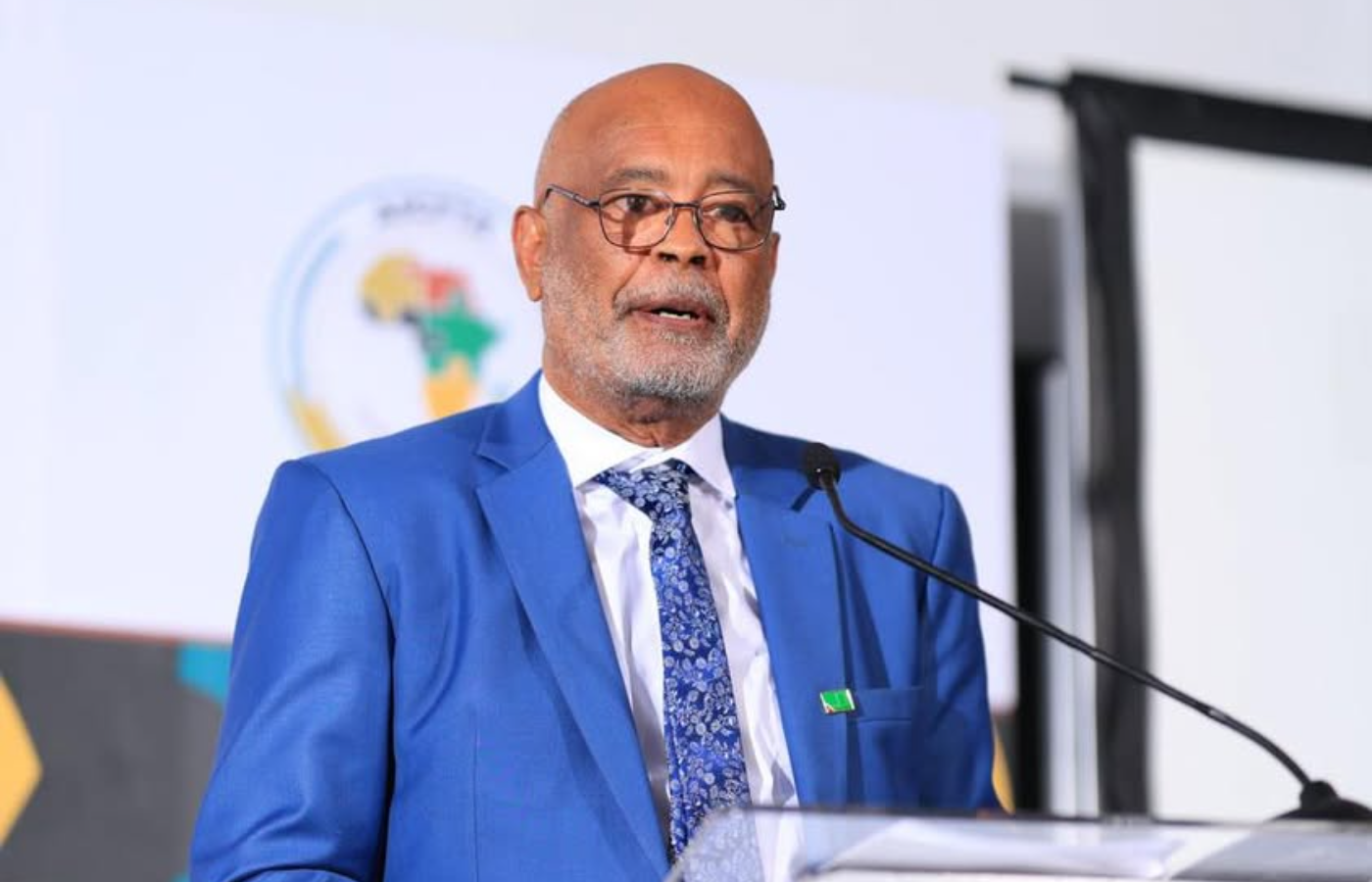
Kebour Ghenna is at the helm of the Pan African Chamber of Commerce and Industry (PACCI), the continent-wide body representing chambers of commerce and private sector organisations across Africa. With board experience at the Commercial Bank of Ethiopia, Abyssinia Bank, and the National Fertilizer Company, and advisory roles with UNECA, UNDP, the World Bank Institute, and Canada’s IDRC, he brings deep insight into trade and economic policy. A leading voice on Ethiopia’s economic developments, he regularly shares analysis through digital platforms. Birrmetrics’ Mintesinot Nigussie sat down with him to discuss the country’s trade landscape and macroeconomic outlook.
Birrmetrics: With Ethiopia joining the African Continental Free Trade Area (AfCFTA) a few months ago, how can the country leapfrog traditional infrastructure gaps to unlock trade opportunities across the continent?
Kibour: Our first priority has to be strengthening basic service-provider infrastructure across Africa to enable real growth. Take trade between Ethiopia and Djibouti, for instance, in that case, infrastructure isn’t the main hurdle; bureaucracy is. It is easier to travel from Djibouti to Addis Ababa than the other way around for individuals with their own vehicles. But with neighbours like Sudan and Eritrea, the challenge runs deeper, with significant gaps in basic infrastructure limiting trade.
But our real advantage is Ethiopian Airlines, often called our ‘big port,’ as it moves a huge volume of goods. The challenge is that air transport is expensive, so we need alternatives like highway, rail, and sea, and we also need to expand our ports to support growing trade efficiently.
Q: The global balance of power appears to be shifting, with many African countries at a crossroads between China and the United States. How should Ethiopia calibrate its policy to navigate this changing landscape and safeguard its economic and strategic interests?
A: China’s presence in Africa isn’t new, they’ve been active here for decades, especially in trade and infrastructure. What’s different now is how quickly their technology, production capacity, and competitive pricing are expanding. They are moving aggressively on the Belt and Road Initiative, aiming to connect markets across the world, and that’s why we’re seeing a diversification towards the east. China also continues to be a major backer of Ethiopia’s economy.
With our trade ties with the United States weakening after the African Growth and Opportunity Act (AGOA) suspension, we have to look for alternative markets. The AfCFTA, which we recently joined, is an obvious opportunity. It’s largely untapped, and because many of the businesses are small, strong government support will be critical to help them take full advantage.
Q: Ethiopia is liberalising key sectors, from gold to retail. What's your take on this, and how can local businesses get ready to make the most of it?
A: The liberalisation we’re seeing in our economy follows the principles we agreed on with the International Monetary Fund. We’ve witnessed these principles struggle even in developed countries, including the United States, which is still weighed down by debt. There’s no debate about whether they can repay, the answer is clear: they cannot. They are searching for solutions that few understand. While they rush, we are sticking to a principle that has eluded even the most advanced economies. We’ll see how it plays out for us.
Q: After the National Bank of Ethiopia shifted to a more market-based forex system in 2024, they’ve rolled out a few new directives in the last few days. Some say it could make the forex market easier, what’s your take on that?
The main point is really about access to dollars. From what I see in the directives, they tend to favour a small group of business elites, those already connected to dollars, making it easier for them to navigate challenges. But when you look at it from the perspective of the country’s development, there’s a gap. We simply don’t have enough dollar reserves to match our ambitions, and there is a persistent current account imbalance between the outflow and inflow of dollars in the economy.
There are scenarios where these directives could actually exacerbate the situation. For example, the central bank is shifting more authority to private banks. While this approach can work in developed countries, even though it brings its own challenges, for a country like ours, with ambitious growth targets and much still to be developed, it could create additional problems.
Let’s take one of the directives, which allows banks to provide up to 20,000 US dollars per case for medical and education expenses in advance. The real question is whether this is the right approach, rather than investing in local hospital capacity to make services accessible to the majority. I don’t believe it was designed with that in mind, it seems more about fulfilling the funder’s principles.
Q: Do you think the current macroeconomic instability can be maintained going forward?
A: It really depends on the country’s foreign exchange earnings. The IMF’s view of macroeconomic stability focuses on allowing the forex market to determine the exchange rate to correct imbalances. In practice, however, real stability comes from developing domestic manufacturing, expanding supply capacity, securing markets, and ultimately generating sustainable foreign exchange inflows. We are still far from achieving this, and additional financing may be necessary to bridge the gap.




