

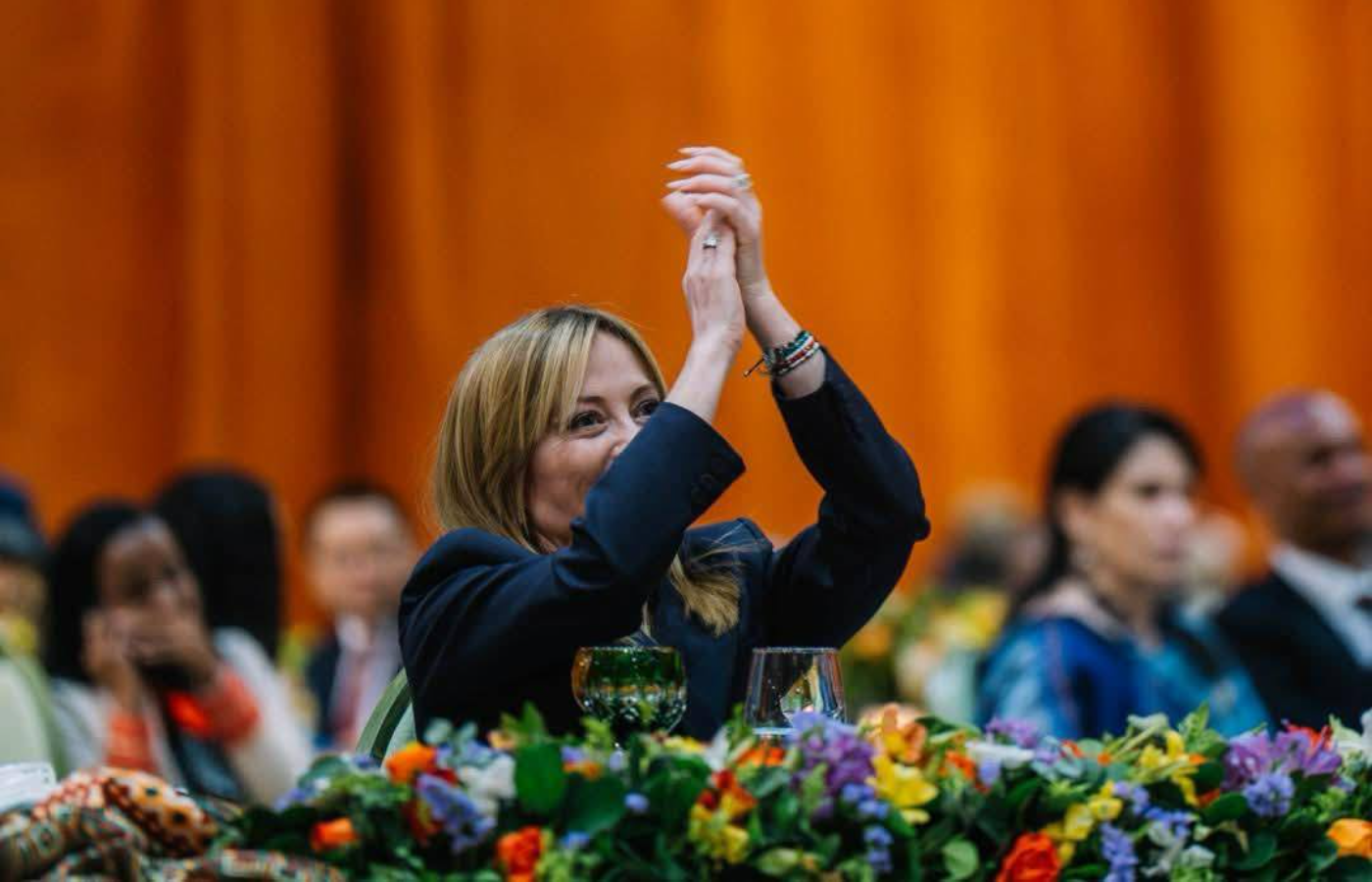
Italian Prime Minister Giorgia Meloni used a high profile address at the Second Italy–Africa Summit on Friday to promote a recalibrated partnership with African nations rooted in investment rather than traditional aid, urging African countries to benefit directly from their resources and confronting migration issues at their source.
Italy’s engagement with Africa has shifted under Meloni’s leadership, centred on the Mattei Plan for Africa, an initiative launched in 2024 aimed at fostering long term economic cooperation across sectors such as energy, infrastructure, agriculture, health and education.
“It is a great honor for me to welcome you here today in Addis Ababa … and it is … proof of the centrality and importance that my Nation attaches to its relationship with all of you,” Meloni said in her opening remarks, thanking Ethiopian Prime Minister Abiy Ahmed (PhD) for hosting the first edition of the summit held on African soil.
Meloni framed the Italy–Africa partnership as an opportunity to “write a new chapter in the history of our relations… Cooperation among equals, far from any predatory temptation, but also far from the paternalistic approach that for a long time characterised relations between Africa, Europe, and the West,” language that reflects Rome’s attempt to distance its strategy from past Western models.
The Mattei Plan, initially endowed with about 5.5 billion euros in public funds and designed as a framework to unlock further private investment, has expanded from nine to 14 African focus countries and marshalled nearly 100 projects across key economic sectors.
“Today the Mattei Plan is an operational and structured reality that generates tangible results for our peoples,” Meloni said, highlighting partnerships with multilateral institutions including the World Bank and the African Development Bank.
Education and human capital development are core pillars of the plan. Meloni noted Italy’s collaboration with Nigeria and the Global Partnership for Education to launch a five billion US dollar campaign to enhance schooling for 750 million children, a flagship initiative she plans to elevate at a summit in Rome in June.
A central theme of Meloni’s address was economic self reliance. “This is our approach, because the challenge of a completely new cooperation is based above all on enabling Africa to live from its own wealth,” she said, rejecting models that leave African raw materials “plundered” and warning against exploiting migration for cheap labour.
The Mattei Plan marks a strategic pivot from aid to investment led partnerships, a shift that Rome argues can stimulate sustainable growth and reduce irregular migration pressures. However, there are concerns over the plan’s financing scale and feasibility — given its comparatively modest budget — as well as the need for stronger African ownership and transparency in project selection.
Meloni depicted Italy’s strategy as collaborative and adaptive. “We have done all this by following a method that does not stem from the arrogance of those who impose pre established models from above… but rather builds solutions together with humility and respect,” she said.
Wrapping up her speech, Meloni invoked both African wisdom and Catholic teaching: “No path is traced without encountering stones… We are all truly responsible for all,” a line she said encapsulates Italy’s vision of shared responsibility in fostering durable growth and deeper ties with African partners.




