

Depreciation Threatens Ethiopia’s Banking Profits
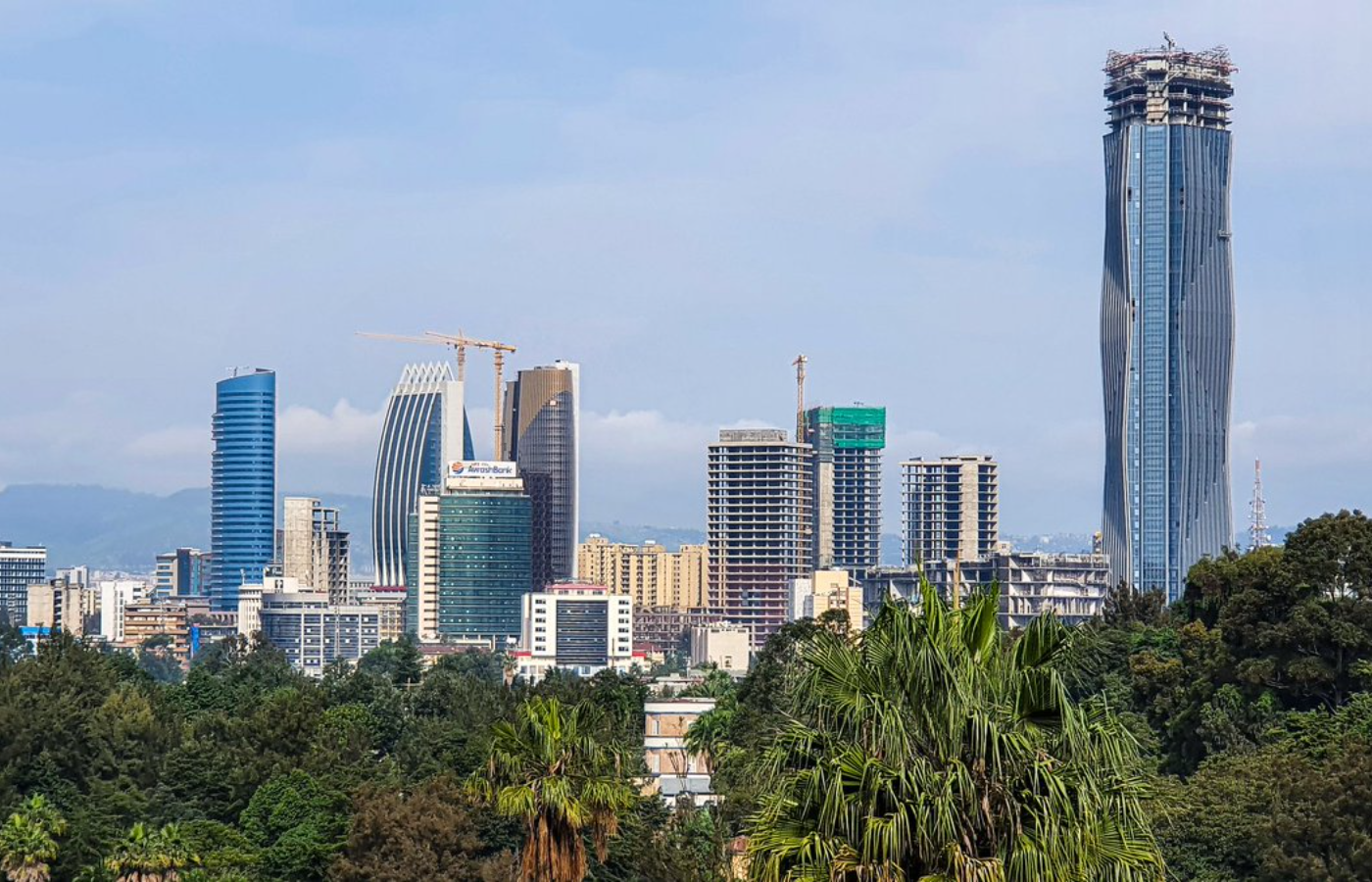
Mexico Street, often considered the Wall Street of Ethiopia, has been particularly busy over the past month as banks prepare their balance sheets ahead of annual performance reports, which will be presented to shareholders during upcoming Annual General Meetings (AGMs). This year, activity comes against a new backdrop: Ethiopia has marked one year since floating the birr.
The currency’s renewed weakness has heightened banks’ exposure to losses, threatening to offset last year’s post-liberalisation profit gains. Private lenders have disclosed risks amounting to billions of birr from depreciation. Others, however, have recorded gains from foreign currency positions, creating a mixed picture for private banks as they enter AGM season.
A 10 percent depreciation in the birr would collectively erase an estimated 2.6 billion birr from the annual profits of the four banks alone, led by Bank of Abyssinia with a potential 1.96 billion birr hit. The scale of the sensitivity portrays how exchange-rate movements have become a defining factor in banks’ earnings volatility under the managed float. Even mid-sized lenders such as Zemen and Wegagen could see hundreds of millions of birr wiped from their bottom line, equivalent to between six and seven percent of pre-tax profit.
The exposures reveal how banks’ balance sheets have tilted heavily toward foreign-currency assets over the past year. Bank of Abyssinia’s net long dollar position reached 19.6 billion birr — more than five times last year’s level — while Zemen’s doubled to 5.4 billion birr, Wegagen’s climbed to roughly 6.6 billion birr, and Berhan’s rose to 1.1 billion birr. The structural mismatch stems from strong growth in export receipts, remittances, and other dollar inflows that outpaced deposit mobilisation, leaving banks effectively betting on the birr’s direction as they manage liquidity in an increasingly volatile market.
Experts say the extent of banks’ vulnerability depends on factors such as the mix of foreign-currency assets and liabilities, off-balance-sheet exposures, hedging strategies, liquidity buffers, and the central bank’s policy stance. “Continued birr weakness would squeeze margins, raise credit risk and raise the cost of imported goods, and could trigger greater dollarisation and slower credit growth unless policymakers and banks act to limit foreign-exchange mismatches and strengthen liquidity,” said Dakito Alemu, PhD, associate professor of accounting and finance at Addis Ababa University.
He added that currency mismatches are a major concern. Banks that lend or invest in foreign currency but fund those activities with local-currency deposits risk losses when the birr falls, because the value of what they owe in foreign currency rises compared to their income and capital.
The materiality of the risk, he said, depends on three factors: the size of a bank’s net open FX position, meaning its foreign-currency assets minus liabilities, the extent of natural hedges like deposits from exporters or loans linked to foreign currencies, and the quality of risk management, including hedging strategies, internal limits, and contingency funding.
“Since banks lend for imported goods using off-balance-sheet foreign currency commitments, the exposure is revalued at the current market rate, and profit or loss is only recognised once the payment is effected,” said Ameha Teferra, a banking researcher at DBL.
Industry analysts, however, argue that the losses disclosed by the bank may be partly strategic, aimed at influencing stakeholders, as the official foreign-currency price has appreciated and taxation policies—including those without corresponding value addition—have intensified. Off-balance-sheet items are unofficial records and, according to analysts, should not be disclosed until payment is settled and the transactions are formally recorded in the balance sheet.
“All banks should report consistently, and the rationale behind any disclosure should be made public. Otherwise, this creates asymmetric information, which is legally prohibited,” said an anonymous analyst.
The birr continued to weaken through 2024, reaching 127.92 birr per US dollar in December, an 11.5 percent decline from September. By mid-2025, the exchange rate fluctuated between 132.50 birr per US dollar on May 17 and 153.76 birr on October 30, averaging about 140 birr over the six months to late October. According to the World Bank’s April 2025 Africa’s Pulse report, the currency’s fall of more than 50 percent in 2024 was the second steepest in sub-Saharan Africa, surpassed only by the depreciation of South Sudan’s pound.
Amid this volatility of the market, several private lenders are carrying large open foreign-exchange positions that expose them to significant losses if the birr continues to fall.
| Bank | Pre-tax profit (Br bn) | Profit growth (%) | Assets (Br bn) | Asset growth (%) | Net FX exposure (Br bn) | 10% birr fall impact (Br mn) |
| BoA | 10.1 | +91 | 286 | +29 | 19.6 | -1,960 |
| Zemen | 8.9* | +136 | 88.6 | +50 | 5.4 | -542 |
| Berhan | 2.5* | +66 | 58.9 | +28 | 1.1 | -107 |
| Wegagen | 3.85 | +73 | 84.7 | +29 | ~6.6 | -663 |
Source: Sampled Annual Reports of banks (2024-25 FY)
The mismatch reflects a surge in dollar-denominated assets — fuelled by higher export proceeds, remittances, and liberalisation-led inflows — while customer dollar deposits have lagged. This has left banks structurally long on foreign currency, a position that benefits them when the birr strengthens but magnifies losses when it weakens.
“Banks with large FX exposures funded by domestic liabilities and limited hedges or FX reserves are particularly vulnerable,” he noted. “Even if most banks maintain modest net FX positions and prudential limits, concentrated weaknesses in smaller or riskier institutions could still trigger losses and broader contagion.”
International cases show that banks often face heavy pressure when countries shift abruptly to floating exchange-rate regimes. Losses tend to appear through three channels: higher loan-loss provisions as borrowers struggle with foreign-currency debts, large translation losses for global banks operating in volatile markets, and, in severe cases, systemic failure. Iceland’s 2008 crisis represents the most extreme example, when the króna’s collapse pushed the country’s three largest banks into failure. Multinational lenders in Argentina experienced a different form of strain as years of peso depreciation produced sizeable foreign-currency translation write-downs, including several billion US dollars recognised by HSBC.
Russian lenders faced similar pressures during the ruble’s sharp drop in 2014 to 2015, with several institutions reporting losses and requiring central bank support. Across all cases, the severity of the impact depended on banks’ exposure to foreign-currency risk and the speed of the policy shift.
The NBE’s new governor, Eyob Tekalign, has expressed optimism that the birr will stabilise, citing record gold exports — which overtook coffee for the first time at 3.5 billion US dollar — and fresh agreements for concessional financing from the IMF and World Bank. Analysts, however, describe the outlook as “cautious and uncertain”, noting that volatility in both the economy and forex market remains high.
“Raising interest rates can support the currency by making local assets more attractive, but it risks slowing growth and increasing debt-service burdens,” Dakito said.
He added that managed foreign-exchange interventions—using reserves to smooth volatility or running temporary auctions—can help stabilize the market, though “their effectiveness depends on the adequacy of FX reserves.”
Dakito also highlighted ways to improve FX market functioning, noting, “Increasing transparency in auctions, widening bank participation, and strengthening the interbank FX market can reduce disorderly flows.” He cautioned that temporary capital-flow controls could help limit speculative outflows in crisis episodes, “but if prolonged, they may damage investor confidence.”
For now, the sector’s strong foreign-exchange income continues to mask the risks. Bank of Abyssinia’s FX earnings climbed 56 percent to 663 million US dollars in 2024/25, while Zemen’s reached 588m million US dollars. But with tightening liquidity and persistent depreciation pressures, the gains that lifted bank profits this year could quickly turn into losses if the birr’s slide continues.
According to Dakito, a weaker birr raises funding costs, compresses net interest margins for banks that cannot reprice quickly, and may force lenders to tighten standards or reduce new loans—especially to borrowers with foreign-currency exposure or limited local-currency cash flows.
The ripple effects of currency volatility stretch well beyond bank balance sheets. Fluctuations in the birr can alter borrowing costs, reshape lending behaviour, and push up the prices of imported goods and services. For an import-dependent economy, this can mean more than just higher costs at the checkout or thinner margins on factory floors, ultimately hitting the wallets of households across the country.
“Persistent currency volatility generally drives higher inflation and elevates macroeconomic uncertainty, which can deter investment,” said Dakito. “Households and firms may shift savings and contracts into foreign currency, complicating monetary policy and increasing banks’ FX funding needs.”
He added that a weaker currency can raise the cost of capital, as lenders demand higher spreads, leading to slower credit growth and reduced financial deepening. Credit quality may also deteriorate, with chronic stress increasing non-performing loans, weakening bank balance sheets, and potentially forcing consolidation if weaker institutions cannot recapitalise. Over the longer term, these dynamics can create a structural drag on growth, as investment, imports of capital goods, and productivity improvements decline—making sustained growth difficult unless macroeconomic stability is restored.
Banks appear to be navigating what many describe as a “new-normal storm” of currency volatility, adjusting to an environment in which birr fluctuations have become a constant rather than an occasional shock. Analysts say the shift is forcing institutions to tighten risk controls, refine hedging practices, and strengthen foreign-exchange buffers to withstand continued pressure.
Even within this uncertainty, a few lenders have benefited from the new dynamics. Addis Bank reported a net profit of 2.19 billion birr, a rise of 430 percent, with foreign-exchange transactions contributing 41.6 percent, or nearly 1.81 billion birr. Bunna Bank’s net profit exceeded 1.9 billion birr, with FX activities accounting for about 25.24 percent of total earnings. Experts caution, however, that such windfalls are unlikely to continue as market conditions normalise and regulatory scrutiny deepens.
In the short term, Dakito advised banks to monitor FX exposures closely, tighten risk limits, and hedge selectively through forwards, swaps, or natural hedges. “Careful repricing of loans and contracts can reflect FX risk without overburdening borrowers,” he added. Maintaining liquidity buffers, diversifying funding sources, and building conservative provisions are essential, while shifting toward fee income, shorter-duration assets, and local-currency lending to well-hedged clients can further reduce vulnerability.
“Banks could also aim to balance their sheets by funding FX assets with FX liabilities and encouraging exporters and remittance inflows,” he said. Product innovation, such as FX-denominated savings accounts and improved FX payment services, can attract foreign currency into the system, he said. Expanding non-interest income and reinforcing capital buffers above regulatory minima provide additional shock absorbers. Rigorous stress-testing and engagement with regulators, he noted, help ensure measures support orderly markets without encouraging risky behaviour.
“Ultimately, banks are being called on to evolve, not just react,” he told Birrmetrics, “turning volatility from a threat into a managed risk while keeping the wheels of credit and commerce turning.”




