

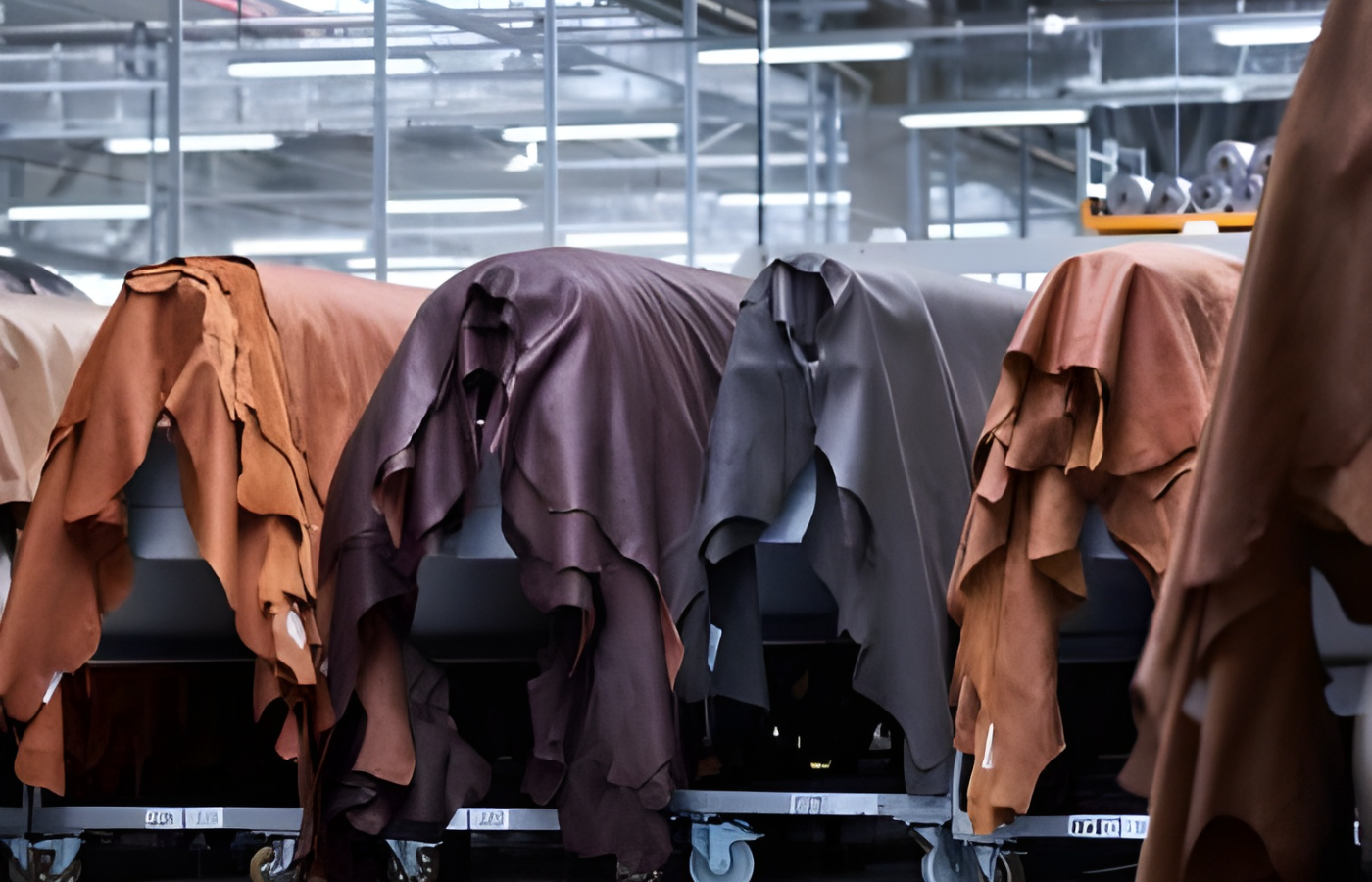
The Ethiopian Leather Industries Association has unveiled a sweeping update to its governing regulations and branding approach, aiming to turn the sector’s long-standing inefficiencies into a competitive edge. Hindered for years by underutilised resources, outdated processes, and fragmented market strategies, the industry is now repositioning itself to tap both domestic demand and international markets.
The industry currently generates up to 40 million US dollars annually in export revenues and contributes around 3 billion birr in import substitution. Officials say the sector has the potential to perform far beyond these levels, prompting reforms that have not been updated for decades. Key measures include a full rebranding effort, ranging from modernising the association’s website to expanding its presence on social media platforms with the support of artificial intelligence tools.
The governing regulations are also being revised to align with international standards. The association plans to introduce five- and ten-year strategic frameworks, providing clearer guidance for businesses to enter and operate in the sector.
On October 11, 2026, the association undertook a major leadership reshuffle of its long-serving board, appointing Zelalem Merawi as president and Elias Tegegnework as vice president. The new board also includes Bayush Mulugeta, Eyoel Girma, Mussie Ayalew, Evano Mesfin, Ahmed Nuru, and Biruk Hailu, signalling a strategic shift in governance.
The association has simultaneously launched an auction for its branding plan, attracting five bidders so far, including Zeleman Production, Gizat, Alpha, Git, and Shobe. Officials declined to disclose the capital requirement for the initiative.
Ethiopia has Africa’s largest livestock population, a crucial raw material base, but the leather sector remains under‑developed relative to its potential, with exports and processing still modest compared with total African output.
“We see hides everywhere on the streets being discarded, while industries face shortages of raw materials,” Zelalem said. “And our share of the global leather market remains minimal.”
He added that the reforms aim to expand the sector’s share in the global market while increasing the utilisation of Ethiopia’s leather industry.
According to him, civil unrest in the country has contributed to shortages of hides, as many internationally sought varieties, such as highland hides, are sourced from regions affected by instability. These hides are primarily found in Wello, Bahirdar, and Nekemte.
The sector also grapples with limited access to finance and shortages of raw materials, as hides are increasingly diverted for export and local consumption. At the same time, some leather factories are being relocated to make way for urban modernisation and corridor development projects, with authorities raising environmental concerns, creating a tension between industrial growth and the city’s transformation.
The ministry is taking measures to discourage raw hide exports, which currently involve mainly oxen hides. Exporters are now subject to a 150 percent tax, and the minimum price has been raised from 7 US dollars to 10 US dollars per hide.
“We’re working in a free market, so we’re not banning exports, we just want to steer them in a way that helps the sector grow,” said Zerihun Abebe, Executive Director for Export Competitiveness at the Ministry of Industry.
Moreover, quality assessments of the industry, previously conducted by the Ministry of Agriculture, have been paused, and the sector continues to lack dedicated hide collection zones, limiting efficiency across the value chain.
Zerihun said the ministry is reviewing the industry’s proclamation to address persistent bottlenecks. He noted that the existing proclamation does not clearly define market supply chains and is ill-suited to the current context, describing it as overly restrictive. The ministry has engaged in consultations with the Ethiopian Leather Industries Association, the Ministry of Agriculture, and the Ministry of Trade and Regional Integration to draft a more practical framework.




