

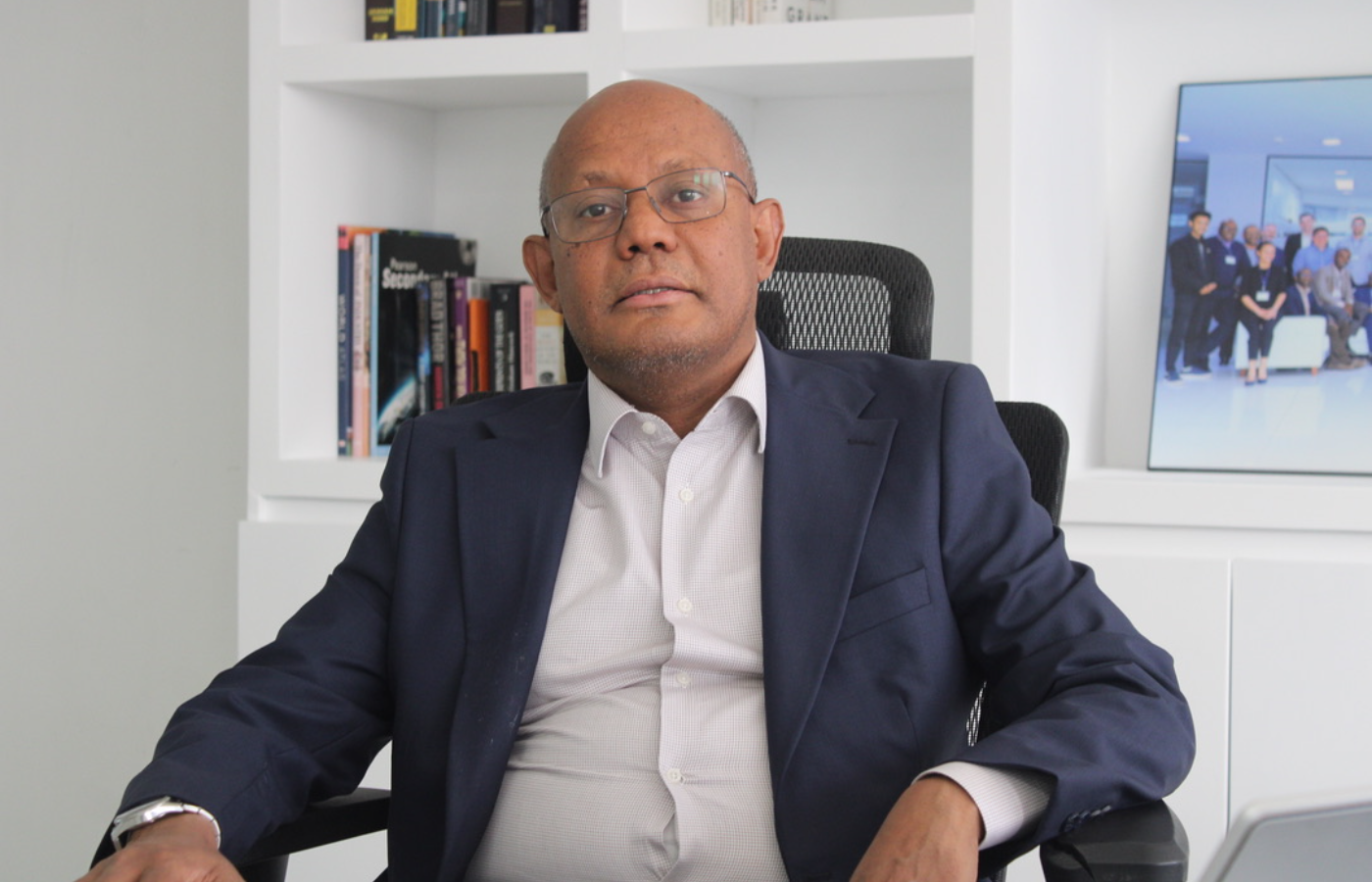
Million Kibret is Managing Partner at BDO Ethiopia, a member of BDO International, the fifth-largest global professional services network. He has led the firm for the past 13 years since its establishment in Ethiopia, drawing on the company’s century-long experience across 169 countries. BDO Ethiopia advises both local and international clients, supporting every aspect of planning, setting up, managing, and improving business enterprises and organizations.
Weeks ago, the firm launched an investment securities advisory arm, becoming the 16th licensed capital market service provider in Ethiopia. Million holds a Bachelor of Arts in Accounting and Finance from Addis Ababa University and an MBA from the Jack Welch Management Institute. He is at the forefront of Ethiopian finance narratives, actively advocating for policy reforms and raising awareness on the country’s most dynamic and reform-driven sectors.
Mintesinot Nigussie of Birrmetrics discussed Ethiopia’s capital market, macroeconomic reforms, and the broader economy with him, while also exploring what the business community is currently seeking from policy, drawing on his decades of experience advising companies.
Birrmetrics: Could you walk us through the structure, services and strategic focus of the investment advisory arm recently launched under BDO?
Million: BDO Consulting was started with an initial paid-up capital of 30 million birr. It’s part of BDO Ethiopia, which belongs to the global BDO network that has been around for over 100 years, though we’ve been operating in Ethiopia since 2013.
Our main work is in corporate finance, advising both local and international companies. BDO Consulting has a five-member board, and all of them are Ethiopian.
Q: How does being an international firm help BDO navigate and compete in Ethiopia’s nascent capital market?
A: Being an international firm, we bring decades of experience to Ethiopia, from a time when the concept of a capital market didn’t even exist here. This enables us to support the country’s emerging market with insights drawn from mature markets across the 169 countries where we operate globally.
We will bring in experts with experience from more mature markets to train local professionals. However, this won’t be a permanent setup, once the locals are fully trained, the expatriates will step back, and the local team will take over operations completely.
Q: How strong is the demand for capital market services in Ethiopia?
A: Beyond developed economies, emerging markets like Ethiopia have a strong need for a capital market. When companies start out, their main challenge is access to finance. Traditionally, banks have tried to provide this, but they cannot meet the full demand. Meanwhile, funds are fragmented across many sources, and if these were pooled, they could generate significant capital to support businesses.
Traditionally in Ethiopia, people think investors have to be big or established, but that’s not the case. Back when there was no capital market, you basically had to be a millionaire to invest. Now, you can buy a share with a very small amount. The capital market is helping to democratize access to capital, which used to be controlled mostly by the business elite.
Q: Institutional investors often point to low returns and high volatility as concerns. Now that Ethiopia is rolling out reforms and regulating the capital market, how is the environment becoming more favorable for them?
A good example of this is Ethiopia’s shift to a market-based foreign exchange regime, which has improved access to foreign currency. In the past, businesses often relied on the parallel market to meet their foreign currency needs, as the official market could not satisfy demand. This situation is easing, reducing the prominence of the parallel market.
Additionally, the central bank recently introduced a set of directives to further streamline the forex market. Over time, supply and demand will be better balanced as more businesses turn to the official market. Returning to your earlier question, this benefits investors, giving them alternative investment opportunities as their funds are now authorised to invest through their banks.
Q: To what extent is the growth of Ethiopia’s capital market correlated with the liberalisation of the foreign currency market?
A: The two are closely connected. A stronger capital market requires that all funds be legitimate, and as investment advisors, we make sure of this through comprehensive Know Your Customer (KYC) checks, verifying who the investors are, where their money comes from, and that everything complies with regulations. This not only encourages formal investors to participate but also discourages informal traders, making it increasingly difficult for unregulated participants to enter the market.
Q: Some critics say Ethiopia is moving too fast with liberalisation, pointing to unfinished structural groundwork. What’s your take on the country’s approach?
I am against that view. Prior to the liberalisation of the foreign currency market, the official rate was low, but access to foreign currency was limited and not available to everyone. That is no longer the case, our currency can now be used to make purchases. We should operate according to the market rate, just like other countries around the world, even if it comes with short-term pain. If sacrifice is required, let it be ours, so future generations can reap the rewards.
Q: Based on your experience advising local and international clients, what policy shortcomings still constrain businesses in Ethiopia?
One area I believe policy has not fully addressed is the restriction on certain investment areas for foreign investors. In many countries, we are able to invest across almost all sectors. In Ethiopia, however, some areas remain closed to foreign participation, although recent policies have started to open up parts of the economy. We learn from those operating around us. To benefit from diverse expertise and experience, we need to open up to established foreign businesses so we can grow and develop alongside them.
Q: What are the main bottlenecks foreign investors raise when you advise them on entering the Ethiopian market?
Bureaucratic bottlenecks remain a concern, and they continue to raise this issue. Corruption is another challenge, as it increases the cost of doing business. Businesses thrive in a competitive environment where companies succeed based on performance and efficiency. When corruption is present, however, it distorts competition and advantages those willing to engage in unethical practices. Ethiopia should be a country where success is determined by merit and competitiveness, not by influence.
We should contextualise lessons from other countries in addressing these challenges. Many of them made significant sacrifices to implement reforms, and we can adapt those experiences to our own context.
Q: How can local businesses prepare themselves as large, established companies with significant economies of scale, such as Carrefour, enter the Ethiopian market?
Being a small business doesn’t just affect the company itself, it also impacts consumers and the wider economy. When businesses aren’t competitive enough, they often have to import goods in small quantities, which raises costs. This, in turn, pushes up prices for consumers and is one reason why prices in Ethiopia tend to be higher than in other countries. So, I suggest that local businesses consider merging or forming partnerships to become strong enough to compete effectively.
Q: There’s a growing trend in Ethiopia of young people becoming founders and CEOs. In your view, can anyone be an entrepreneur, and what advice would you give to fresh graduates looking to start their own business?
A: We all make mistakes in our careers. To avoid risks that can be very costly when starting a business, graduates should first gain experience by working as employees with established entrepreneurs and learning from their journeys. This approach can reduce their costs by as much as 80 percent. Trust is the currency of business. While working as an employee, every task and interaction is an opportunity to build your reputation. That credibility becomes your foundation when you step out as an entrepreneur, people will invest in you, partner with you, and follow your lead because they know they can trust you.
Q: How do you view the idea of consolidating banks in Ethiopia? Would having a smaller number of large banks be better for the economy than maintaining many smaller institutions?
Some businesses, especially banks, rely heavily on credibility, which comes from size and strength. A strong capital base allows a bank to survive defaults from some borrowers while continuing to serve others. Smaller banks don’t have that cushion and can fail quickly. That’s why having bigger, well-capitalized banks helps the system weather financial crises. Banks and financial institutions are inherently exposed to risks, some unforeseen. When one fails, the consequences ripple out, hitting not just shareholders but depositors and the broader economy as well.
Q: What factors do you attribute to achieving the level of success you have today?
A: One of the major factors is focus. When something new comes along, many people tend to chase it, but staying focused on a single goal allows you to be creative and truly serve your customers. The other key factor is trust. A business can only be sustained through genuine trustworthiness. Trust is even more valuable than capital, it’s something you earn from your relationships and networks. In many ways, trust is a company’s greatest asset.
Q: I notice a book on the shelf behind you, and you often advise young people to read on your social media. Could you tell us about your reading routine and a book that had a significant impact on how you view finance?
Businesses often fail when leaders become complacent with what they know. Even with years of experience, you have to admit there’s always more to learn. A bit of healthy paranoia keeps you sharp, and then you put those lessons into practice. I enjoy reading genuine biographies of global figures like Steve Jobs. They reveal not just the path to success, but also how these investors and entrepreneurs navigated their failures.




