

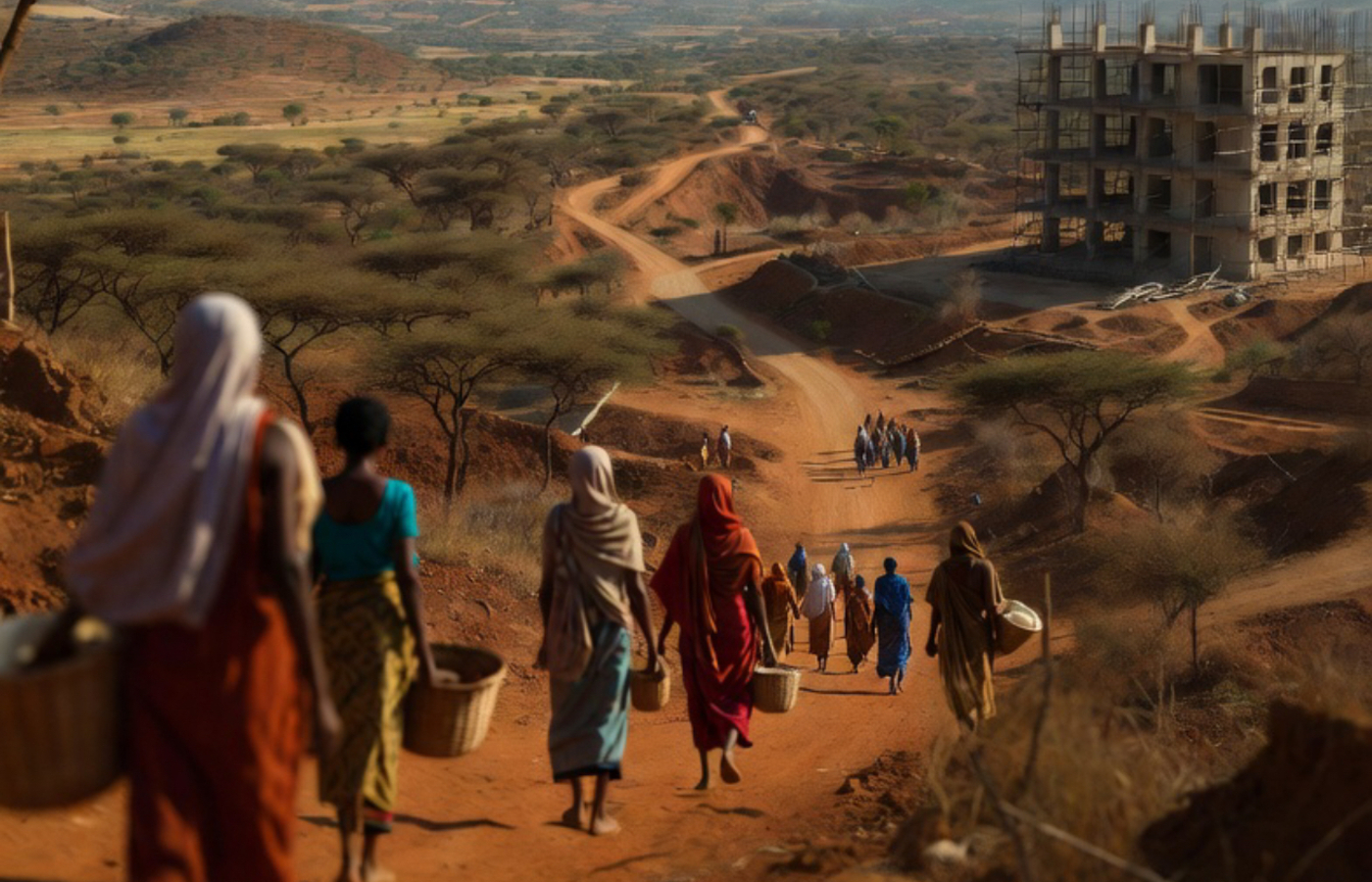
Ethiopian women enjoy barely more than half the legal economic rights afforded to men, with critical gaps in implementation and enforcement severely limiting their access to better jobs and economic growth, according to the World Bank’s latest Women, Business and the Law 2026 report.
The report, which benchmarks laws, policies and real-world enforcement across 190 economies, assigns Ethiopia a score of 57.20 out of 100 on its legal frameworks index—meaning women hold roughly two-thirds of the economic rights men do under the law. This places the country in the mid-tier globally but well below leaders such as Spain (97.93) and far short of full equality, which no economy has yet achieved.
Even more concerning for Ethiopia’s rapidly growing youth population—where half of the 1.2 billion young people entering the global workforce over the next decade will be women—the supportive frameworks index scores just 33.00 out of 100. This reflects that fewer than one-third of the necessary policies, institutions, services and data systems are in place to turn legal rights into practical opportunities.
Expert perceptions of enforcement fare somewhat better at 52.31 out of 100, but still indicate that laws supporting women’s economic participation are upheld inconsistently in practice. Globally, enforcement averages only 53 out of 100, with the report noting a “shockingly large gap” between laws on the books and their real-world application.
“There is a shockingly large gap between the two,” the report states in its foreword. “On average, economies score 67 out of 100 on the report’s index measuring laws that support women’s economic equality. But when it comes to enforcing these laws, the average index score is 53. And when the systems needed to implement those rights are assessed for adequacy, the average index score is just 47.”
The findings carry particular weight for Sub-Saharan Africa, where legal barriers remain among the highest and youth populations are expanding fastest. The region averages 59.6 on legal frameworks—below the global 67—and 45.4 on enforcement perceptions, with experts assessing childcare law enforcement at a mere 10.2 out of 100.
“Regions that most need women’s contributions—the Middle East and North Africa, South Asia and Sub-Saharan Africa—continue to maintain some of the most restrictive legal barriers to the full economic participation of women,” Chief Economist Indermit S. Gill writes in the foreword. “These are also the regions where youth populations are expanding fastest. Without urgent reforms, millions of young women will remain locked out of the workforce just as their economies need their talent most.”
Ethiopia recorded no major legal reforms advancing women’s economic rights between October 2023 and October 2025, unlike neighbours such as Madagascar (which repealed job restrictions for women and introduced paid paternity leave) and Somalia (which lifted prohibitions on women in key sectors such as mining and construction). Globally, 68 economies enacted 113 such reforms, with momentum strongest in safety from violence and entrepreneurship.
The report stresses that stronger laws correlate with more women working, owning businesses and holding political office, while shrinking gender gaps in labour force participation. Yet in Ethiopia, persistent weaknesses—particularly in safety, childcare, entrepreneurship, assets and pensions—risk squandering the country’s demographic dividend.
“Expanding women’s economic participation is not just a social aspiration; it is an economic imperative,” Gill adds. “In some parts of the world, such as South Asia, it may well be the single best strategy for increasing the growth potential of the economy.”
The World Bank urges governments to finalise pending reforms, repeal discriminatory provisions and invest heavily in supportive systems and enforcement to convert legal rights into lived realities for women.




