

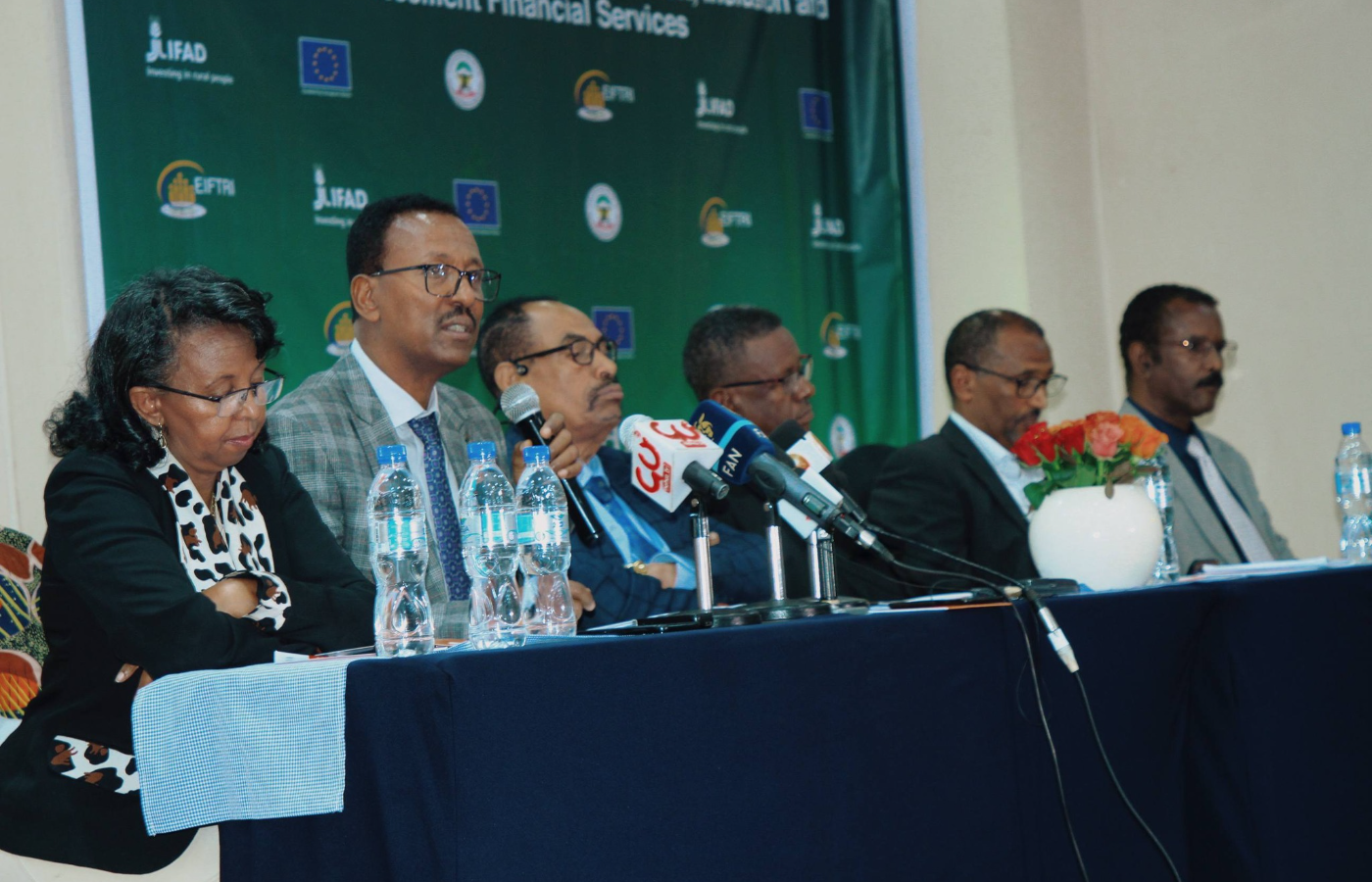
Ethiopia’s microfinance institutions are seeking foreign investment to boost financial inclusion as commercial investors expand into the sector.
The call was made by the Association of Ethiopian Microfinance Institutions during a press conference on Wednesday ahead of their international conference scheduled for March 24–26, 2026. Officials said access to foreign capital would help the sector modernise operations and strengthen its position in a changing financial landscape.
Industry representatives said digital finance has become increasingly important for microfinance institutions, which serve millions of low-income clients across the country, particularly in rural areas. Expanding digital platforms would allow institutions to improve service delivery, reduce operational costs, and reach underserved communities more efficiently.
Mekonnen Yelemwossen, board chairman of the association, said the upcoming conference will gather players from across the financial and technology sectors. He said international participants are expected to introduce innovative products, tapping into expertise from product development researchers and technology specialists, offering a window into the future of Ethiopia’s microfinance ecosystem.
“Joint ventures and social investors will be present,” Mekonnen told reporters. “The conference will give international investors a clear line of sight into how MFIs can channel capital efficiently, turning partnerships into tangible financial inclusion outcomes.”
He said social investors and international financial institutions, including the World Bank, are likely to use MFIs as a conduit for investments that target poverty reduction, strengthen service delivery, and widen financial access across Ethiopia’s underserved regions.
As of June 2024, MFIs served 829,078 loan clients. The sector’s deposit base was approximately 31.4 billion birr, while net loans reached 38.6 billion birr. By June 2023, Ethiopia’s microfinance sector comprised 47 licensed institutions operating 1,109 branches nationwide, representing around 2.0 percent of total financial sector assets, according to data from the National Bank of Ethiopia.
Stakeholders said the sector is under growing pressure from profit-oriented commercial investors moving into areas traditionally served by MFIs. Amsalu Alemayehu (PhD), vice board chairperson of the association and chief executive of Wasasa Microfinance, noted that Ethiopia’s first-generation MFIs were established primarily with social objectives rather than profit. He observed, however, a rising number of MFIs created with commercial motives, drawn by the sector’s profitability.
“These investors are not driven by social goals, they are purely commercial,” Amsalu said. “Banks, fintechs, and telecom operators are stepping into roles once held by MFIs. The sector’s landscape is rapidly shifting.”
According to him, the shift has deep-rooted implications for customers, particularly in pricing and access to financial services. Amsalu told Birrmetrics that loans for grassroots clients in remote areas, where local MFIs have a strong understanding of communities, are becoming increasingly scarce, as banks are reluctant to provide financing to MFIs due to high risks, repayment challenges, and the credit caps imposed by the central bank.
He added that targeted policy intervention could change the equation, encouraging social investors and individual donors to partner with local MFIs and share the risk, ensuring that financial inclusion does not falter as the sector evolves.
“I also suggest liberalising the market,” he told Birrmetrics. “Look at the telecom sector, opening it up to competition has driven significant product innovation.”
The association expects the conference to bring together over 500 participants from Ethiopia and around the world. While the event is organised and owned by the association, sponsorship comes from the European Union and the International Fund for Agricultural Development (IFAD). Attempts by Birrmetrics to confirm the level of financial backing from these international institutions were unsuccessful.




