

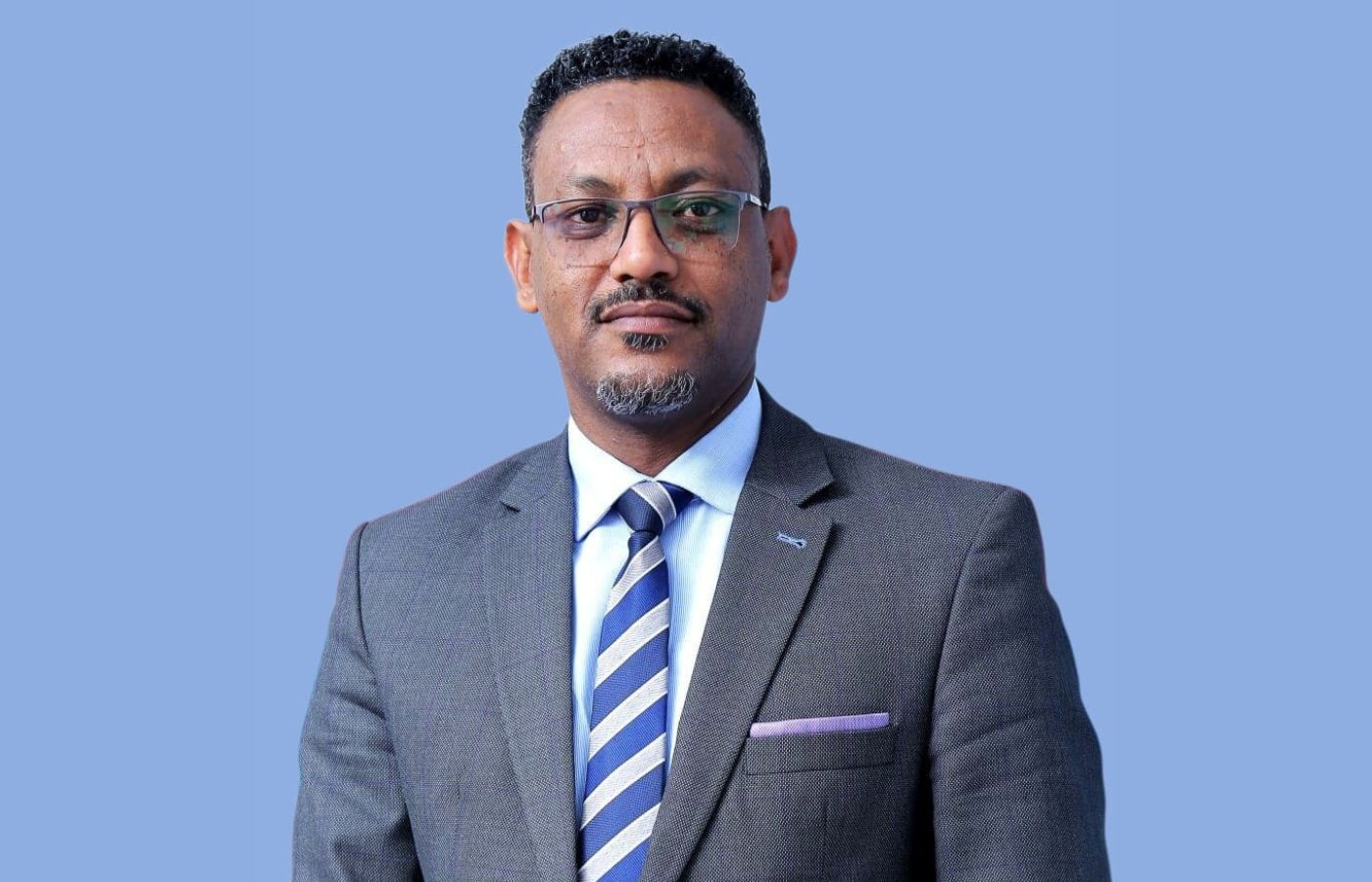
Solomon Asefa, founding CEO of Standard Insurance, has been in Ethiopia’s insurance industry since 2003, building his career from junior roles at Africa Insurance to senior management at Abay Insurance. In this Q&A, he reflects on a journey shaped by experience across multiple institutions, supported by an Executive MBA from Addis Ababa University and academic grounding in accounting and business administration. He discusses how early exposure to restoring damaged assets instilled a strong belief in insurance as a system built on good faith. The interview delves into the sector’s enduring constraints — limited uptake, fragile trust, and intense pricing pressures — alongside his plan to build a more responsive, service-oriented insurer backed by Awach SACCO, in a discussion BirrMetrics journalist Mignot Tariku sat down for.
Birrmetrics: Becoming the founding CEO of a new company like Standard Insurance — backed by Awach SACCO and many shareholders — is a big milestone. What’s one moment from the journey to get here that you still look back on with pride?
Solomon Asefa: Success does not stop; it continues as long as life exists. Becoming the CEO of Standard Insurance is a big milestone. As has been said, to achieve that, I have gone through many ups and downs. The companies I worked for have made their own contributions to me, and my former bosses have also contributed greatly. To the best of my ability, I have continuously updated myself through education, and I am still learning now. In addition to that, the industry involves many complexities. I have a good relationship with people in the industry; I take advice from them, including from clients. When I came here, almost 1,746 shareholders were from Awach SACCOs, with Awach holding the largest share. For me, becoming the CEO of Standard Insurance after overcoming so many challenges is a moment of great pride.
You’ve spent over 15 years in the sector, witnessing its ups and downs, yet Ethiopia’s insurance penetration remains stubbornly low — well below one percent of GDP (around 0.3–0.5 percent in recent reports), with the entire industry barely contributing meaningfully to economic protection for farmers, small traders, or the average family. As someone who knows the inside story intimately, why do you believe the sector — including veterans like yourself — has failed so spectacularly to move the needle on access and trust after decades?
The first issue is awareness. Leaving aside SMEs, even the so-called big firms themselves, most of the time people only insure their properties when required — for example, house insurance is often taken when the house is used as collateral for a bank loan, because the bank forces them to do so. Because third-party insurance is mandatory, everyone has to insure their car, so awareness has slightly increased due to that. Secondly, there is a lack of trained manpower in the insurance sector, and not enough insurance academies. There used to be one under the National Bank, and there are some emerging now, but the shortage of qualified employees has limited the sector’s ability to grow aggressively.
In addition, the price war is very severe. The premiums collected are low, which has prevented the industry from growing, although there is significant potential, especially in life insurance. In a country with 120 million people, neighbouring countries with only one-third of our population are ahead of us. Indeed, selling life insurance is not easy, as it makes people think about death.
Standard Insurance was born partly out of frustration: Awach SACCO members felt existing players weren’t providing adequate financial protection or quality service. Now that you’re running the company, how do you avoid repeating the same mistakes? What specific, measurable commitments have you already implemented in your first year or so to ensure faster claims settlement, fewer denials, and genuinely customer-friendly processes — especially when many long-established firms still face public complaints about delays and bureaucracy?
Our starting point is to provide adequate insurance and service excellence for the assets purchased by our savers and members. For the types of insurance that members need, we customise products, especially by improving the claims settlement system to create better market differentiation. This is not only for our members but also for the public as a whole, to provide improved insurance services that bring positive change. It has become an opportunity; our team members have more than 15 years of experience from various companies, which we believe will bring different perspectives. Every company has its own discipline, and we believe we will take the best practices and deliver results.
New entrants like Standard often promise lower premiums and better service to disrupt the market. But the sector has long suffered from destructive price undercutting that leads to under-reserving, liquidity issues, and a race to the bottom. With your deep experience, are you committing to disciplined pricing, or is Standard already participating in the same short-term tactics that have hurt the industry? How will you prove you’re different?
We are just starting operations and have not yet been tested, but everything begins with policy and procedure. Especially in the claims process, we have tried to identify and remove the issues we experienced in other companies — issues that still cause claim delays. In particular, we are working on improving claims procedures, especially since the engineering department is integrated with us. We need to adjust timelines, speed up processes, and ensure there are no complaints, including addressing what needs to be clarified in our contracts. It is said that “there is no bad claim, only bad underwriting.” When there is a problem in underwriting, complaints often arise during claims. We must clearly explain policies to clients before any loss occurs, ensuring full disclosure. This reduces disputes.
Price cutting has greatly damaged the industry. While customers will choose better prices, if premiums are not sufficient, insurance — which relies on the law of large numbers — cannot function properly. If the premium pool is inadequate, it cannot cover claims, and service quality declines. Most insurance companies do not want this kind of price competition.
Our main focus is to improve service excellence. In addition, we have a digitalisation project to improve accuracy and relevance, both web-based and application-based, allowing customers to transact using their mobile phones from anywhere. This will help balance pricing challenges.
Our target market is small and medium enterprises. Since SACCOs mainly consist of SMEs, we aim to customise products and adjust coverage to bring meaningful change.
Ethiopia remains one of the few places in East Africa without a fully independent insurance regulator (still under NBE), which critics say protects incumbents and stifles real competition and innovation. As CEO of a late entrant that should benefit from more openness, are you publicly pushing for a dedicated, independent authority — or are you content with the status quo because it gives new players like yours room to grow without heavier scrutiny?
An independent regulator is underway by the National Bank of Ethiopia — this has been mentioned in different forums. If the NBE involves relevant stakeholders, I believe it will be beneficial. In my opinion, having a dedicated regulator for the insurance industry will bring better change. The NBE is also working towards making the insurance industry more independent.
The market now has nearly 19 companies, yet overall awareness and uptake remain dismal — only about 10 percent of adults insured, with huge untapped potential in cooperatives and organised groups. Your company is tied to a SACCO base, which is smart, but why hasn’t the sector (and experienced leaders like you) cracked mass-market products for the uninsured 90 percent? What revenue-generating, innovative offerings has Standard actually launched so far that reach beyond cooperative members to everyday Ethiopians?
It does not mean that we will only sell insurance products to our members while leaving the broader market untouched. We have people with many years of experience from various companies, and we will also offer products similar to those provided across the industry. If only 10 percent are insured, the question is how to reach the remaining 90 percent. Insurance companies are making efforts through associations, and in the future, awareness campaigns will likely be a collective effort.
As digitalisation progresses, mandatory insurance could take different forms. However, rather than focusing solely on mandatoriness, increasing awareness will better protect the public. When the public is informed, the overall outcome will benefit both the insurance sector and all stakeholders involved.
You bring decades of insider knowledge to a fresh start-up phase, yet many new entrants struggle with high setup costs, limited scale, and the same old manual processes. How do you plan to leapfrog the digital lag that plagues most Ethiopian insurers — paper-heavy operations, branch dependency, and slow modernisation? In concrete terms, what digital or tech-driven products has Standard rolled out (or committed to in the next 12–18 months) to lower costs, speed up claims, and expand access in a way incumbents haven’t?
Start-ups always face high operational costs. Our focus is on digitalisation. We have not yet rolled out any products, but in the future, we plan to use insurtech and are currently in the process of implementing a core insurance system. It is capital-intensive, but necessary, as everything is becoming digitised — and digitalisation also improves service excellence. We are committed to moving in this direction.




