

Dubai Customs has introduced a series of trade facilitation measures aimed at sustaining cargo flows and easing pressure on regional supply chains, as authorities respond to mounting disruptions across key Gulf shipping routes.
The initiatives come as recent bottlenecks in the Strait of Hormuz have forced importers and shipping lines to reroute cargo, pushing up transit times and costs while exposing vulnerabilities in traditional trade corridors.
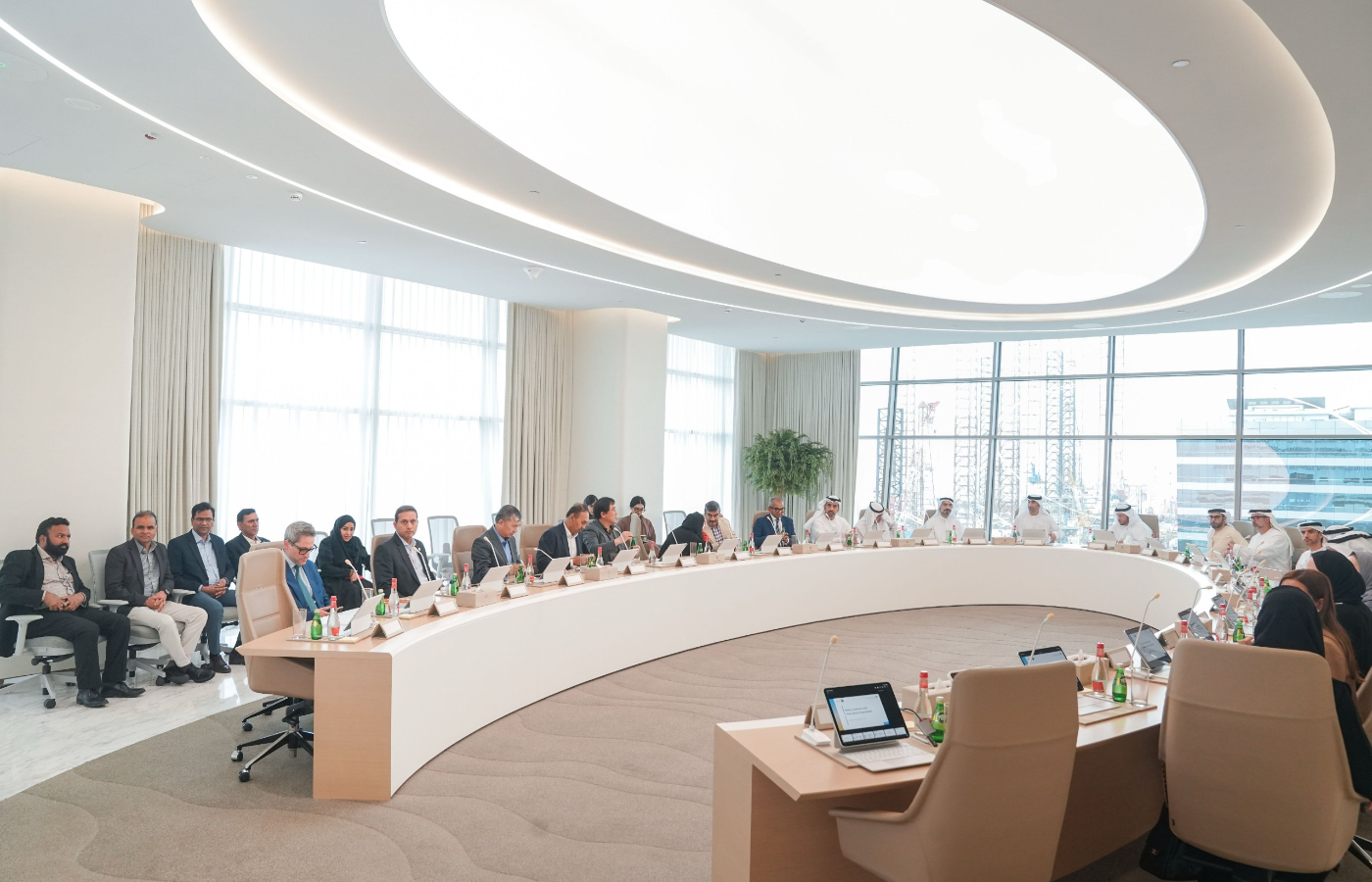
Outlined during a high-level coordination meeting hosted by the Ports, Customs and Free Zone Corporation in Dubai, the measures bring together government officials, global shipping executives and maritime industry representatives seeking to stabilise logistics networks and maintain the uninterrupted movement of goods.
Abdulla Busenad (PhD), Director General of Dubai Customs, said the latest steps are designed to accelerate clearance processes and improve cargo predictability across alternative routes. Central to the effort is Customs Notice No. 6, which enables transit cargo to move through a green corridor with Oman, allowing shipments to bypass congested maritime lanes and continue via land transport.
The corridor introduces pre-clearance mechanisms and bonded transit systems, reducing delays at border points and enabling faster delivery of goods to regional and international markets. Authorities have also expanded engagement with traders through targeted workshops aimed at improving compliance and operational awareness.
Dubai Customs is simultaneously rolling out an Advance Cargo Information system, requiring shipment data to be submitted before arrival to speed up inspection and release procedures. Officials said the system is being deployed in coordination with shipping companies handling green corridor cargo.
In parallel, a new maritime feeder service linking the Gulf with India is being introduced to diversify shipping routes and strengthen connectivity with key trading partners.
Further measures under development include extending the grace period for re-export cargo, expanding participation in secured land transport corridors, and widening the green corridor framework to include Saudi Arabia.
The meeting also reviewed a broader shift towards alternative logistics pathways, including increased use of ports along the UAE’s eastern seaboard such as Port of Fujairah and Port of Khorfakkan. These routes have gained prominence as shipping operators adjust to ongoing regional constraints, supported by expanded multimodal transport solutions integrating land and rail networks.
Thani bin Ahmed Al Zeyoudi (PhD), Minister of Foreign Trade, said the UAE is intensifying coordination with industry stakeholders to maintain trade continuity and reinforce its position as a global logistics hub.
Abdulla bin Damithan (PhD), Chairman of the Ports, Customs and Free Zone Corporation, said collaboration between public and private stakeholders has helped sustain cargo movement despite rising costs and operational complexity, adding that continued coordination will be essential as supply chain pressures persist.
The latest measures point to a stabilising signal across Gulf-linked trade routes that remain central to import continuity, export reliability, and the uninterrupted flow of essential goods. The implications extend to import-dependent economies such as Ethiopia, where external trade is heavily anchored to maritime supply chains routed through Gulf transshipment hubs before reaching the Djibouti corridor, the country’s main trade gateway.
Trade flows between the two countries have expanded steadily over the past decade, with the UAE emerging as a key re-export hub for goods bound for East Africa. The relationship has been underpinned by a series of financial and economic arrangements, including a 3 billion US dollar concessional loan, 17 bilateral agreements signed in 2023, and a currency swap agreement between the National Bank of Ethiopia and the UAE Central Bank in 2024. Cooperation has also extended into skills development and energy, including the “5 Million Ethiopian Coders” initiative and renewable energy partnerships involving Masdar.
In 2023, official data showed that more than 113 UAE-backed investment projects were active in Ethiopia, with a combined value of about 2.9 billion US dollars, while total bilateral trade exceeded 6 billion US dollars.




