

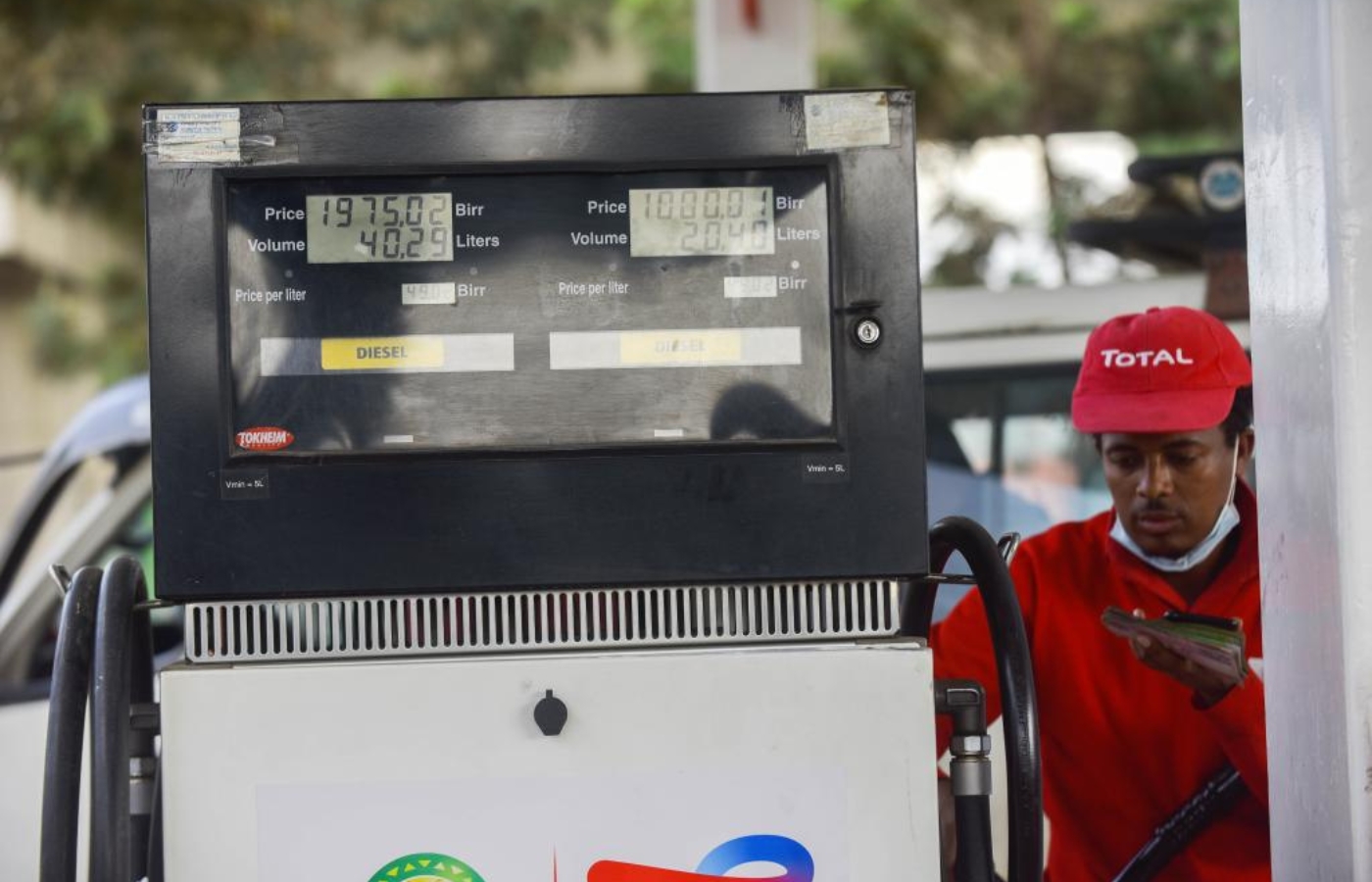
Ethiopia has raised retail fuel prices for the second time in just over a month, pushing petrol to 167.50 birr per litre and white diesel to 180.46 birr per litre, according to the latest price schedule circulated to fuel retailers.
The new adjustment represents a 17.6 percent increase in petrol and a 10.7 percent increase in white diesel from the previous retail prices that took effect on April 1, 2026. The April adjustment had set petrol at 142.41 birr and white diesel at 163.09 birr per litre.
The latest schedule sets the retail price of kerosene at 320.66 birr per litre, more than double the April price of 151.39 birr. Jet fuel has also risen sharply to 319.76 birr per litre, compared with 150.48 birr under the April adjustment.
Under the new retail price schedule, light black diesel is now priced at 170.62 birr per litre, while heavy black diesel is priced at 167.37 birr per litre. In April, light black diesel was priced at 163.98 birr, and heavy black diesel at 160.68 birr per litre.
The sharpest increases are in kerosene and jet fuel. Kerosene, which was priced at 146.14 birr per litre before April, has now risen to 320.66 birr, an increase of 174.52 birr, or about 119 percent, in less than two months. Jet fuel has risen from 145.23 birr to 319.76 birr over the same period.
The April 1 adjustment was made in response to developments in global oil prices, according to reports citing a letter from the Ministry of Trade and Regional Integration. The new prices at the time took effect at midnight on April 1.
The latest increase comes as the government continues to reduce the gap between domestic pump prices and the cost of imported petroleum products.
Ethiopia’s fuel subsidy burden had reached nearly 272 billion birr, while officials said the government was still subsidising about 71 birr per litre of diesel and 32 birr per litre of petrol even after the April price revision.
Fuel prices have now risen substantially since March. Petrol was priced at 132.18 birr per litre before the April adjustment, while white diesel stood at 139.84 birr. That means petrol has increased by 35.32 birr per litre, or about 26.7 percent, since March. White diesel has increased by 40.62 birr, or about 29 percent, over the same period.
The increase is expected to put further pressure on transport costs, freight charges and the prices of basic goods. Diesel is widely used in cargo transport, public transport, agriculture, construction and industry. Higher diesel prices tend to affect the cost of moving goods across the country, including food and construction materials.
The rise in petrol will directly affect private vehicle owners and some commercial transport operators. The surge in kerosene is likely to be more sensitive for low-income households that use it for cooking or lighting, particularly in areas with limited access to reliable electricity or alternative fuels.
The higher jet fuel price could also raise operating costs for the aviation sector, though the impact on fares will depend on how airlines absorb or pass on the additional cost.
Ethiopia imports petroleum products and remains exposed to global oil price movements, foreign exchange availability and import financing pressures. In April, fuel prices had also risen in other African countries as crude costs increased amid supply concerns, with import-dependent economies particularly affected.
The repeated fuel price adjustments point to a difficult policy balance for the Ethiopian government. Maintaining subsidies protects households and businesses from the full impact of global prices but adds pressure to public finances. Faster price adjustments reduce the fiscal burden but risk worsening inflation, transport costs and household living expenses.
The latest adjustment also comes after fuel supply chains were disrupted by the effective closure of the Strait of Hormuz, a key route for Gulf energy exports. The crisis has affected shipments from Kuwait, one of Ethiopia’s main fuel suppliers, forcing the government to rely more heavily on alternative procurement arrangements. Ethiopia has turned to global commodity trader Vitol to help cover delayed supplies under its Kuwait arrangement, a move that helped ease immediate shortages but exposed the country to higher spot-market and logistics costs.
Reports indicate Ethiopia’s long-term Kuwait supply line has faced delays, while the revised Vitol arrangement covers diesel and petrol supply on credit terms, adding further pressure to import costs and the fuel subsidy bill.




