

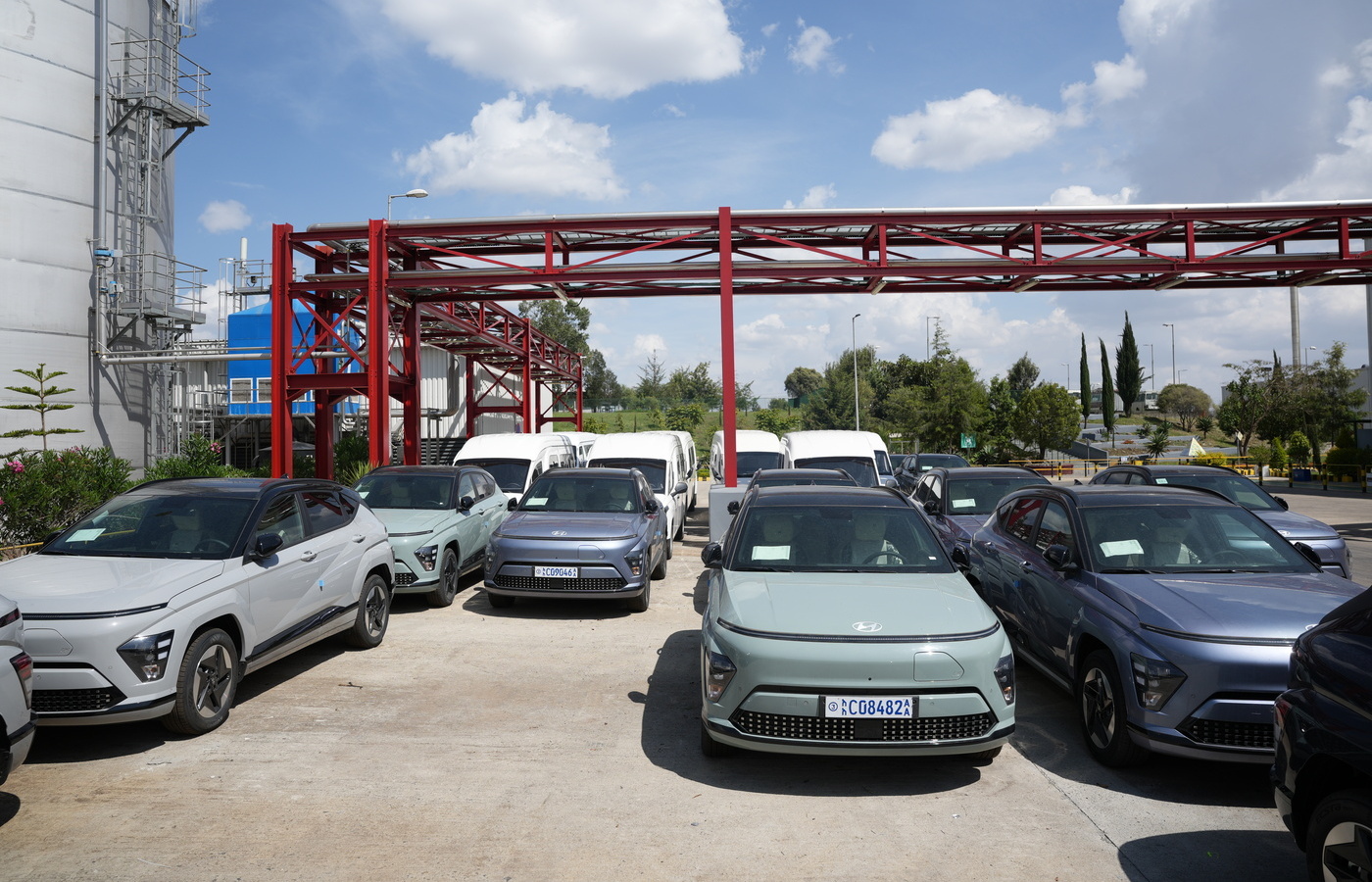
Heineken Ethiopia has invested 392.3 million birr in 65 electric vehicles for its Addis Ababa operations, joining a growing shift by businesses seeking to reduce exposure to volatile global fuel costs and Ethiopia’s mounting fuel-import bill.
The brewer said the electric fleet, assembled locally, is expected to reduce annual carbon emissions by about 6,579 tonnes by replacing older combustion-engine vehicles used across its operations. The company estimates the transition will also cut fuel and maintenance expenses by roughly 32.7 million birr a year.
The move comes as global fuel prices have surged to near-record levels in 2026, driven by supply disruptions linked to geopolitical tensions in the Middle East, tighter export flows, and volatility in major crude benchmarks. Brent crude has traded above 100 US dollars per barrel in recent periods, with analysts citing constrained shipping routes, including the Strait of Hormuz, alongside persistent uncertainty in global energy markets.
Ethiopia responded to the disruptions by awarding a fuel supply tender to Dutch-based energy trader Vitol, as deliveries under its existing government contract with Kuwait were delayed amid global supply chain pressures linked to the conflict.
This led the Eastern African country to raise petrol prices to 167.50 birr per litre and white diesel to 180.46 birr per litre, representing increases of 17.6 percent and 10.7 percent respectively from the previous retail prices that took effect on April 1, 2026.
Birrmetrics reported in April that the crisis has weighed on brewery operations outside Addis Ababa. The managing director, Bart De Keninck, said the beer industry has contracted sharply, with output and activity running at an estimated 30 to 40 percent of normal levels.
Ethiopia is among Africa’s fastest adopters of electric mobility. Rising fuel import costs, foreign exchange shortages and heavy reliance on hydropower have encouraged policymakers to accelerate the shift towards electric transport.
In 2024, the country banned imports of new internal combustion engine vehicles, becoming one of the first countries to take such a step nationally. Authorities have since expanded tax incentives and reduced import duties for electric vehicles while favouring locally assembled models.
The government’s E-Mobility Strategy and Implementation Plan for 2025-2030 targets electric vehicles accounting for 80 percent of newly registered vehicles by the end of the decade. Officials also want 30 percent of new EVs to be assembled or manufactured domestically.
The strategy includes plans to electrify newly registered government vehicles, public transport fleets and two- and three-wheelers, while aiming to put around 500,000 electric vehicles on Ethiopian roads by 2030.
HEINEKEN Ethiopia said the vehicles would initially operate in Addis Ababa, where charging infrastructure has expanded rapidly. Ethiopia plans to install more than 2,200 charging stations nationwide by 2030, including over 1,100 in the capital.
The investment forms part of HEINEKEN’s global “Brew a Better World” sustainability programme and its target to achieve net-zero emissions across its business by 2040. The brewer is also pursuing carbon neutrality in production by 2030 through renewable-energy integration, energy-efficiency upgrades and operational changes.
Corporate fleet electrification is increasingly becoming part of Ethiopia’s economic strategy to ease pressure on foreign-currency reserves long strained by large fuel-import costs. More than a dozen electric vehicle assembly plants are already operating in the country, with further expansion planned.
Heineken Ethiopia said the initiative was implemented with support from Ethiopia’s Ministry of Transport and Logistics, the Addis Ababa Driver and Vehicle Licensing and Control Authority, and officials in Kirkos district.




