

African Reinsurance Corporation (African Re) was conceived in 1976 under the then Organisation of African Unity, following a pan-African agreement led by African governments and the African Development Bank to establish a continent-wide reinsurer aimed at retaining risk and insurance premiums within Africa.
The group began operations with 3.5 million US dollars in paid-up capital. By 1981, authorised capital had risen to 15 million US dollars. Five decades on, as it marks its 50th anniversary in Addis Ababa, the company reports authorised capital of 500 million US dollars and issued capital of 300 million US dollars, while retained earnings have lifted total shareholders’ funds to 1.37 billion US dollars as of end-2025. That places it at close to one-third of the combined equity of more than 50 reinsurance companies operating across the continent.
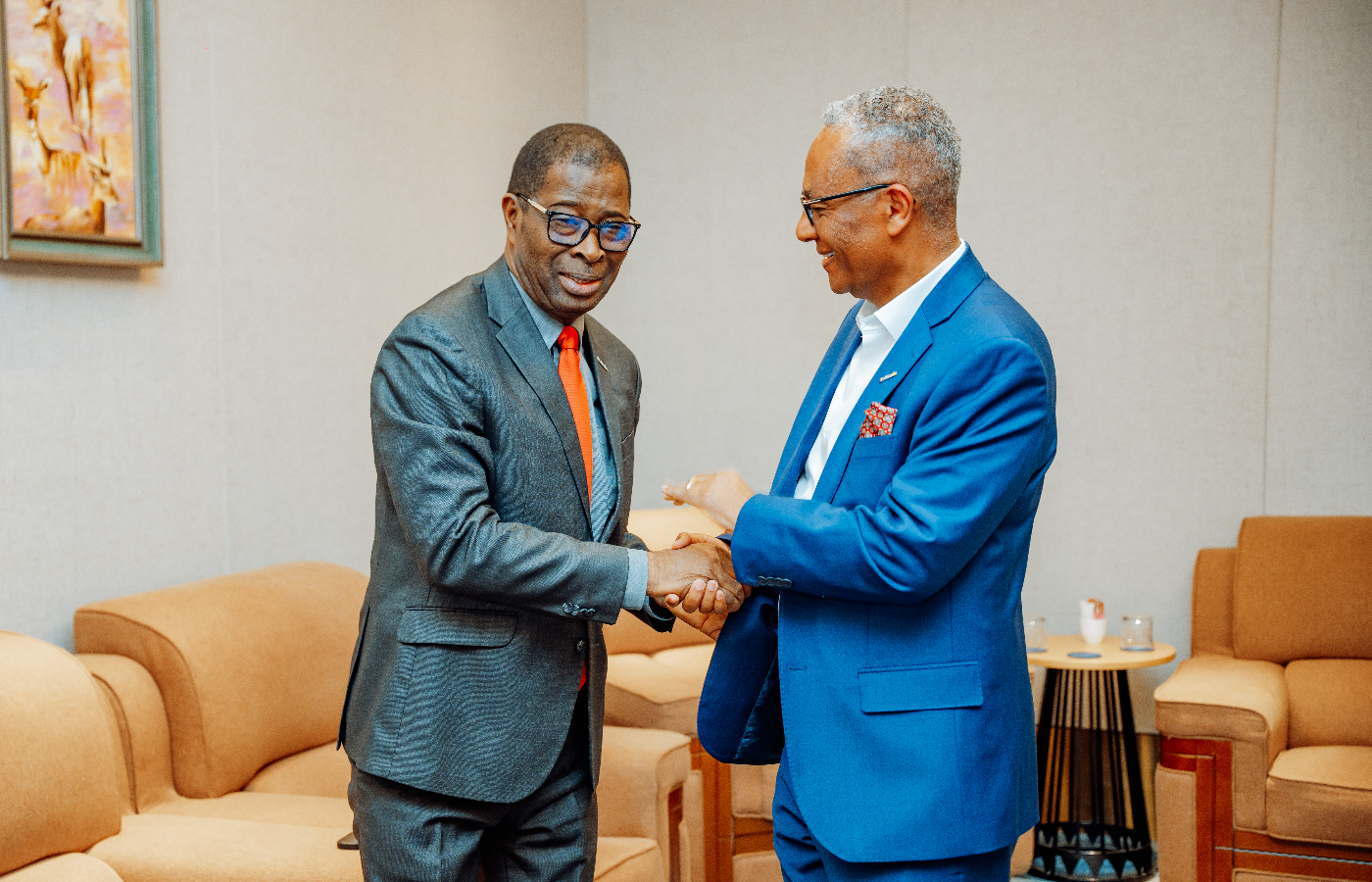
On the sidelines of the anniversary, Birrmetrics’ Mintesinot Nigussie sat down with Moustapha Coulibaly, Chairman of the Board of Directors of Africa Re. He said the institution’s strategic focus is now shifting towards faster scale-up, with targets to significantly expand turnover over the coming years, supported by stronger capital buffers and broader market reach.
He highlighted agriculture, climate-related risks and political risk insurance as fast-growing areas of opportunity, alongside increasing demand from infrastructure and construction-linked coverage as African economies expand. He also pointed to the need for disciplined underwriting, noting that while opportunities are widening, risk selection remains central to profitability and long-term stability.
Moustapha further said Africa Re’s exposure to the Middle East has so far remained limited, with the company maintaining a cautious international underwriting approach. He added that emerging technologies, including artificial intelligence, are expected to improve operational efficiency and risk assessment over the next phase of growth.
Birrmetrics: What have been African Re’s key achievements over the past five decades?
Moustapha: African Re was created in 1976. The headquarters is currently based in Lagos, but we are preparing to move to Abuja in June or July. This follows the completion of our new state-of-the-art headquarters building in Abuja, which is expected to be inaugurated around June 24 or 25, 2026.
African Re is rated by international agencies, including AM Best, a rating agency specialised in reinsurance, as well as Standard & Poor’s and Fitch Ratings. In December 2025, Standard & Poor’s upgraded African Re from “A-” to “A” with a positive outlook. This reflects our position as a key player in the reinsurance industry, not only in Africa but also globally.
As of December 31, 2025, African Re recorded underwriting income of 1.337 billion US dollars. This represents gross income performance, alongside a net profit of 218 million US dollars, the highest level achieved in the company’s history.
We operate through regional offices across Africa and beyond, including Ethiopia, Kenya, Egypt, Morocco, Mauritius, Côte d’Ivoire, and also in Dubai. This allows us to conduct business both within the African continent and internationally.
In terms of human capital development, we are proud to have trained nearly 6,000 young professionals in the insurance industry, including Ethiopians. We sponsor and train them to become operational so they can better serve the insurance companies they work for.
On the investment side, we support and invest in sustainable institutions across the continent to help strengthen them. These include Africa Finance Corporation (AFC) and other entities, as well as initiatives such as Shift Africa in Kenya.
We also operate the Africa Re Foundation, which focuses on supporting national insurance industries across Africa through technical assistance.
Overall, beyond financial performance, one of our key achievements has been the provision of technical support and capacity building to insurance institutions across the continent.
You mentioned earlier that Ethiopia’s contribution to African Re has been growing recently. Could you support that with some figures or examples?
We have an office in Ethiopia that works closely with the local insurance industry. The companies pass business to African Re, which then provides reinsurance coverage.
To explain with an example, if an insurance company in Ethiopia wants to underwrite an asset worth, say, one billion US dollars, it may not have sufficient capacity on its own. Insurance requires adequate capital to cover potential risks. When that capacity is not enough, the company can still accept the business but shares part of the risk through reinsurance.
In such cases, the insurer retains a portion within its own capacity, for example one hundred thousand dollars, and cedes the remaining exposure to African Re. This is what is referred to as reinsurance coverage. In the event of a claim, African Re covers the agreed portion above the local insurer’s retention, allowing the system to function without exposing a single company to excessive risk.
We have been working with the Ethiopian insurance industry on this basis, and the market is gradually developing. We have also held discussions with State Minister of Finance Semereta Sewasew, where we expressed our readiness to support the sector further.
This includes potential technical assistance in areas such as strengthening the life insurance segment, digitising insurance systems, and improving non-life insurance operations.
We conveyed our willingness to provide that support, and the ministry indicated it would follow up with us.
The board has approved a new strategic plan during its 180th board meeting. Could you walk us through its core priorities, and where does Ethiopia sit in that broader strategic map?
The strategic plan we approved today at board level sets a clear ambition for the next phase of the institution. It is anchored on growth and expansion over the coming years.
We are targeting a significant increase in scale, with an objective of reaching around 1 billion US dollars in gross income, which also reflects the value we generate for national insurance companies across the continent, including Ethiopia.
African Re was established in 1976 in Addis Ababa, following discussions at the African Union. The founding vision, supported by the African Development Bank and African leaders, was to create a pan-African reinsurance institution. That vision has shaped what the organisation has become today.
From 1976 to 2025, we have grown to approximately 1.2 billion US dollars in turnover. The board recognises this as a strong foundation, but also sees the need to move further and faster.
Looking ahead, we have set ambitious targets for management. By 2030, in five years, we are aiming for around 2.5 billion US dollars in turnover. Beyond that, the objective is to reach about 5 billion US dollars by 2035. It is a significant step-up, reflecting the scale of ambition we are setting for the organisation.
To achieve this, the strategic plan focuses on several pillars, including market expansion, deeper penetration in key regions, and efficiency gains. We are also looking closely at how technology, particularly artificial intelligence, can improve speed, accuracy and overall operational efficiency.
African Re currently has equity of about 1.8 billion US dollars, with share capital of roughly 300 million US dollars. We also maintain strong reserves, which are essential in the insurance business. A solid capital base allows us to underwrite more business and, in turn, generate higher returns while maintaining stability.
The Middle East crisis is weighing on multiple parts of the economy, with insurance among the most exposed sectors. What has been the effect on your balance sheet so far?
Not much, at least for the time being. We do write business in the Middle East, but our initial assessment shows that the impact has been minimal.
The crisis is still ongoing, so we continue to monitor it closely on a day-to-day basis. But so far, the exposure has not translated into significant losses or claims. This is partly because of our underwriting approach. When we operate internationally, we are very selective. We do not take excessive risk; we focus on sound, well-structured business.
We know the African continent better, so our risk appetite is more familiar there. Outside Africa, we remain open to business, but we are extremely cautious and prudent in our underwriting decisions.
In your view, what has the crisis revealed about Africa’s insurance industry readiness and resilience?
From an insurance perspective, we do underwrite some businesses in Israel through technical partnerships there. These partners engage with us, and we provide reinsurance coverage for those risks. So far, none of the insured exposures have been affected by the crisis, and we continue to monitor the situation on a day-to-day basis.
We also operate through our office in Dubai, which supports our business in the wider Middle East region. Based on the latest assessment, there has been no significant impact and no material claims expected at this stage.
That said, we are watching developments closely. We hope the situation in the Middle East normalises soon, because prolonged instability could eventually affect the broader insurance and reinsurance industry. If insured assets are directly hit, claims would naturally follow.
How do you view the potential of Ethiopia’s insurance market, and what are the main challenges slowing it down?
I think the global insurance industry has good days ahead, with growing opportunities across different segments of the economy.
One area is agriculture. Today, there is increasing demand for insurance coverage for farmers. Agriculture is highly exposed to risks such as droughts and floods. When such events occur, farmers suffer losses in output. If they are insured, insurance companies can indemnify them and help absorb part of the shock.
In turn, those insurance companies often transfer part of the risk to African Re through reinsurance. So there is a clear chain of risk-sharing that supports the system. Agriculture, climate-related risks, as well as political risk and political violence coverage, are all expanding areas. This means there are growing opportunities in the market.
However, insurance is a business that requires selectivity. You cannot take every opportunity that comes. Companies need to be careful, monitor risk closely, and ensure that the business they underwrite is profitable and sustainable. Prudent risk management remains essential.
In Ethiopia’s case, the market is particularly interesting. Over the past 20 years, economic development has been significant. When an economy grows, insurance demand naturally expands.
You see it in construction activity across cities. Buildings, infrastructure, and commercial properties all need insurance. Construction risks exist, and even completed buildings may face damage or collapse. Insurance becomes a necessary safeguard.
Commercial spaces, offices, and residential buildings also need coverage, whether for fire, flood, or other risks. Companies should also insure their staff as part of broader corporate protection.
Overall, Ethiopia’s growing economy creates more space for insurance penetration. There is sufficient capacity within Africa to support this growth.
One of the main constraints, however, is the level of support from local authorities and administration. The insurance sector often requires a supportive regulatory and policy environment to expand effectively. Areas such as taxation, if well structured, can help stimulate industry growth.
There is also significant untapped potential in public-sector insurance. Governments, by nature, are not insurance specialists, but they own buildings, vehicles, and state enterprises that require coverage. This represents a major opportunity if properly structured.
In that sense, government can act as a catalyst for the insurance industry. A stronger insurance sector would also create more jobs, build technical skills, and expand professional capacity.
Through initiatives such as the Africa Re Foundation’s Young Professional Programme, we are also working to train the next generation of insurance professionals so they can better serve the industry.




