

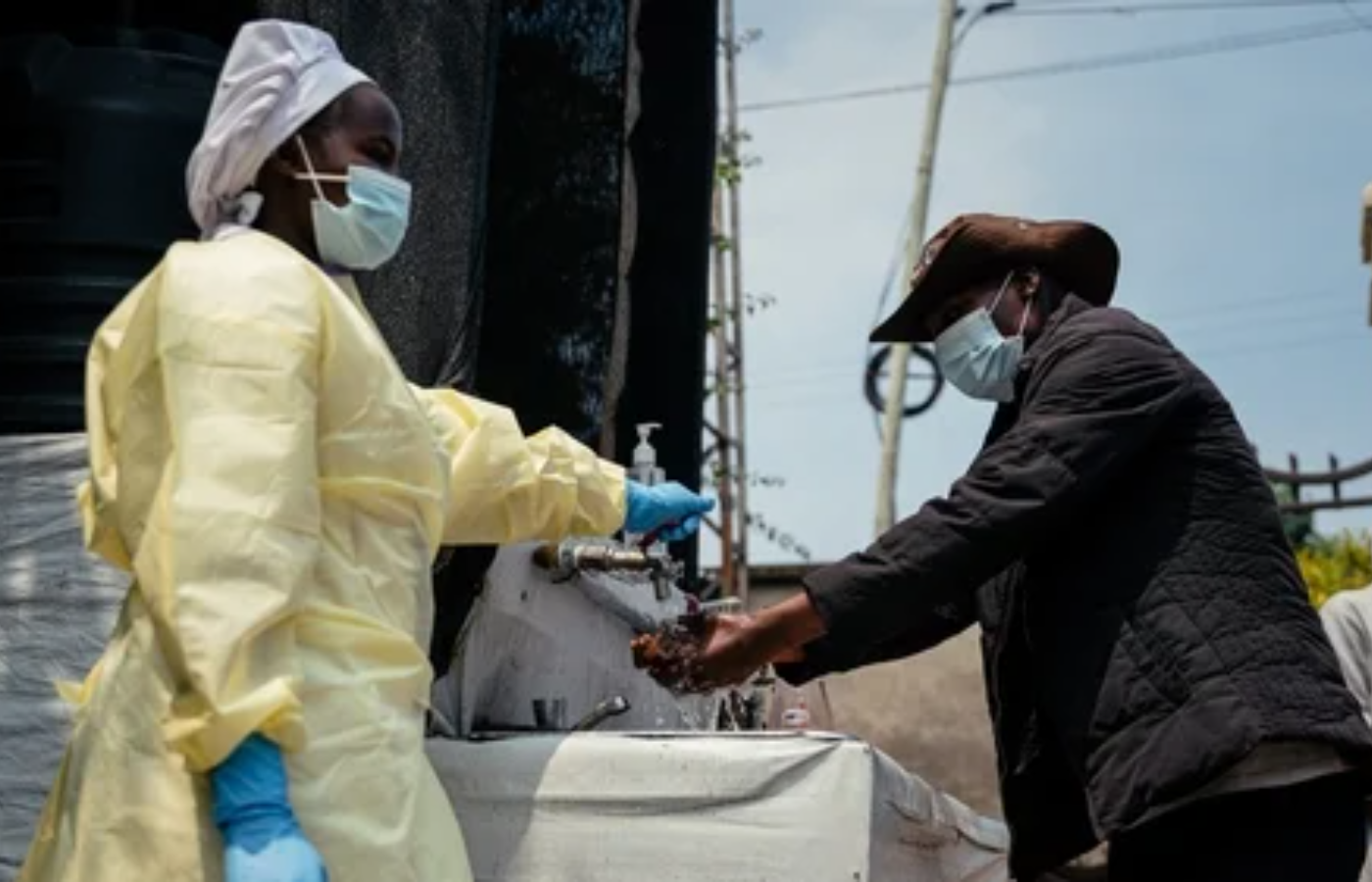
The Africa Centres for Disease Control and Prevention has declared a Public Health Emergency of Continental Security over the Bundibugyo ebolavirus outbreak spreading across the Democratic Republic of the Congo and Uganda, elevating the response to its highest continental coordination level amid rising cross border transmission risks.
The declaration follows recommendations from the agency’s Emergency Consultative Group after reviewing epidemiological trends, regional mobility patterns and operational constraints. It formally activates Africa CDC’s mandate to coordinate large scale health emergencies across member states.
As of May 18, 2026, health authorities had recorded about 395 suspected cases and 106 deaths in the Democratic Republic of the Congo, with clusters reported in Mongwalu, Rwampara and the Bunia health zones. In Uganda, two confirmed cases and one death have been reported in Kampala.
Africa CDC said the risk of wider regional spread remains high due to population movement linked to mining activity, insecurity in affected areas, weak infection prevention systems and the occurrence of community deaths outside formal health facilities. The agency also pointed to the proximity of affected zones to Rwanda and South Sudan as a key concern for further transmission.
Dr Jean Kaseya, director general of Africa CDC, said the decision was intended to accelerate coordinated action across the continent. “Today, we declare this PHECS to mobilise our institutions, our collective will, and our resources to act swiftly and decisively,” he said. “Africa’s health security is indivisible. We must act early, act together, and act based on science.”
He added that the declaration would strengthen surveillance systems, expand laboratory capacity, and support rapid deployment of emergency response teams in affected and neighbouring countries.
The Africa CDC said it is working jointly with the World Health Organization to activate a coordinated Incident Management Support Team, based on a unified operational structure to streamline response activities across countries.
Emergency teams have already been deployed, including specialists in epidemiology, infection prevention and control, laboratory systems, logistics and risk communication. The agency has also mobilised two million US dollars in initial funding to support containment measures.
The response is complicated by the limited availability of validated vaccines and therapeutics for Bundibugyo ebolavirus disease. Africa CDC said it is working with partners, including the UNICEF and the World Health Organization, to assess potential medical countermeasures and support operational research.
Professor Salim Abdool Karim, chair of the Emergency Consultative Group, said the outbreak required urgent coordination across borders. “The interconnected nature of transmission between DRC and Uganda, combined with insecurity and population movement, requires urgent coordinated continental action,” he said.
Ebola is a severe viral disease transmitted through direct contact with bodily fluids of infected individuals or contaminated materials. Health authorities emphasise that rapid isolation, contact tracing, infection prevention and safe burial practices remain central to controlling the outbreak.
Africa CDC said it will continue to issue updates as new epidemiological and laboratory data becomes available, while urging heightened preparedness in countries at risk of spillover transmission.




