

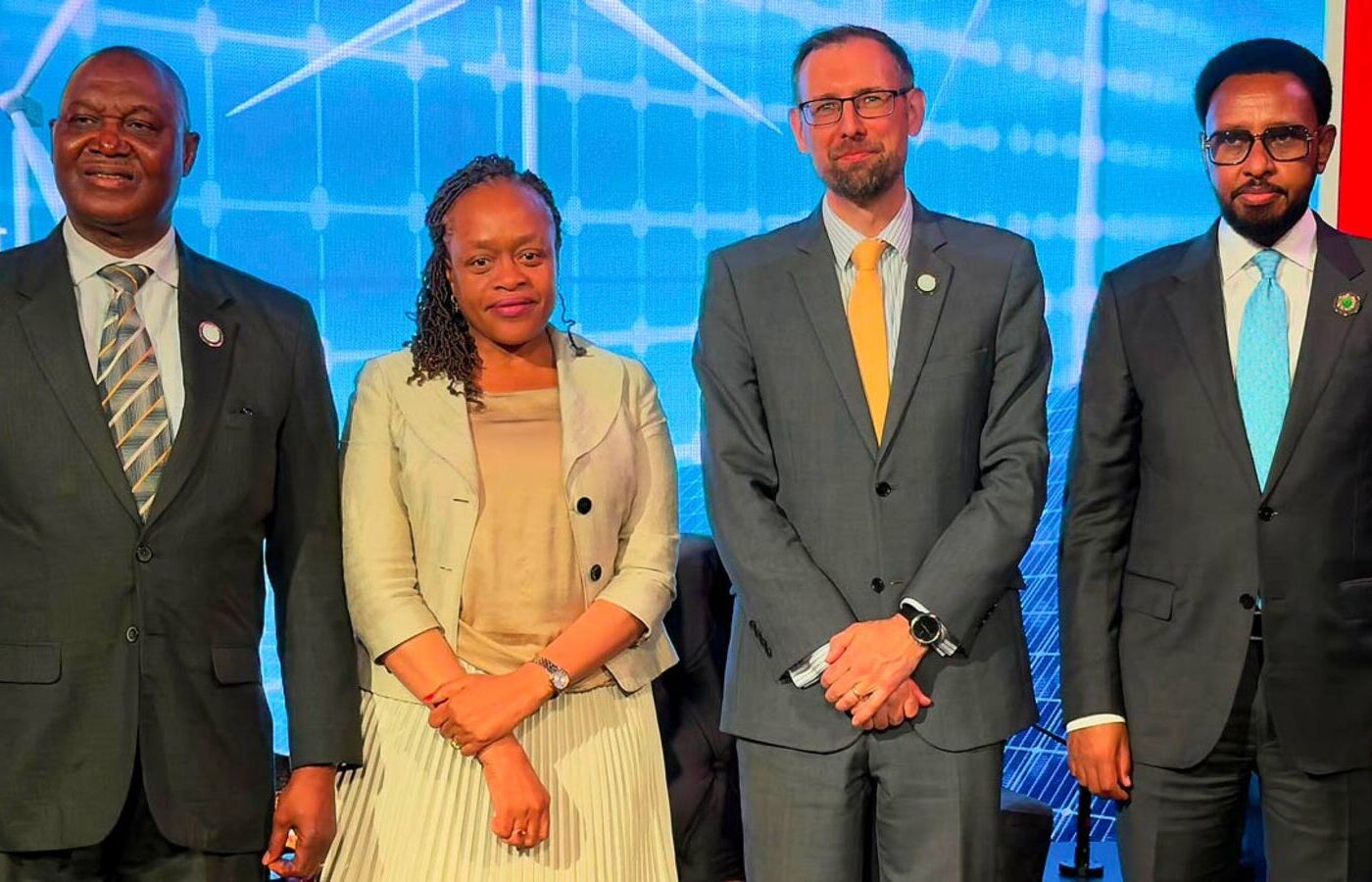
The African Development Bank and the World Economic Forum launched a new framework aimed at steering private capital into Africa’s most fragile and underserved economies, in an effort to narrow the continent’s persistent development financing gap.
The initiative, known as the Humanitarian and Resilience Investing (HRI) Roadmap for Africa, is designed to mobilise commercial and catalytic investment into frontier markets and transition states where structural risks have historically limited private sector participation. It promotes a coordinated, country-led approach intended to improve how development finance and private capital interact in high-risk environments.
Africa’s financing constraints remain significant. The continent faces an estimated annual development funding gap of about 400 billion US dollars. Despite accounting for roughly 17 percent of the global population, Africa attracts only 3.5 percent of global foreign direct investment and less than 2 percent of global venture capital, a disparity that has widened amid tightening aid flows and shifting global economic conditions.
Pilot programmes under the roadmap are already being implemented in Liberia, Somalia, Mozambique and Djibouti, where the initiative is being tested in fragile and transition contexts.
Speaking on behalf of African Development Bank Group President Dr Sidi Ould Tah, Senior Vice President Marie-Laure Akin-Olugbade said the initiative signals a shift in development strategy. She said it represents a move from aid dependency toward investment-led development, adding that public finance should act as a catalyst rather than a substitute for private capital.
The World Economic Forum’s Managing Director Sheba Crocker said the roadmap is intended to shift the focus from short-term relief to long-term investment in vulnerable communities. She said the framework, developed with more than 100 partners, is designed to reduce fragmentation and strengthen coordination in frontier markets.
A technical session following the launch brought together officials and development finance actors, including Somalia’s Finance Minister Bihi Iman Egeh, UK Foreign, Commonwealth and Development Office representative Chris Bold, and IFAD Director for East and Southern Africa Sara Mbago-Bhunu.
Egeh said Somalia’s main constraint is not entrepreneurship but limited access to risk-sharing mechanisms and correspondent banking services. Mbago-Bhunu highlighted integrated solutions combining finance, digital tools and infrastructure, citing initiatives such as a digital voucher programme with Kenyan commercial banks to support smallholder farmers.
Bold said development finance institutions are increasing their focus on fragile states through concessional funding, adding that regulatory reforms are as important as capital in unlocking markets. He pointed to Kenya’s M-Pesa mobile money system as an example of how policy shifts can enable financial inclusion.
The African Development Bank said the roadmap integrates climate resilience and gender inclusion as core pillars and aligns with its strategic framework, the Four Cardinal Points, as well as the New African Financial Architecture for Development endorsed under the Abidjan Consensus in April 2026.
It also aligns with the Bank’s Affirmative Finance Action for Women in Africa programme, which has disbursed 1.33 billion US dollars to women-led businesses across 45 countries.
The Bank’s Chief Fragility and Resilience Economist, Bumi Camara, presented the roadmap’s technical design and implementation structure during the session, outlining its application across fragile and transition economies.




