

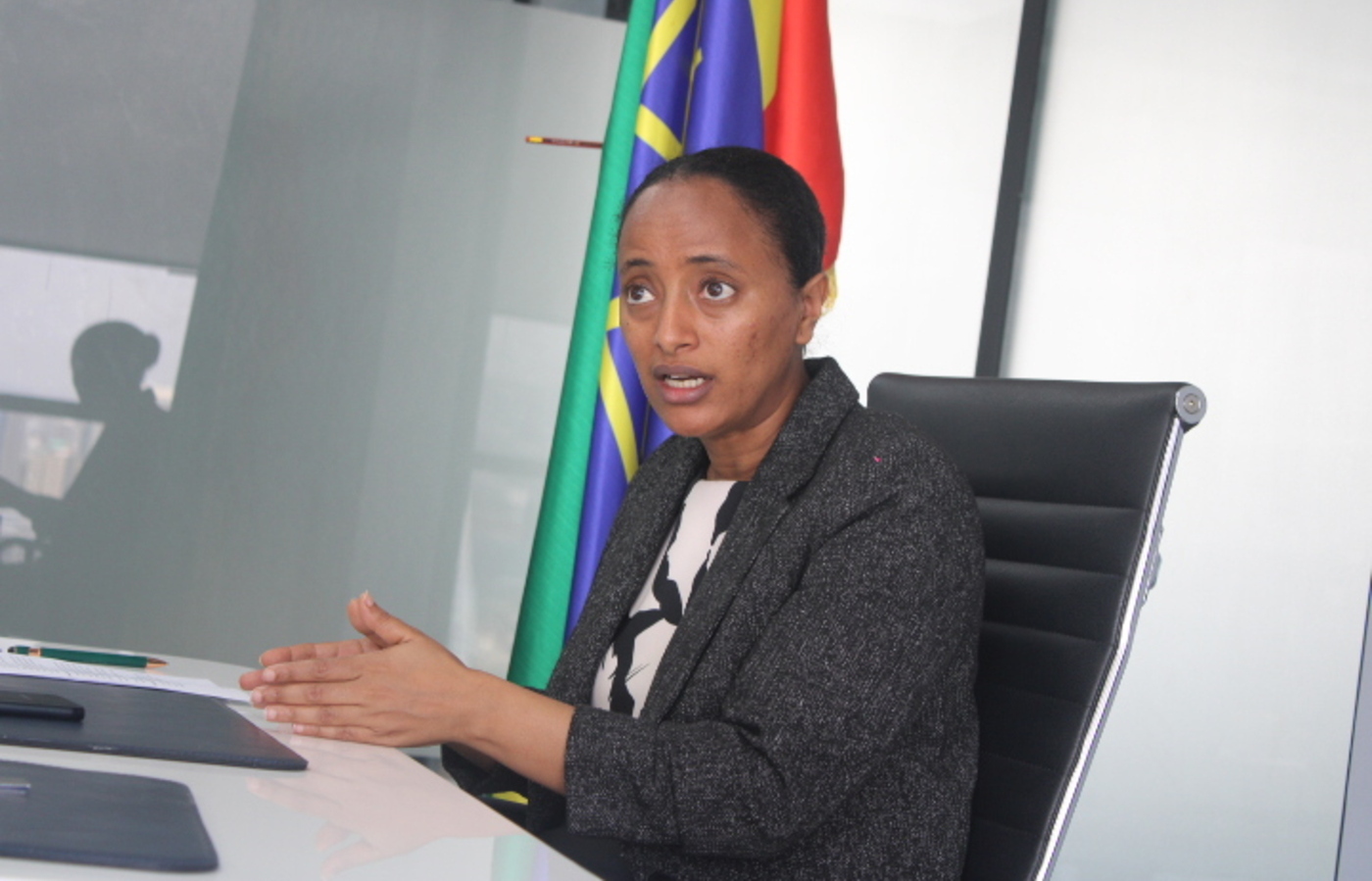
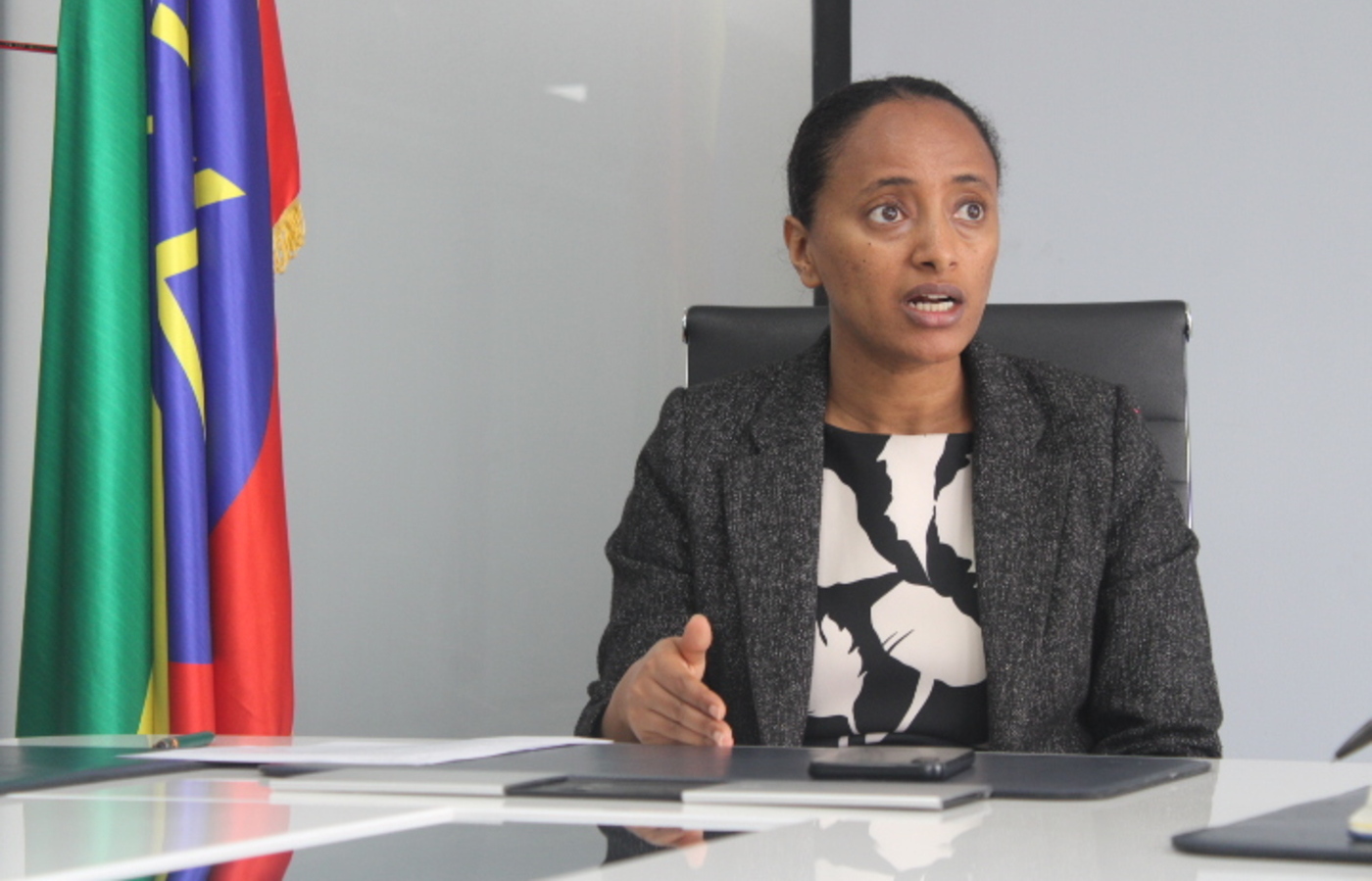
Hana Tehelku, Director General of the Ethiopian Capital Market Authority, presides over one of Africa’s youngest capital markets as it moves from regulation to activation. Appointed in August 2024, as the first woman director, she previously served as Legal Counsel at ECMA and held senior roles at the Ministry of Justice’s Economic Crime and Anti-Corruption Directorates. Hana has since expanded the pool of licensed intermediaries to sixteen capital market service providers, including investment banks, securities dealers and advisers, widening the infrastructure needed for a functioning market.
Hana highlighted the potential of green finance, explaining that Ethiopia is preparing sustainable financial instruments aligned with national development priorities, with a focus on attracting diverse participants and supporting climate-related investments. She emphasised transparency, credible oversight, and institutional capacity-building as essential to fostering investor confidence. As told to Mintesinot Nigussie of Birrmetrics, she stressed that these steps are critical as the market matures and prepares to attract both local and international investors.
Birrmetrics: To begin on a more personal note, could you share a little about your own journey? From your early days as Legal Counsel at the ECMA to leading economic crime prosecutions at the Ministry of Justice, what experiences or moments first sparked your passion for building strong financial institutions in Ethiopia?
Hana: After joining the Ethiopian Capital Market Authority as Legal Counsel, I was appointed Director General within just three months. My early career involved investigating financial crimes, corruption, and tax-related offences in the banking sector, which gave me a strong foundation in understanding the challenges facing our financial institutions. Transitioning to the capital market was a steep learning curve, as it is dynamic and constantly evolving. The most significant moment for me has been the pace at which I immersed myself in the sector. In less than two years, I familiarised myself with its complexities by working closely with my team, engaging with peer regulators and industry experts, and attending international courses.
What is it like to design a financial system for one of Africa’s fastest-growing and most populous nations, and what has been the most rewarding or inspiring part of your role as Director General so far?
I am no stranger to public service. I have spent over a decade serving the community since graduating. But this role is different, it goes beyond enforcing rules or ensuring compliance. It is about proactively building a financial system that can benefit the country and its people on a much broader scale. Much of our work today focuses on introducing products and transactions that align with Ethiopia’s development priorities, helping to channel the financial system toward supporting national growth.
ECMA has been developing regulations for sustainable financial products. How far has that initiative progressed, when could the market see its first green bond issuance, and what factors are proving most difficult in bringing issuers on board?
When we talk about thematic products, such as sustainable financial products, they serve two main purposes. First, they aim to attract a diverse range of participants. A capital market cannot develop depth or liquidity if only a single type of investor is active. Second, these products are structured to align with the country’s national development priorities, ensuring that the growth of the market directly supports Ethiopia’s broader economic objectives.
Building on this, one of our first steps in advancing sustainable finance was to conduct a scoping study on feasible green and sustainable financial instruments in Ethiopia. The study found that there is strong government commitment, as well as policy alignment across institutions, and that green financial products are viable in the Ethiopian context. However, further work is needed before these products can be fully introduced.
One key area is the development of sustainability reporting guidelines. We are currently working on these guidelines to help companies understand the disclosure requirements and standards they must meet to be recognised as green. This will also play an important role in preventing greenwashing, where companies claim to be environmentally sustainable at the time of public offering but fail to maintain those standards over time. The guidelines have been drafted and are now under discussion with relevant stakeholders.
Ultimately, what matters is translating these efforts into actual transactions. To support this, we have engaged consultants in partnership with UNDP. Their work focuses on three areas: supporting selected companies to issue green bonds, building sustainable capacity across market participants, and developing reporting standards and templates. The aim is to equip market players with the knowledge and experience needed to operate independently as the market matures.
As Ethiopia prepares to host COP32, we expect sustainable financial instruments to be launched ahead of the event.
The regulatory sandbox for innovative financial instruments has been active since 2024. Can you share details on any active pilots, approved participants, or early lessons learned across areas such as green finance, carbon credits, sustainability-linked products, or ESG-linked securities?
So far, none of the applications we have received are aligned with green or sustainable finance. The instruments currently being tested in the regulatory sandbox focus on broader market development. These include crowdfunding platforms, digital sub-brokerage, Real Estate Investment Funds (REIF), and Collective Investment Schemes (CIS). but we are also working on the carbon market to be introduced.
At the same time, we are actively preparing for the introduction of a carbon market. Staff recently completed training with peer regulators to understand how such a market can be launched and effectively regulated in Ethiopia.
One key lesson from our engagement with startups is that regulatory flexibility must be maintained. We have also learned how to strengthen both the authority and the product development process. These interactions have shown us how startups are working to align their products with the needs and structure of the capital market.
Moreover, we have realised that we do not always need to wait for a long time to regulate a product. For example, with crowdfunding, we are moving quickly to put regulations in place, as it provides immediate support to startups and SMEs.
Ethiopia is frequently classified among the world’s most climate-vulnerable economies. From the Authority’s engagement with investors, does this perception discourage private capital, or does it strengthen the case for climate-focused investment in the country?
I see climate vulnerability as a unique opportunity for the capital market. By developing financial products that specifically address climate-related risks, we can pool impact investors even in a context of limited global capital liquidity. The key is to design these products so they directly align with areas of high climate vulnerability. Globally, the shift toward green finance is accelerating. Some countries even cover transaction costs for institutions transitioning from brown to green activities, treating these costs as strategic investments in sustainability.
Ethiopia is preparing to host COP32 next year. Based on your work with local businesses, how ready are they to attract climate finance and build long-term partnerships, and what practical steps should they take now to make the most of this opportunity?
Local businesses can be ready to attract climate finance, though historically there has been limited legal and regulatory experience for institutions in this area. The progress made since the establishment of the Ethiopian Capital Market Authority demonstrates that the market is gradually maturing and adapting.
Businesses should be supported in strengthening corporate governance, effectively implementing the ESG directive, and understanding the principles and opportunities of green finance. Another critical element is de-risking through credit enhancement tools. Guarantee facilities, for example, can reduce perceived risk, lower financing and insurance costs, and improve transparency in transactions. When a transaction is backed by a credible credit rating guarantee, the market tends to reflect that rating, which helps attract investors and mobilize capital more efficiently.
To attract international climate finance, businesses must explore alternative funding sources beyond traditional channels. Simultaneously, lenders should adapt their strategies to keep pace with the increasing diversity of financial products emerging in the Ethiopian market. Financial institutions are well-positioned to take the lead in facilitating access to climate finance and must build the necessary expertise to meet the expectations of both domestic and international investors.
For instance, when a company prepares to list with the regulator, it may need to raise funds from licensed private equity and venture capital firms. Some of these investors may have an impact focus, so financial institutions should study the investment landscape carefully and develop products that align with their priorities and interests.
Another critical point is the role of the regulator. Lessons from peer regulators show that when the regulator supports a first issuance and it proves credible, investor confidence in the market grows. This means the regulator must actively support the pipeline as a major initiative. The government also has an important role to play by taking the lead as an issuer.
Ethiopia’s climate finance is still largely driven by international public funding, with private capital contributing only about eight percent. You recently mentioned tax incentives and credit enhancements to attract private investment. What specific incentives are being considered, and what is the expected quantum of additional private climate finance it could unlock annually by 2030?
We have shared several studies with stakeholders to guide policy decisions and help structure tax frameworks that encourage financial products aligned with the national development program. Under the Income Tax Proclamation No. 1395/2025, a number of tax law amendments have been introduced, particularly affecting our sector. These developments indicate that the government is open to providing tax and other incentives, provided that studies demonstrate the potential benefits for the country.
Broadly speaking, however, the primary incentive for investors is clarity and predictability. When companies provide transparent disclosures and communicate clearly about costs and risks, investors can factor these into their decision-making. In Ethiopia, this has improved in recent years through economic liberalization, the establishment of the capital market, and major national development initiatives, all of which have strengthened investor confidence.
Another important factor is the reform of the financial sector and institutional investors, including pension funds. For international investors to participate, there needs to be a strong local investor base that can act as an anchor. In many countries, pension funds fulfill this role by providing stable, long-term capital that signals confidence to other investors. When they invest in local products, it demonstrates trust in the market and encourages international participation.
Fortunately, Ethiopia not only has pension funds but also a sovereign wealth fund, which is the largest in Africa. The challenge now is how to mobilize these resources and channel them into productive investments. If domestic institutional investors actively allocate capital to local financial products, it creates a credible signal that can attract international investors.

In your previous interview, you mentioned that international rating agencies don’t fully capture Africa’s realities. What led you to that view, and how is ECMA working with them to present a more accurate picture of Ethiopia and the region?
Credit ratings are a critical component of the capital market, serving as a tool of trust between issuers and investors. However, African issuers are often underestimated by international rating agencies, making access to capital costly and increasing the risk premium. There has been discussion about the need for a pan-African rating agency. I agree, but I see such an agency primarily as an alternative narrative provider. It would offer investors a different perspective on the continent, allowing them to compare views and make more informed decisions.
At the same time, it could encourage African investors who are currently hesitant, providing them with confidence to invest in the continent if ratings were available from a regional, locally grounded institution.
In Ethiopia’s capital market, rating agencies follow two main approaches. The first is to establish a full-fledged credit rating company that continuously assesses the overall creditworthiness of issuers. The second is to provide transaction-specific ratings or approvals, evaluating a particular financial instrument on its own merits rather than the issuer as a whole. This approach allows both local and international companies operating in Ethiopia to gain credibility for their instruments while they build a longer track record in the market.
In green finance, the equivalent of a conventional credit rating is a Second Party Opinion (SPO), which provides independent verification of a project or instrument’s alignment with environmental, social, and governance (ESG) or sustainability criteria.
Inflation's drop to single digits offers breathing room, yet analysts still model Ethiopia with elevated risk premia due to structural factors. How might ECMA innovate risk-pricing tools to help banks and analysts better quantify "Ethiopia premium" compression as the market deepens?
Looking at ECMA’s organisational structure, our chair is the Governor of the National Bank of Ethiopia. For this and other reasons, we work closely with the central bank. Macroeconomic factors such as inflation, foreign exchange volatility, and T-bill rates play a major role in pricing capital market instruments. To account for this, we consider the inflation rate and also use periodic reports from the interbank money market, which effectively serve as a yield curve for bond pricing.




