

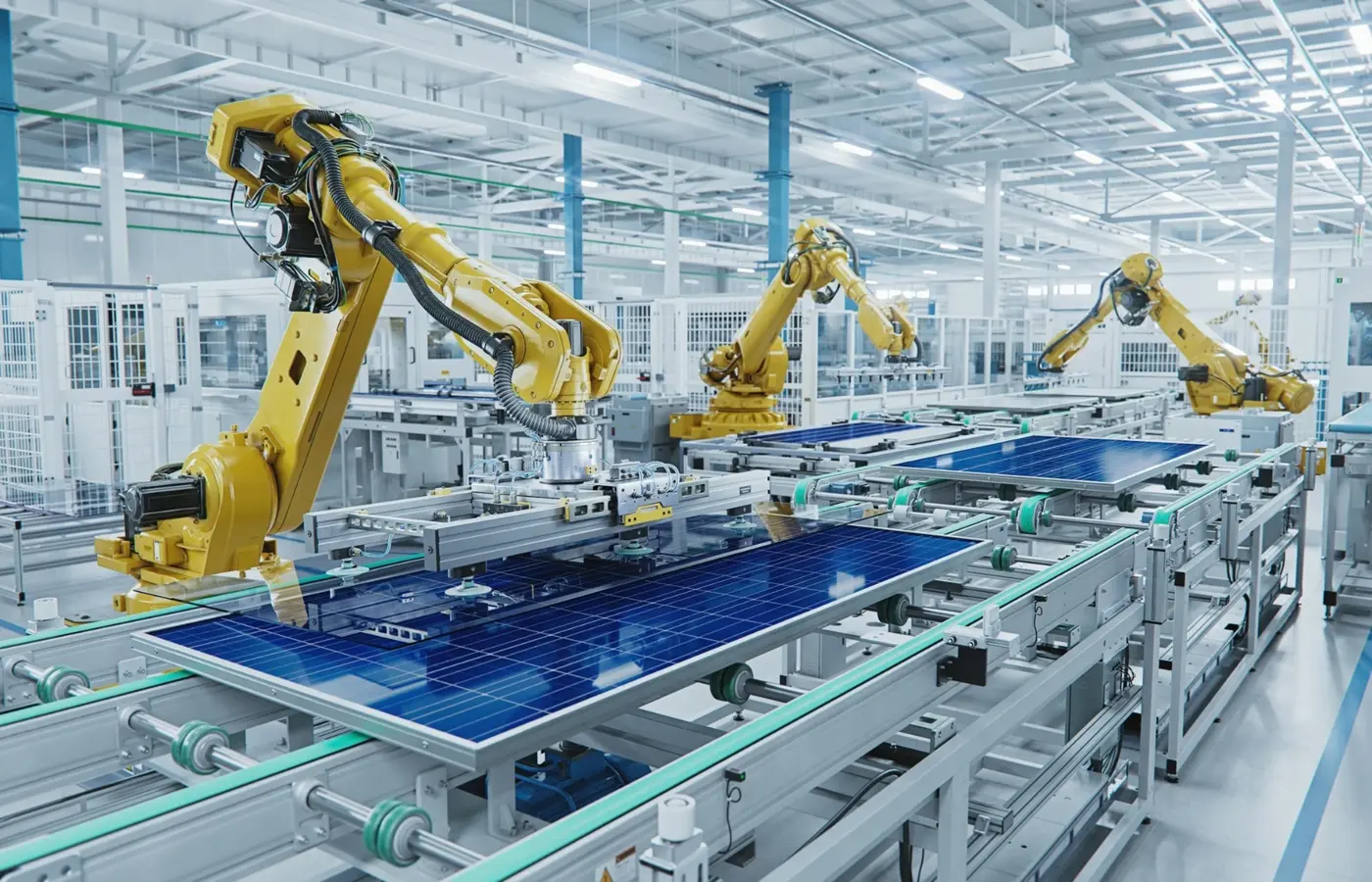
Ethiopia’s sudden rise as a solar photovoltaic cell exporter has drawn scrutiny from US manufacturers, raising questions over whether the country’s emerging renewable-energy manufacturing base is being used to bypass American tariffs on Chinese-linked solar components.
According to a report by fDi Intelligence, citing Customs Commission’s statistics through Trade Data Monitor, Ethiopia exported 99.2 million US dollars worth of photovoltaic cells between January and May 2026. That marks a tenfold increase from the 9.8 million US dollars exported during the same period in 2025.
The surge has made solar cells Ethiopia’s fourth-largest export commodity so far this year and the only non-agricultural product among the country’s top ten exports by value. For a country long dependent on coffee, oilseeds, flowers and gold, the rise of solar cells appears to support Prime Minister Abiy Ahmed’s ambition to push Ethiopia toward industrialisation and higher-value exports.
But the boom has also placed Ethiopia at the centre of a widening global trade dispute.
On May 12, eight US solar-panel manufacturers asked the US Department of Commerce to investigate whether Ethiopia is being used as an export platform to circumvent anti-dumping and countervailing duty orders imposed on Chinese solar products. The petition reportedly names Origin Solar Manufacturing, owned by Singapore-based Zeto Holding, and Japan’s Toyo Solar, alleging that Chinese wafers and components are being routed through limited manufacturing operations in Ethiopia before finished products are shipped to the US.
The companies deny wrongdoing. Toyo Solar has argued that its Ethiopian operations involve genuine manufacturing and that the accusations are based on assumptions drawn from trade flows rather than evidence of illegal conduct. The company says its polysilicon is sourced outside China and that cell processing takes place at its Ethiopian facility.
The issue has already sparked debate among investment and energy-sector observers. In a LinkedIn post responding to the fDi Intelligence report, Henok Assefa, a seasoned consultant in energy and investment, described the case as a sign of how difficult it has become for developing countries to climb into high-value global industries. He argued that Africa is being asked to industrialise while facing the very trade barriers and geopolitical pressures that make industrial upgrading harder.
His point captures the dilemma facing Ethiopia. Solar manufacturing offers the country a rare opportunity to enter a high-value renewable-energy supply chain, attract foreign investment, create jobs and make use of its low-cost renewable power. Yet the sector is deeply exposed to global trade politics because China dominates much of the solar value chain, from polysilicon and wafers to cells, modules and production equipment.
A negative ruling could weaken investor confidence just as the country is trying to position itself as an African manufacturing hub. It could also raise doubts among investors looking at Africa as a base for clean-energy manufacturing.
Ethiopia’s solar export boom has given the country a glimpse of what industrial diversification could look like.




