

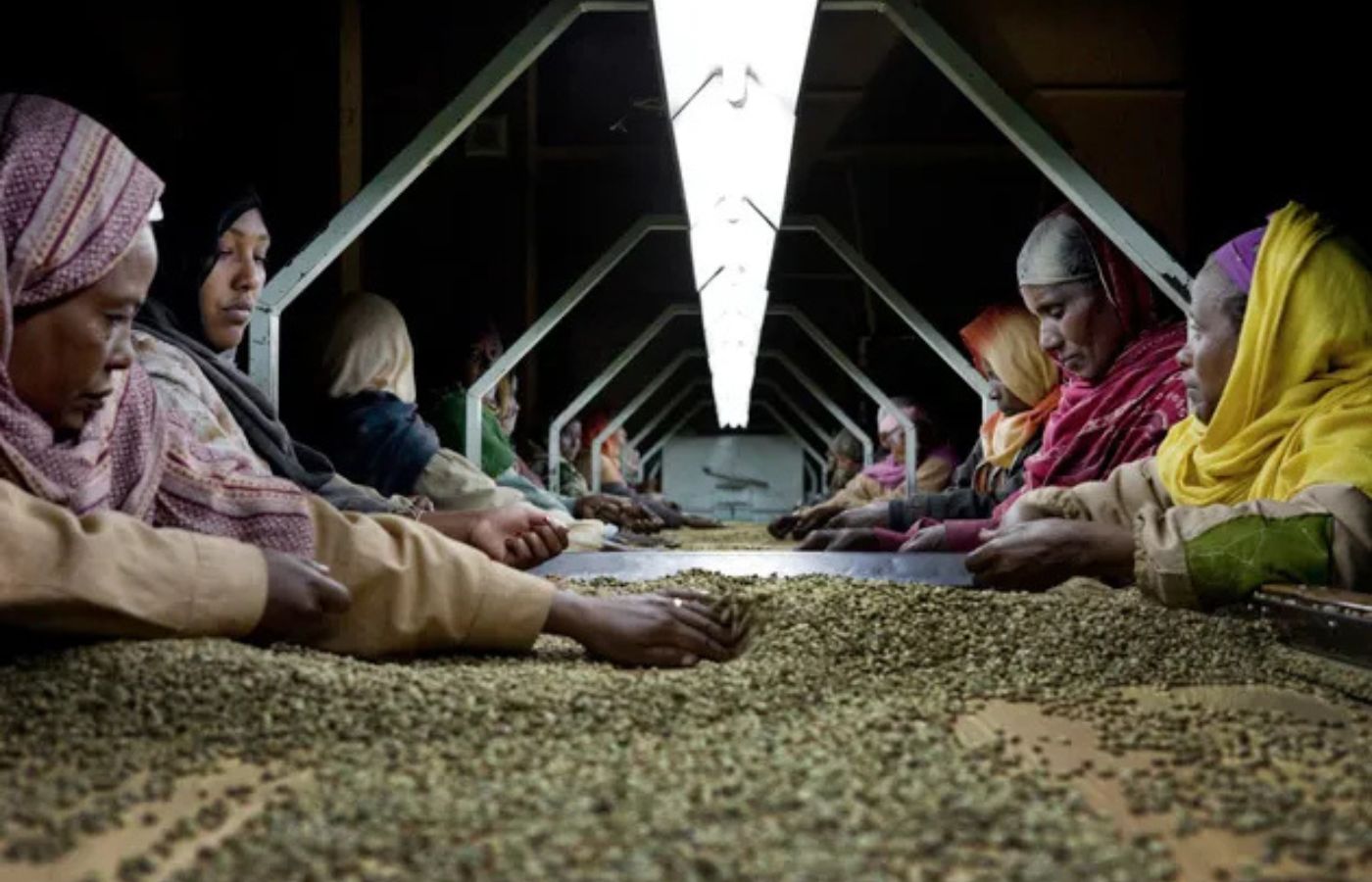
Ethiopian coffee exports declined in April 2026 as global Arabica prices softened and supply expectations improved, according to the International Coffee Organization’s monthly report.
The fall was most pronounced in the “Other Milds” category, where global green bean shipments edged down 1.1 percent to 2.31 million bags. Ethiopia and Guatemala were the main contributors, with combined exports dropping 26.1 percent to 0.48 million bags from 0.65 million a year earlier. The decline came even as Honduras posted gains that partially offset losses in the segment.
The year-on-year contraction reflects a high comparison base. In April 2025, Ethiopian exporters had accelerated shipments and drawn down stocks to capitalise on elevated prices. The ICO Composite Indicator Price averaged 337.43 US cents per pound between January and April 2025, compared with 190.43 US cents per pound a year earlier, pushing exports to unusually high levels.
“Despite the year-on-year decline, it should be noted that the April 2026 exports constituted Ethiopia’s second-largest April export volume on record,” the report says.
In the “Brazilian Naturals” segment, combined shipments from Ethiopia and Indonesia fell 17.9 percent in April. This contributed to a broader 14.8 percent decline in global exports in the category to 2.92 million bags. Brazil also recorded a 15.7 percent drop in natural Arabica shipments, adding further pressure to the segment. Overall, African coffee exports fell 22.1 percent to 1.54 million bags from 1.98 million a year earlier.
Global coffee prices eased during the period as supply prospects improved. The ICO Composite Indicator Price averaged 256.05 US cents per pound in May 2026, down 3.8 percent from April. The decline followed an upward revision in Brazil’s production outlook, with the national supply agency projecting a 2026 to 27 crop of 66.7 million bags, including a 28 percent rise in Arabica output to 45.8 million bags.
Price relationships across Arabica grades also shifted. The premium between Colombian Milds and Other Milds widened from 3.34 US cents per pound to 8.03 US cents per pound between April and May. The gap between Colombian Milds and Brazilian Naturals increased 42.9 percent to 29.72 US cents per pound.
Robusta markets moved in the opposite direction. Global shipments rose 11.2 percent in April to 4.5 million bags, supported by record exports from Viet Nam, which increased 12.1 percent to 3.41 million bags. Brazil and Uganda also recorded gains.
Robusta prices edged higher, while Arabica futures declined, narrowing the price premium between the two varieties. New York Arabica futures fell 5.8 percent to 268.18 US cents per pound, while London Robusta futures rose slightly to 151.79 US cents per pound.
Logistical constraints also continued to influence trade flows. Ongoing disruptions in the Red Sea corridor have forced vessels to reroute via the Cape of Good Hope, increasing shipping times and costs. As a result, roasters have increased physical procurement in advance, keeping spot premiums firm despite weaker futures markets.
Certified coffee inventories continued to decline. US Arabica stocks fell 13.5 percent in May to 0.48 million bags, while Robusta stocks in London edged down to 0.64 million bags.
Market attention is now focused on weather risks. The National Oceanic and Atmospheric Administration has placed an 82 percent probability on an El Niño event between May and July 2026, including a 67 percent chance of a stronger phase. While the impact on Brazil remains uncertain, the development has added caution to market sentiment.




