

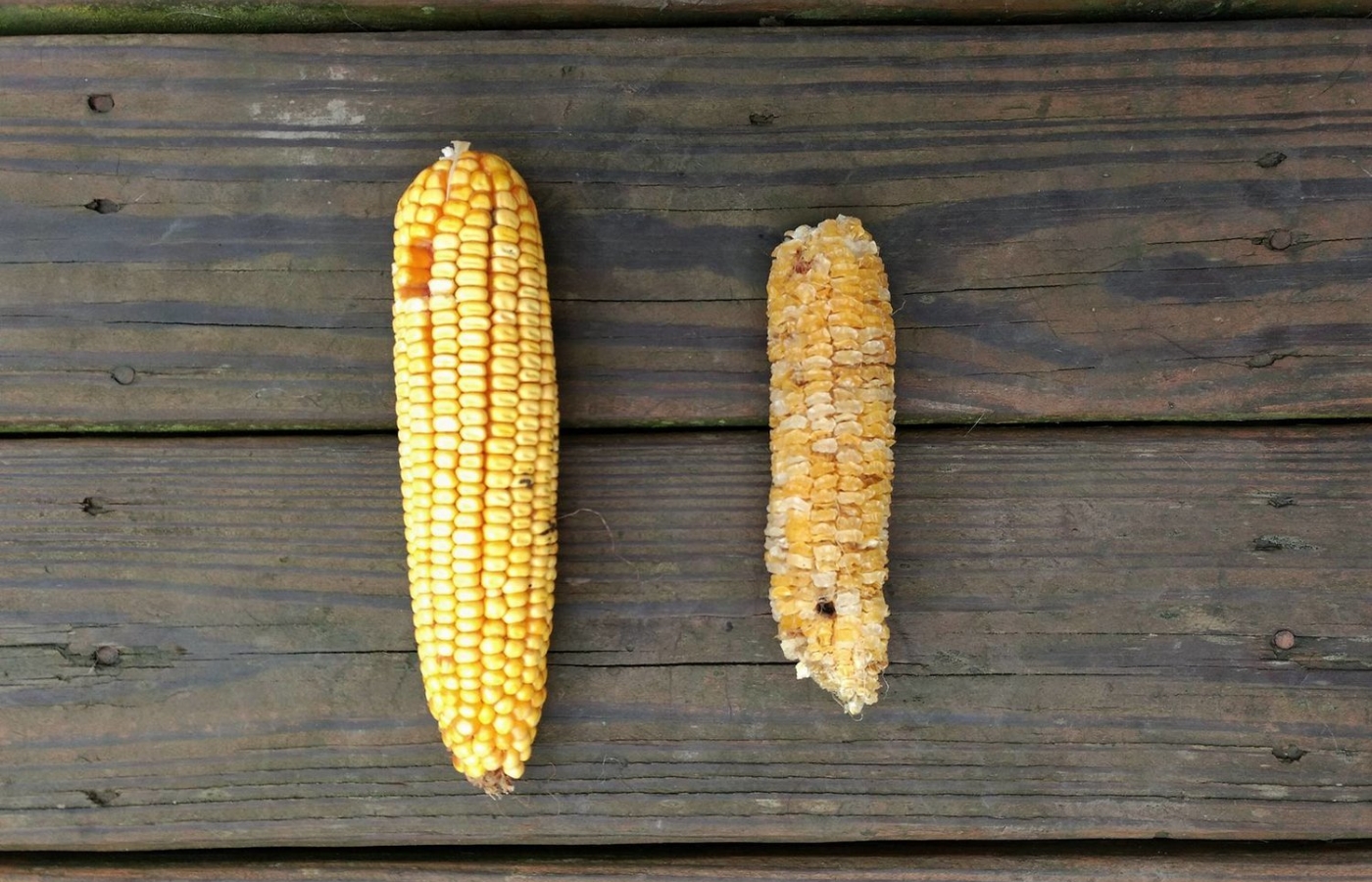
At research plots in Melkassa, Bako and Wondogenet, a question that has followed the country’s agriculture policy for more than two decades has been given physical form in rows of maize: can a seed engineered to withstand drought and pests help farmers produce more food, or will it bind them to a new system of dependency they do not control?
That question is no longer theoretical. In February 2025, the National Variety Release Committee approved the commercial release of three TELA maize hybrids, making maize the country’s first genetically engineered food and feed crop. Unlike Bt cotton, which entered commercial cultivation in 2018 as an industrial crop, maize sits at the centre of household consumption, food prices and rural livelihoods. Local maize production was projected at about 10.2 million metric tonnes in the 2024/25 season, and smallholder farmers dominate its cultivation. The GMO debate has therefore moved from the textile supply chain into the national food system.
This shift has revived one of the most polarising questions in agriculture: after years of prohibition and caution, should the country embrace genetically modified organisms as tools of agricultural transformation, or does doing so risk trading ecological and economic autonomy for the uncertain promise of higher yields?
The technology itself is no longer new. Biotech crops were first planted commercially in 1996, when six countries planted 1.7 million hectares. Since then, more than 70 countries have planted or imported biotech crops. Yet the local debate remains unsettled, partly because the argument has rarely been grounded in a full public audit of what has already happened since Bt cotton was introduced.
The stakes are high. Agriculture still carries a large share of the economy. The National Bank’s 2023/24 annual report put agriculture’s share of GDP at 31.8 percent, while crop production accounted for 66.7 percent of agricultural production. That makes any technology promising higher yields politically attractive, especially as drought, pests, soil degradation, foreign currency shortages and weak input systems continue to test the limits of conventional farming.
Yet the question is not whether science can produce a stronger seed. It can. The harder question is whether the country has the institutions, farmer support systems, monitoring capacity and public trust needed to govern that seed after it leaves the research station.
“We have established the legal and institutional infrastructure to manage this technology responsibly,” says Tesfaye Desisa (PhD), a senior researcher at the Ethiopian Institute of Agricultural Research. “Our farmers deserve options. This must be a decision driven by our own empirical research, not by external pressure or ideological posturing.”
The legal shift that made this possible began in 2015. The original Biosafety Proclamation No. 655/2009 created a restrictive framework for modified organisms. The 2015 amendment opened the door for broader field trials and commercial cultivation. More recently, the country issued guidelines for genome-edited plant products and genetically modified plants with stacked genes. By 2025, the regulatory system had moved from prohibition to cautious commercialisation, approving TELA maize and a new Bt-GT cotton hybrid.
For proponents, this is overdue. They argue that the country can no longer afford to reject tools that may help farmers cope with drought and destructive pests. TELA maize is engineered for insect resistance and drought tolerance. According to USDA reporting on the approval, national performance trials showed yield increases of up to 60 percent compared with conventional varieties. The same report says the hybrids provide strong protection against stem borers and partial protection against fall armyworm, two pests that have caused serious crop losses.
Professor Frew Mekbib, a respected voice in agricultural and environmental research, argues that the data from domestic trials should not be dismissed. “Cotton production was in crisis,” he recalls. “Pests had destroyed both yield and quality. The introduction of Bt cotton has proven effective. Similarly, a maize variety engineered for drought and pest resistance demonstrated a 56 percent increase in yield during trials.”
But the country’s first GMO experience also shows why trial results alone cannot settle the debate.
Bt cotton was approved for environmental release in May 2018, becoming the first commercial biotech crop in the country. Two hybrids, JKCH 1050 and JKCH 1947, were introduced from India to fight bollworm. EIAR studies cited by USDA reported seed cotton yields of 3.06 tonnes per hectare and 3.05 tonnes per hectare, respectively, and found that both hybrids resisted bollworm. But the same assessment noted that their overall agronomic performance was lower than newly released conventional cotton varieties. That nuance matters: a crop can solve one problem, such as pest pressure, while still falling short on other commercial traits.
The rollout also exposed weaknesses in the seed system. In 2019/20, farmers planted Bt cotton on around 300 hectares using seed sourced from JK Agri Genetics in India. A year later, farmers reportedly planted 7,100 hectares using cheaper genetically engineered seed bought informally near the Sudan border, without official seed certification. The reason was not ideology. It was cost, foreign currency shortage and access.
This is where critics locate their strongest argument. Their concern is not only whether the seed works, but who controls it, who pays for it, who monitors it and what happens when farmers cannot access certified seed through formal channels.
Yisehak Melese, a prominent environmental advocate, sees the embrace of GMOs not as a pragmatic breakthrough but as a dangerous policy drift. “The narrative that it increases yield is a managerial sleight of hand,” he says. “What it ultimately creates is corporate dependency.”
For critics like Yisehak, the technology cannot be separated from the global politics of agribusiness. They point to Africa’s earlier experience with Bt cotton, especially Burkina Faso. Once celebrated as a success story, Burkina Faso phased out Bt cotton in 2016 after cotton companies complained that fibre quality had declined, damaging the country’s export reputation. The lesson is not that every GM crop will fail, but that pest resistance alone is not enough. Fibre quality, local breeding, market standards and governance can determine whether the technology succeeds or collapses.
That lesson is especially relevant for cotton. A genetically modified cotton variety that kills bollworm but fails textile-quality requirements cannot transform the textile industry. A maize variety that performs well in trials but cannot be multiplied, distributed, labelled and monitored properly will not transform food security either.
The maize case is more sensitive because it is food. Global health authorities generally do not treat approved GM foods as inherently unsafe. The World Health Organization says GM foods currently available on the international market have passed safety assessments and are not likely to pose risks to human health, while Codex Alimentarius principles require risk analysis and safety assessment on a case-by-case basis. That is an important distinction. The scientific mainstream is not saying every GM product should be accepted without scrutiny. It is saying each product must be assessed transparently, with risk management proportionate to the evidence.
Ethiopia’s own law recognises the same principle. Biosafety Proclamation No. 655/2009 requires advance informed agreement before any transaction involving modified organisms. It also requires risk assessment, public participation, labelling in Amharic and English, inspection powers and access to information through a national biosafety clearing-house. The law even prohibits vague labels such as “may contain modified organisms”, requiring clearer identification.
But there remains a gap between law on paper and governance in the field. A 2021 USDA biotechnology report said the country did not have a special policy on coexistence between genetically engineered and conventional crops, and did not have uniform monitoring and testing mechanisms to detect GE products. It also noted that mandatory labelling exists to protect consumers’ right to know. Those are not minor technical details. They are central to public trust.
The biodiversity question also requires precision. Ethiopia is not simply another agricultural market. It is one of the world’s important centres of crop diversity. It is a centre of origin for crops such as teff, coffee, sorghum and enset, and a centre of diversity for crops including wheat, barley, Ethiopian mustard, chickpea, lentil and finger millet. That does not automatically mean every GM crop threatens local biodiversity. Maize, for instance, is not indigenous to Ethiopia in the same way teff or enset is. But it does mean the regulatory standard must be higher when biotechnology moves into crops with deep local genetic, cultural or food-security significance.
This is why the debate should not be reduced to pro-science versus anti-science. The better question is governance. Are trial results independently verified? Are farmers told what the seed can and cannot do? Are seed prices transparent? Are royalty-free claims enforceable over time? Are farmers free to choose non-GM alternatives? Are labelling rules meaningful in informal food markets? Are regulators funded enough to monitor gene flow, resistance and post-release effects?
The TELA maize approval offers both promise and warning. The project is structured as a public-private partnership led by EIAR and the African Agricultural Technology Foundation, with the aim of making drought-tolerant and pest-resistant maize available royalty-free through domestic seed enterprises. That weakens the simplest version of the “corporate capture” argument. But royalty-free does not mean dependency-free. Hybrid maize normally requires fresh seed purchases to maintain performance, and the success of the technology will depend on local seed multiplication, quality control, extension support and farmer economics.
Best practice from other countries suggests that commercial release should be treated as the beginning of regulation, not the end. Insect-resistant crops require refuge planting, where farmers grow non-Bt plants nearby to slow the evolution of resistant insects. They also require post-release monitoring, public reporting, seed traceability, clear labelling, farmer education and independent impact assessment. Without these systems, the crop may work for a few seasons before pests adapt, public trust erodes or informal seed channels take over.
This is where both sides of the argument unexpectedly meet.
Professor Frew, despite supporting the technology, says an independent assessment is overdue. “Whether the introduction of GMOs has truly brought about the anticipated changes in agriculture, industry and food self-sufficiency is a question that requires independent, impartial study,” he says. Yisehak, despite his opposition, also calls for transparent evaluation. “We need a clear-eyed look at the actual changes brought about by this technology,” he says.
The next phase of the GMO debate should begin where the first one never properly did: with evidence from the fields already planted. Bt cotton has had enough time to be judged not by promise, but by record. Did farmers make more money? Did pesticide use fall? Did certified seed reach them through formal channels? Did fibre quality improve? Did textile manufacturers benefit? If the answer is mixed, the public deserves to know how and why. If the answer is positive, it should be proven beyond institutional optimism.
TELA maize raises the stakes further. Cotton could be treated as an industrial experiment. Maize cannot. It is food, income, politics and household security in one crop. Its approval therefore demands more than regulatory clearance. It requires a system that can track seed movement, monitor resistance, enforce labelling, protect consumer choice and compare the new hybrids against the best non-GM alternatives under ordinary farm conditions.
That is where Ethiopia’s GMO debate will finally become concrete. Not in the language of salvation or surrender, but in the quieter evidence of harvests, costs, choices and control. A seed may arrive carrying the promise of science, but its political meaning is decided later: by who owns it, who benefits from it, who bears its risks, and who has the power to say no.




