

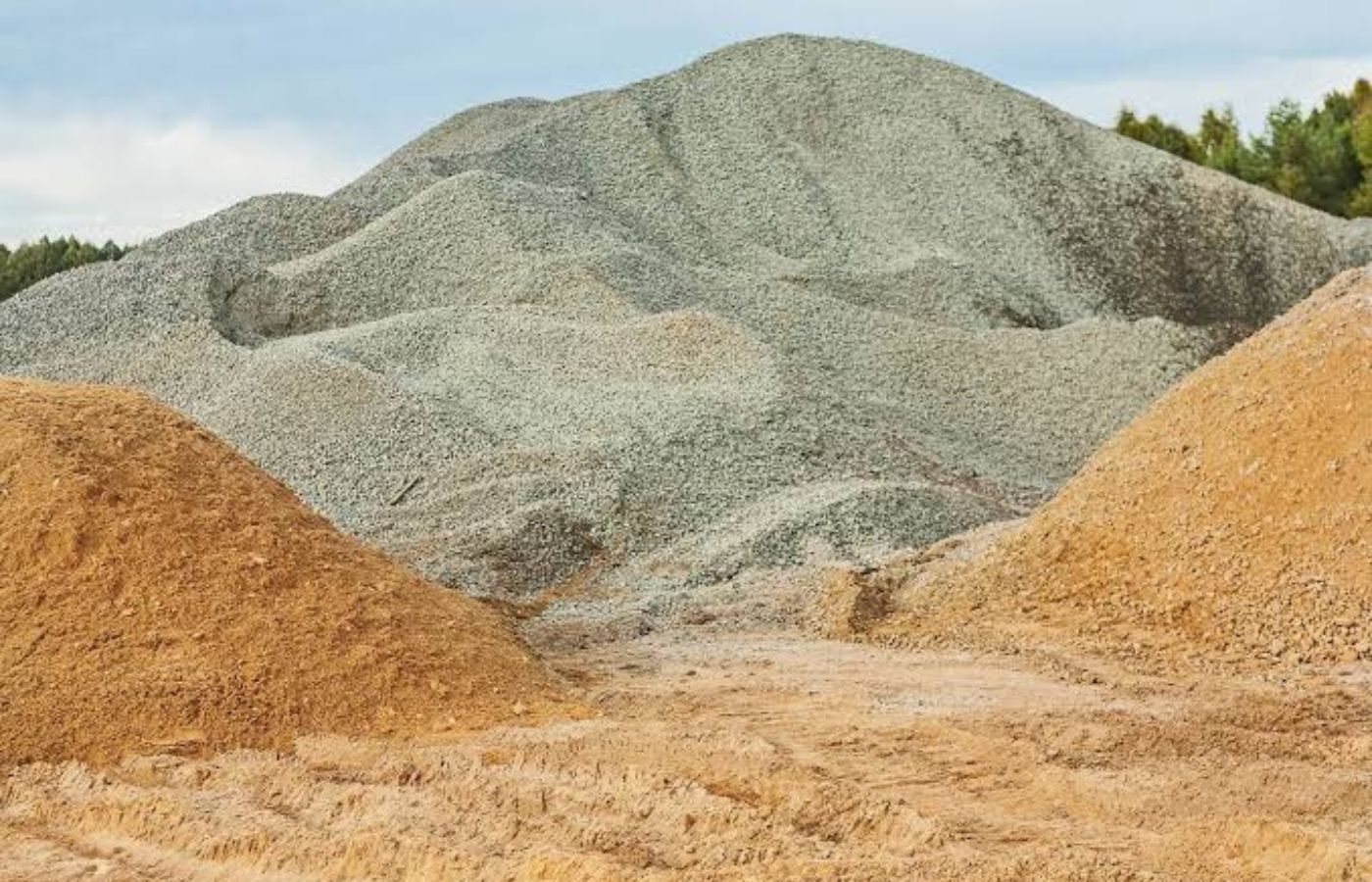
Addis Ababa has introduced a new licensing system for producers of sand, gravel, stone and other construction minerals, requiring businesses and individuals to secure government approval before extracting or selling building materials as the city seeks tighter control over a critical supply chain.
The Addis Ababa City Administration Environmental Protection Authority issued Construction Minerals Licensing Directive No. 191/2026, establishing new requirements for the production, processing and distribution of construction materials within the capital.
The directive applies to individuals, associations, private companies and government institutions involved in producing construction minerals, including black stone, gravel, red sand, red soil, white masonry stone and river sand.
Under the new rules, operators must obtain licences before engaging in commercial production, selling minerals, supplying materials for government development projects, lifting previously produced materials or installing mineral processing machinery.
The authority said the directive aims to improve the sustainable management of limited natural resources, strengthen transparency in mineral licensing and create an information system to map and manage construction mineral deposits across Addis Ababa.
The introduction of the licensing framework comes as demand for construction inputs continues to rise due to the city’s expanding housing, infrastructure and urban development activities.
Companies and individuals seeking construction mineral licences will be required to submit ownership or land-use documents, feasibility studies and approved environmental impact assessment reports.
The directive also requires operators to provide financial guarantees to cover possible environmental damage identified during environmental assessments.
Licensed producers must submit quarterly operational reports, monthly income reports and annual rehabilitation plans outlining measures to restore areas affected by mining activities.
The authority will use the reporting requirements to monitor production activities, improve regulatory oversight and maintain records of operators across the city.
The directive introduces restrictions on mineral extraction in environmentally and socially sensitive areas.
Licences will not be issued for mining activities in areas reserved for cemeteries, religious sites, historical heritage locations, infrastructure corridors, protected areas and national parks.
Mining operations will also be prohibited within specified distances of residential villages, industrial parks, infrastructure utilities, electricity transmission lines and riverbanks.
The directive prohibits mineral extraction within 500 metres of residential villages, industrial parks and infrastructure utilities, 25 metres of electricity transmission lines and 30 metres of riverbanks.
The validity period of licences will depend on the type of construction mineral activity.
Black stone mining licences can be issued for up to five years, subject to annual renewal. Licences for aggregate, sand and white stone production will be issued for a maximum of two years and will also require yearly renewal.
Product lifting licences will remain valid for up to three months, while machinery installation licences will have the same validity period as the related mining production licence.
The directive strengthens enforcement against unlicensed mining and mineral sales conducted without official invoices.
The Environmental Protection Authority and sub-city administrations will be responsible for monitoring illegal operations, supervising licensed producers and reporting violations.
Sub-city offices will also collect information on mineral operators and submit reports to the central authority, which will maintain a registration system containing approved and rejected licence applications.
The directive also allows legal landholders to extract and use construction minerals from their own property for non-commercial construction purposes without obtaining a licence or paying related fees.
The new framework marks a shift towards formalising Addis Ababa’s construction mineral sector by placing producers under licensing, reporting and environmental compliance requirements as the city manages growing demand for building materials.




