

The African Trade & Investment Development Insurance recorded a 20 percent increase in annual profit in 2025, significantly outpacing the growth of its insured portfolio as demand for protection against political and payment risks remained high across Africa.
ATIDI’s profit rose to 71.4 million US dollars from 59.5 million US dollars a year earlier, while its total exposure increased by only about 3 percent, from 8.9 billion US dollars to 9.2 billion US dollars.
Total assets climbed 20 percent to exceed one billion US dollars for the first time, reaching 1.06 billion US dollars, while shareholders’ equity increased 12 percent to 883 million US dollars.
The results show the growing financial strength of Africa’s main multilateral political and credit risk insurer. They also expose the scale of the financing challenge the institution was created to address.
Africa faces an annual development financing gap estimated at more than 400 billion US dollars, even though the continent holds nearly 4 trillion US dollars in pension assets, insurance funds and central bank reserves. Much of that capital continues to be invested outside Africa because projects on the continent are frequently considered too risky or expensive to finance.
ATIDI uses political risk, credit insurance and guarantee products to protect lenders and investors against risks including government non-payment, currency transfer restrictions, expropriation, political violence and breach of contract.
Its expanding profitability comes as African governments and development institutions argue that the risks associated with investing on the continent are often overstated, raising borrowing costs and preventing otherwise viable projects from securing financing.
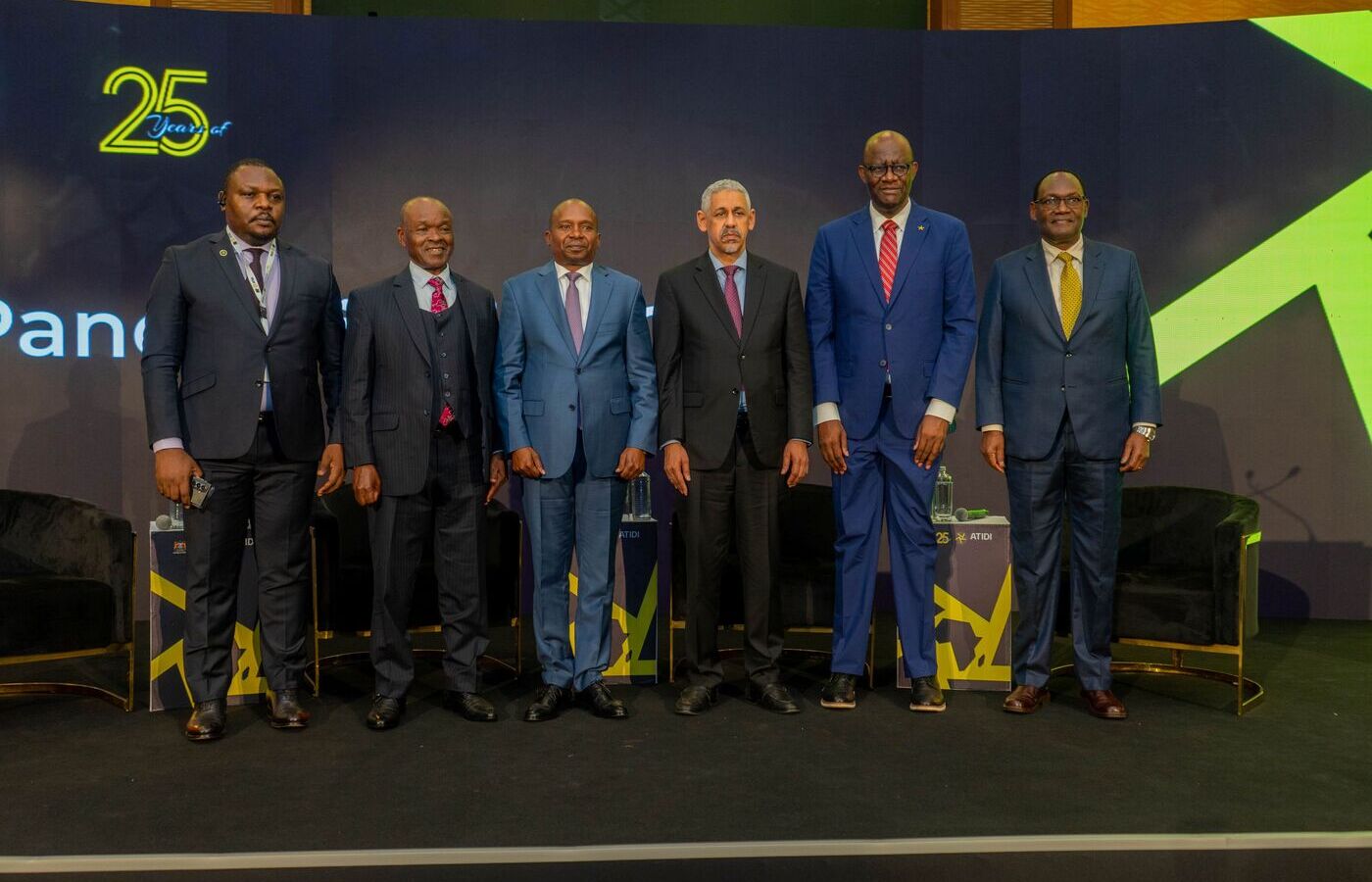
The results were announced during ATIDI’s 26th Annual General Meeting, held in Nairobi from June 30 to July 3, 2026, under the theme, “Empowering Africa: Risk Managed, Growth Unlocked.”
Chief Executive Officer Manuel Moses said the institution recorded strong performance across insurance revenue, investment income and total equity despite global economic uncertainty.
ATIDI did not provide a detailed breakdown in its AGM announcement showing how much of the profit increase came from its insurance operations and how much was generated from investments.
The institution’s 2024 financial statements showed that political risk insurance accounted for about 80 percent of its total exposure, while credit risk insurance represented about 20 percent. Political risk coverage protects investors and lenders against losses linked to government action, sovereign non-payment and political instability.
ATIDI relies partly on preferred creditor status granted by its member countries, requiring governments to prioritise their financial obligations to the institution, including during periods of financial distress. Moses described the arrangement as fundamental to ATIDI’s business model and its ability to maintain investor confidence.
The insurer said it has facilitated more than 93 billion US dollars in trade and investment since its establishment in 2001. Its shareholders include 24 African countries, 13 institutional investors and one non-African member state.
However, the 9.2 billion US dollars currently covered by the institution remains small compared with the continent’s infrastructure and development financing requirements.
Kenyan President William Ruto used the meeting to call for the recapitalisation of ATIDI to 2 billion US dollars, arguing that stronger African financial institutions were needed to mobilise the continent’s own savings and reduce its dependence on expensive external capital.
Ruto said Africa’s central challenge was not necessarily a shortage of money but a lack of institutions capable of transforming risk and directing domestic savings towards productive investments.
He announced that Kenya would, subject to domestic approval procedures, progressively increase its shareholding in ATIDI from 25 million US dollars to 65 million US dollars.
Ruto also backed the New African Financial Architecture for Development, an initiative intended to bring together institutions including the African Development Bank, Afreximbank, the Africa Finance Corporation and ATIDI to expand risk-sharing and mobilise domestic capital.
African Development Bank Group President Sidi Ould Tah said the persistent mispricing of African risk continued to discourage investors and increase the cost of financing projects on the continent.
The bank has increased its capital participation in ATIDI fivefold, becoming the insurer’s largest institutional shareholder. It has also pledged to help additional African countries join the institution and finance their capital contributions.
Ethiopia is among ATIDI’s African shareholders, with a paid-up capital contribution of about 22.9 million US dollars.
ATIDI has supported several major investments in Ethiopia. Its first transaction in the country involved backing a 159 million US dollar African Development Bank loan used to finance Ethiopian Airlines’ acquisition of an Airbus A350-900 aircraft.
The insurer later provided 10-year investment risk coverage to Japan’s Sumitomo Corporation for its participation in Safaricom Telecommunications Ethiopia, protecting the investment against specified political risks.
Ethiopia has also signed an agreement to access ATIDI’s Regional Liquidity Support Facility, which protects renewable energy developers against delayed payments by state-owned electricity utilities and is intended to make independent power projects more attractive to lenders.
Established with World Bank support in 2001, ATIDI has maintained investment-grade ratings from major international credit rating agencies. Its strong capital position allows it to absorb risks that private insurers and commercial lenders may be unwilling to take in African markets.
The latest results show that insuring African risk has become increasingly profitable for the institution. The larger test, however, is whether its growing balance sheet can translate into lower financing costs and significantly greater investment across a continent where hundreds of billions of dollars in viable projects remain unfunded.




