

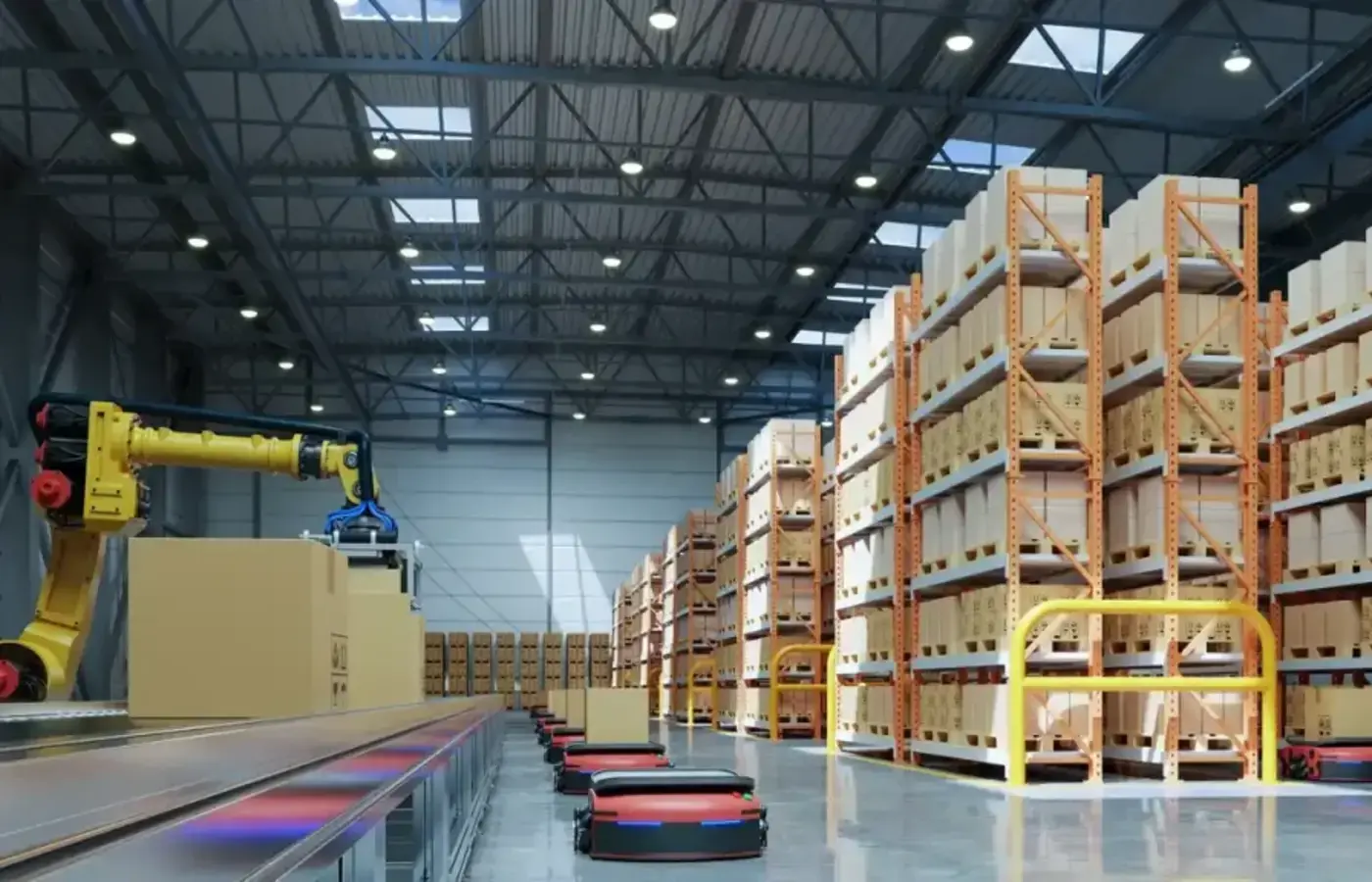
A UAE-based warehouse automation company is entering the local market with lower-cost technology aimed at helping industrial firms replace manual warehouse operations with faster and more efficient systems.
ACME Interwold has partnered with Pitron Tech Solutions to introduce semi- and fully automated warehouse solutions targeting coffee processors, flour producers, pharmaceutical companies and manufacturers.
The partnership comes as many firms continue to rely on manual loading and unloading processes, which can take up to 40 minutes, according to ACME. The company said automated systems can reduce the same operations to about five minutes.
“Outside of airports and mega-companies, we don’t see any automated operations in Africa,” said Atanas khagerian, vice-president of sales at ACME Interwold, during the partnership launch in Addis Ababa. “For others, it seems difficult or expensive. It is not.”
ACME said the main challenge limiting warehouse automation has been the high cost of deploying such systems. The company is seeking to address this through a lower-cost warehouse management system integrated with enterprise resource planning software, designed for small, medium and large businesses.
“Historically, warehouse automation has been expensive,” Atanas said. “Now, we are making it cost-effective and accessible for medium, small and large companies alike.”
The UAE company showcased one of its reference projects in Muscat, Oman — a fully automated 15,000-square-metre warehouse with 20-metre-high storage racks and capacity for 4,000 pallets. Built in the UAE, the facility handles products including coffee, tea, pharmaceuticals and flour.
Through the partnership, Pitron Tech will provide local technical support and maintenance services for firms adopting the technology.
Companies seeking automation solutions will first complete a one-page assessment outlining their operations. ACME will then develop a warehouse design based on their requirements.
“The most important elements in warehouse automation are proper practices, robust software and a reliable WMS (Warehouse Management System),” Atanas khagerian said. “Our commitment is to deliver cutting-edge technology backed by local technical support.”
The move comes as industries seek to improve supply chain efficiency and reduce losses linked to storage and handling challenges. Post-harvest losses in some agricultural value chains are estimated at 30 to 40 percent, while logistics modernisation remains a priority under the government’s 10-Year Development Plan.
Advanced warehouse automation has so far been concentrated among large-scale operators, including Ethiopian Airlines’ cargo terminal. The partnership aims to expand access to automation technology among a wider group of industrial companies.




