

The Ministry of Revenue collected 1.518 trillion birr during the 2025/26 fiscal year, exceeding its revised target of 1.5 trillion birr as government revenues rose by 68.69 percent from the previous year.
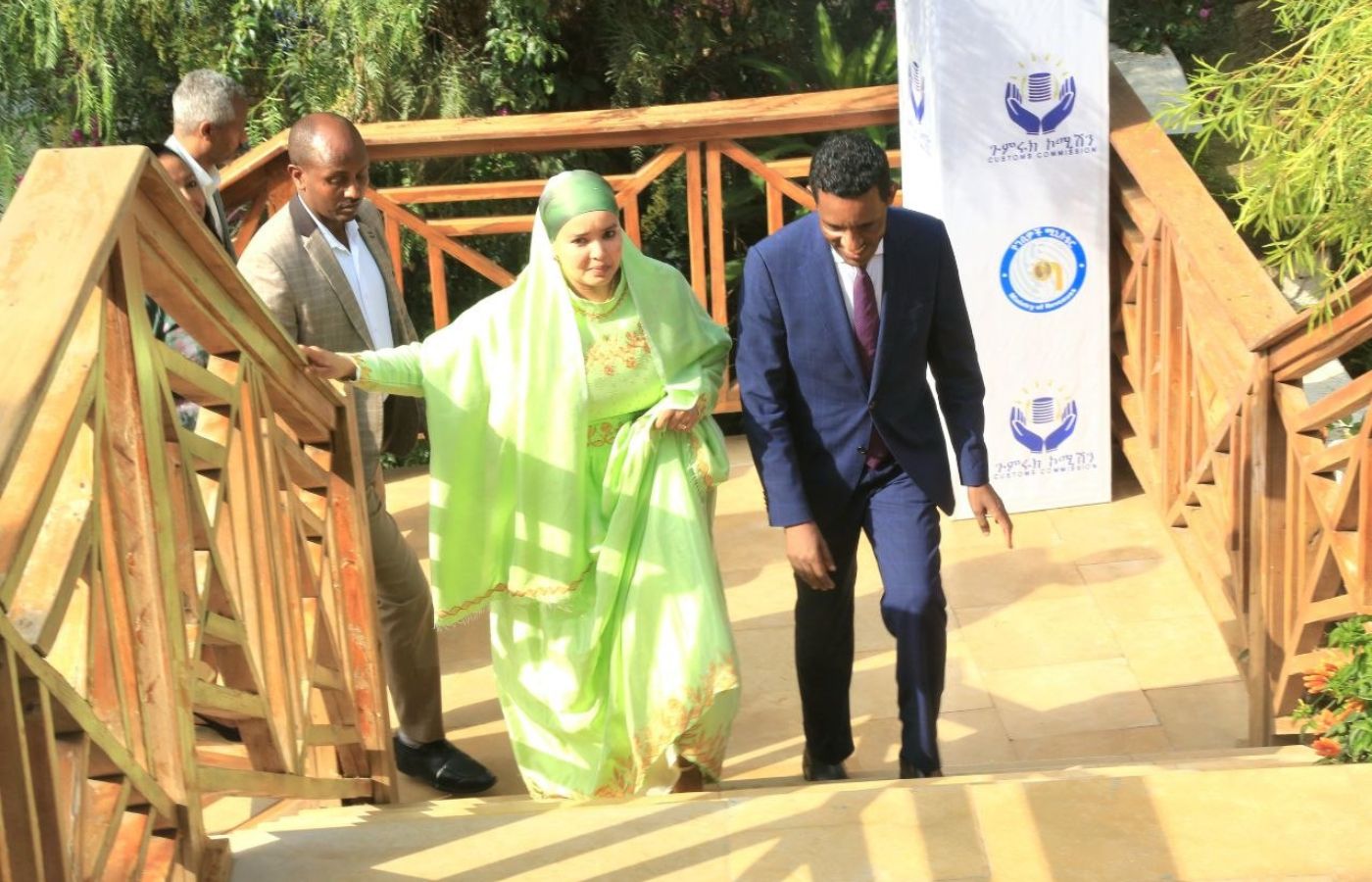
The collection represents 101.24 percent of the adjusted annual target, according to figures presented on Monday during the joint annual performance review of the Ministry of Revenue and the Customs Commission.
The ministry had initially set a revenue target of 1.28 trillion birr for the fiscal year. The figure was revised upward to 1.5 trillion birr in February 2026 after first-half collections reached 709 billion birr.
Domestic taxes accounted for 774 billion birr of total collections, while customs duties and foreign trade taxes contributed 725.3 billion birr, according to Minister of Revenue Aynalem Nigussie.
The ministry also reported that authorities intercepted contraband goods valued at 28.9 billion birr during the fiscal year.
Aynalem attributed the increase to tax administration reforms, including expanded use of digital systems, improved enforcement mechanisms and measures aimed at widening the tax base and improving compliance.
However, officials said the increase was also linked to tax policy changes introduced during the year. These included a requirement for companies to make quarterly advance tax payments rather than settling tax obligations at the end of the financial year.
The rise in revenue collection comes as Ethiopia continues implementing a four-year, 3.4 billion US dollars Extended Credit Facility programme with the International Monetary Fund (IMF), approved in July 2024 to support the government’s Homegrown Economic Reform Agenda.
Under the programme, tax revenue is projected to increase from 7.3 percent of GDP in 2023/24 to 10.8 percent in 2025/26.
Parliament approved a 1.93 trillion birr federal budget for the 2025/26 fiscal year, with revenue projections of 1.5 trillion birr. Of the projected revenue, 1.1 trillion birr was expected from taxes, while 236 billion birr was projected from development partners.
The IMF has completed five reviews of Ethiopia’s programme, with total disbursements reaching about 2.65 billion US dollars, according to government figures.
The latest revenue performance comes ahead of Ethiopia’s planned GDP rebasing exercise, which could reshape how key economic indicators, including the tax-to-GDP ratio, are measured.
The government plans to update the base year used for national accounts to better reflect structural changes in the economy. Ethiopia’s current GDP estimates are based on an older benchmark, which authorities say no longer fully captures changes in economic activity, including the expansion of digital financial services, private telecommunications, mobile money, financial services and other parts of the services sector.
GDP rebasing does not change the actual size of government revenue or economic activity. Instead, it updates the statistical framework used to measure the economy by incorporating newer data sources, sector weights and consumption patterns.
The revision could affect ratios that use GDP as a denominator. If the rebased GDP estimate increases, the tax-to-GDP ratio could decline even if tax collections remain unchanged.
For example, if tax revenue remains at 1 trillion birr while GDP is revised upward from 10 trillion birr to 12 trillion birr, the tax-to-GDP ratio would fall from 10 percent to 8.3 percent.




