

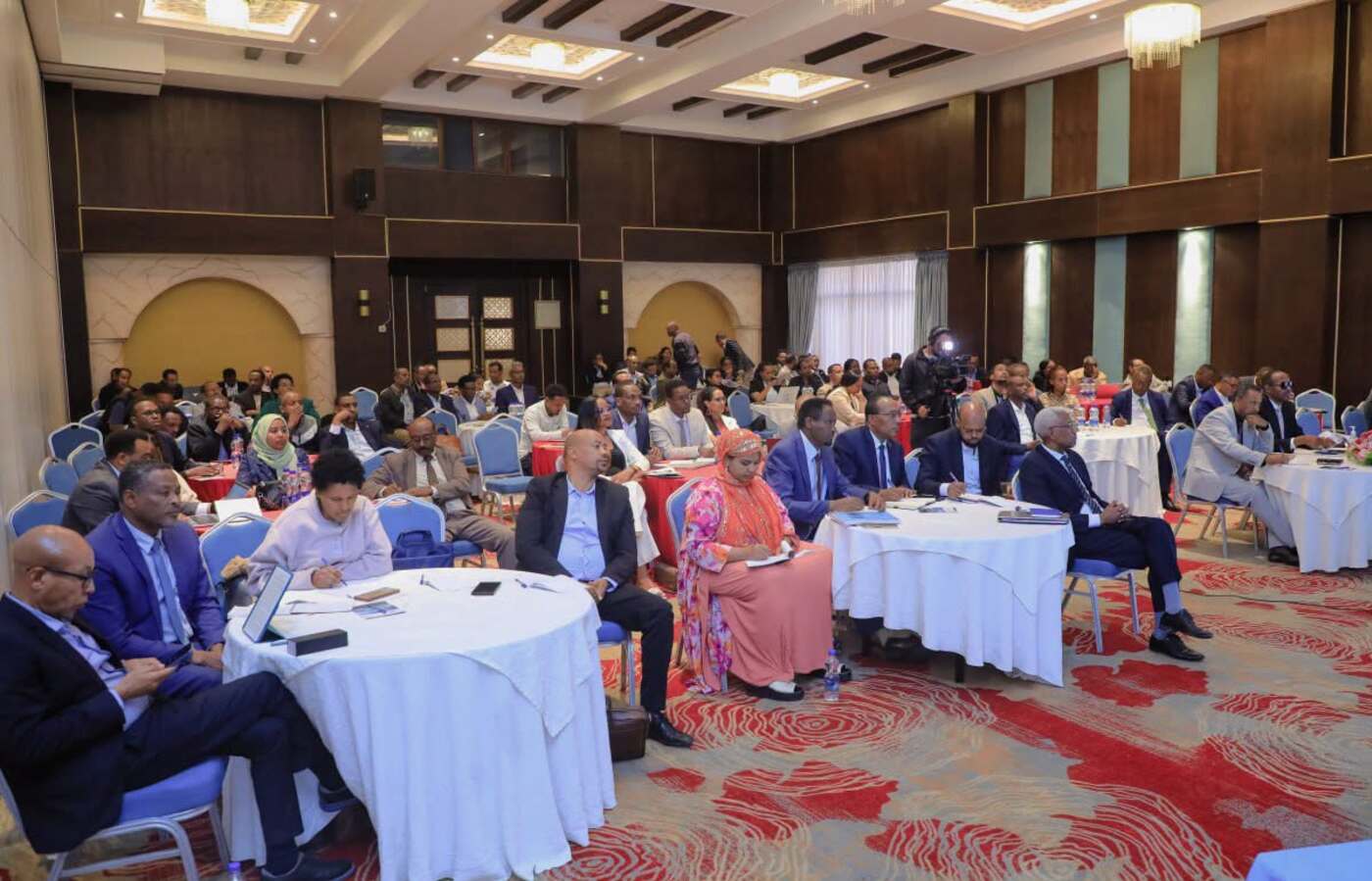
About 4,400 manufacturing enterprises started operations during the 2025/26 financial year, helping save 5.9 billion US dollars in foreign exchange through import substitution, Industry Minister Melaku Alebel said.
The increase in manufacturing comes as the government seeks to reduce reliance on imported goods, raise factory output and increase export earnings amid continued efforts to improve foreign-currency availability.
Of the 4,400 manufacturing enterprises that began operations during the year, 165 were large-scale manufacturers, Melaku said at a review of the ministry's 2025/26 performance and its plans for the 2026/27 financial year.
Manufacturing capacity utilisation reached 69.3 percent during the year and is targeted to rise to 74 percent in 2026/27, he said.
The government is also targeting 1 billion US dollars in foreign-exchange earnings from manufactured exports and 480,000 jobs from the sector during the new financial year.
The figures come as authorities seek to expand domestic production following macroeconomic reforms that have changed access to foreign currency and raised the local-currency cost of imports.
The government has increasingly promoted import substitution as a way to reduce demand for foreign exchange while expanding industrial production.
Edible oil is among the sectors where domestic production remains well below consumption.
About 82 percent of edible oil demand is currently met through imports, Melaku said during a separate meeting with manufacturers focused on increasing production capacity.
"There are more than 41 large and medium manufacturing industries engaged in edible oil production," Melaku said.
Domestic producers have increased their share of the edible-oil market to 18.3 percent from about 5 percent in the 2012 and 2013 Ethiopian calendar years, he said.
Twenty-one of the manufacturers were established during the government's reform period and account for about 63 percent of total production, according to figures presented by the ministry.
Production capacity utilisation among the manufacturers stands at 53 percent, Melaku said.
"The capacity of these manufacturing companies needs to be increased so that domestic demand can be met through domestic production," he said.
The ministry's discussions with producers focused on raw-material supplies, access to finance, policy, production capacity and other constraints affecting output.
"To cover the demand for edible oil through domestic production and plan to export, we need to solve the challenges and create an enabling environment," Melaku said.
The government has sought to expand local edible-oil production as part of a wider food-security strategy, given the sector's heavy dependence on imported supplies.
The ministry said its nationwide "Ethiopia Tamrit" manufacturing initiative generated 57 billion birr in market linkages during the 2025/26 financial year.
The programme is aimed at connecting manufacturers with domestic buyers and expanding markets for locally produced goods.
The new targets place greater emphasis on using existing industrial capacity as well as bringing new manufacturers into operation. Raising utilisation from 69.3 percent to 74 percent would increase output without requiring the same pace of expansion in installed capacity.
The ministry's 2026/27 targets also include higher manufactured exports and employment, as the government seeks to strengthen the industrial sector's contribution to the economy.
The edible-oil meeting was attended by officials from the trade, finance, revenue and agriculture ministries, customs authorities, the central bank, the Commercial Bank of Ethiopia and representatives of manufacturers and industry associations.




