

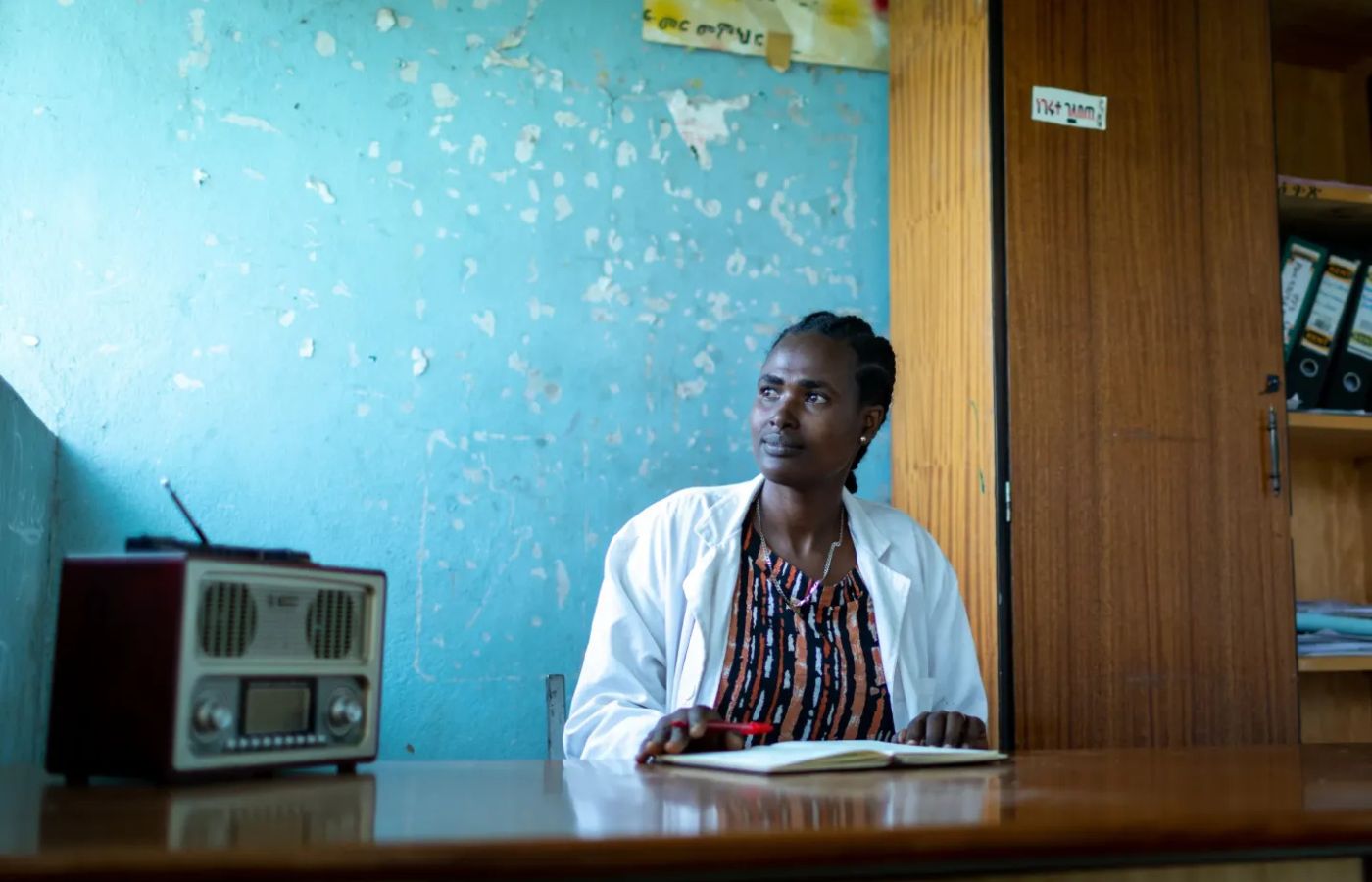
Women account for 41 per cent of Ethiopia’s primary school teachers but hold only 7 per cent of principal positions, highlighting a sharp gender gap in the country’s education leadership, according to a new national report.
The study by UNICEF Innocenti, the International Institute for Education Planning (IIEP-UNESCO) and Ethiopia’s Ministry of Education found that the disparity persists despite female and male teachers having broadly similar qualifications and career progression.
Among principals, 69 per cent of women hold higher education degrees, compared with 76 per cent of men. The report’s regression analysis found that differences in promotion and student dropout rates do not explain the gap in access to school leadership.
Instead, the report identifies structural and administrative barriers that can limit women’s progression into principal positions.
One of the key changes came in 2019, when the Civil Service Commission’s Job Evaluation and Grading directive increased the minimum in-service experience required for principal positions from three years to 14 years. Researchers note that the requirement can disproportionately affect women, whose careers are more likely to be interrupted by maternity and caregiving responsibilities.
“While the intent was to standardize and professionalize leadership appointments, this change considerably narrowed the pool of eligible candidates. This represents a major institutional barrier to women's leadership: given that women’s careers are more frequently interrupted by maternity leave, caregiving responsibilities and other domestic demands, a 14-year threshold is likely to affect their eligibility for principal positions disproportionately,” the report says.
Existing affirmative-action measures have also not translated into comparable representation in school leadership. National directives reserve 30 per cent of primary teaching positions for women and provide additional points for women during leadership evaluations, but recruitment decisions at Woreda level remain subject to local discretion.
The report identifies informal networks and established gender norms among the factors that can influence recruitment and promotion decisions.
The leadership gap has implications for student outcomes. The study found that a higher proportion of female teachers is associated with lower student dropout rates, higher promotion rates and greater Grade 8 retention among girls. A 10-percentage-point increase in female teacher representation was associated with measurable gains in student progression.
The report also identifies working conditions as a potential disincentive to pursuing school leadership. Principals are appointed before receiving formal leadership training and face substantial administrative responsibilities, while the salary increase over senior teaching positions remains limited.
Researchers recommend reviewing the 14-year service requirement, strengthening transparency and oversight in principal recruitment, and introducing structured mentorship and leadership programmes before appointment.
The measures are intended to address barriers in the promotion pipeline and enable more of Ethiopia’s female teaching workforce to move into school leadership.




