

Gold and coffee mask a shakier picture beneath the country's record trade figures
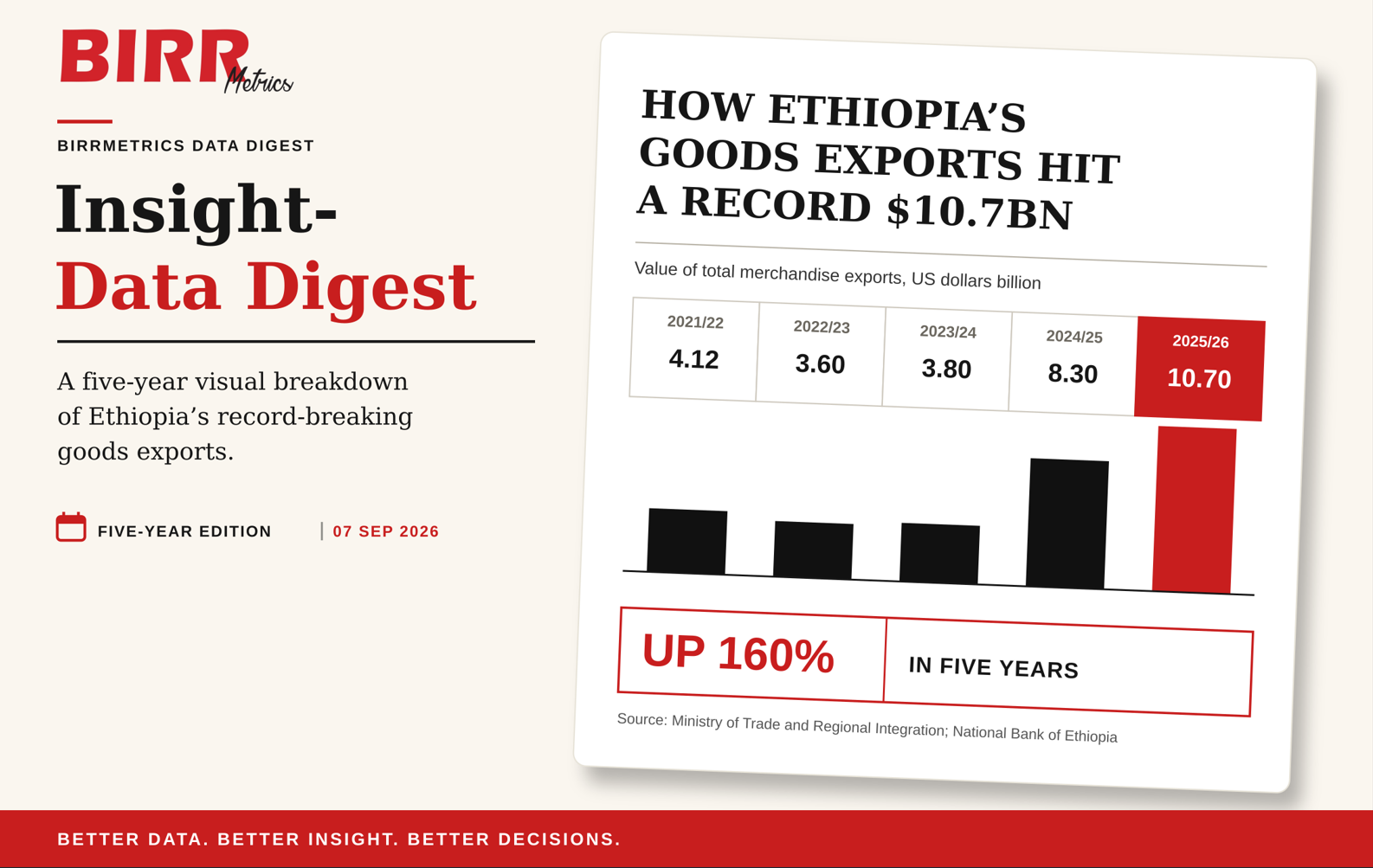
FOR A country that spent much of the past decade rationing dollars to its own importers, Ethiopia's export figures now read like a rebuke to the pessimists. Goods exports rose from 3.6 billion US dollars in the 2022/23 fiscal year to 10.7 billion US dollars in 2025/26, a jump of nearly three times in four years and 160 percent since 2021/22. The government, which floated the birr in July 2024 as part of a 3.4 billion US dollars programme with the IMF, is entitled to some crowing. Officials had targeted 9.4 billion US dollars for the year just ended; they beat it by 14 percent.
Two commodities explain almost all of it. Gold brought in 5.6 billion US dollars, more than half the total, as artisanal and industrial miners alike rushed supply to the National Bank of Ethiopia, the country's sole authorised buyer, drawn by a weaker currency and rules that pay closer to world prices than the fixed rates of old. Coffee, Ethiopia's historic cash crop, delivered a record 3 billion US dollars. Between them the two accounted for close to four-fifths of export earnings—a concentration that would unsettle most trade ministries, even ones celebrating a record year.
It is not obvious that the rest of the export base is doing much better. Pulses and oilseeds, once reliable earners, brought in 571 million US dollars in 2025/26, down 6 percent on the previous year, even as the volume shipped rose by nearly 5 percent. Sesame prices on world markets have softened, and Ethiopian exporters have not made up the difference in quantity. Horticulture fared little better, with flowers and vegetables together earning 490 million US dollars, well short of what a country with Ethiopia's growing conditions and cheap labour might be expected to produce. Manufactured exports—textiles, leather goods, the sort of value-added products that development economists like to see climbing—remain a rounding error next to gold bars and coffee sacks.
None of this is unique to Ethiopia. Commodity booms the world over tend to be narrow, and gold in particular has had a good run: prices have risen sharply since 2024 as central banks diversified reserves and investors sought shelter from currency turmoil elsewhere. Ethiopia's own numbers owe something to that global tailwind as much as to domestic reform. A crash in bullion prices, or a return of the smuggling that plagued the sector before the central bank sweetened its buying rates, would take a large bite out of next year's total.
The currency float deserves real credit nonetheless. Before September 2024 the birr was fixed and importers queued for months for letters of credit, while exporters had every incentive to under-invoice and stash dollars abroad. A market-clearing exchange rate, however painful for consumers facing pricier imports, removes much of that incentive. It is probably not a coincidence that reported export earnings rose fastest in the year immediately following the float, nor that gold supply to the central bank—previously siphoned off through informal channels—jumped once sellers could get closer to the going rate through official ones.
The government's next test is whether it can turn a currency-and-commodity story into a diversification story. Officials have set a target of 12 billion US dollars or more for the current fiscal year, but repeating a 29 percent rise will be harder without another leg up in gold prices or a further currency adjustment to squeeze out. The coffee sector, for its part, is chasing a five-year productivity drive rather than simply riding price cycles, which suggests at least some awareness in Addis Ababa that today's numbers flatter a narrow base. Investors and creditors, still owed answers on Ethiopia's defaulted Eurobond, will be watching just as closely as the headline figure to see what lies beneath it.




