

Behind a long list of "potential" sectors, no deals, dollar figures, or timelines have been announced
Sri Lanka, barely two years removed from its own sovereign default, is positioning itself as a source of investment for Ethiopia and the Horn of Africa — a striking pitch from a government still working through the final stages of its own debt restructuring and an economy that has yet to recover its pre-crisis size.
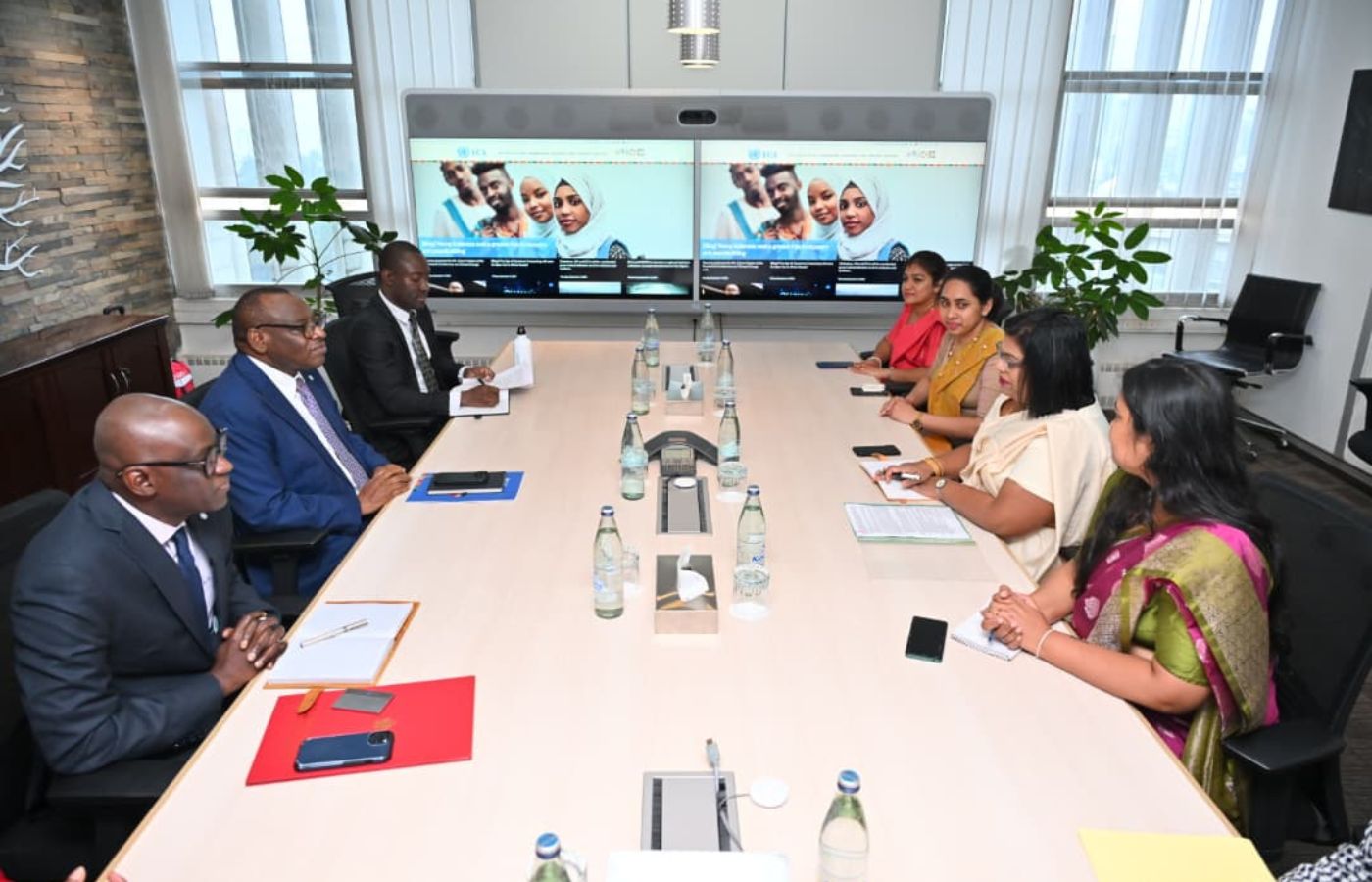
The initiative surfaced after Nirmala Paranavitana, Sri Lanka's new permanent representative to the United Nations Economic Commission for Africa, presented her credentials to UNECA Executive Secretary Claver Gatete in Addis Ababa.
The talks covered investment, technology transfer, private-sector partnerships and knowledge exchange, but produced no signed agreements, financing commitments, or timelines. What's on offer for now is mostly diplomatic access: platforms, knowledge-exchange arrangements, and an invitation for Ethiopia to serve as a "base" from which Sri Lankan business models could scale across the continent.
The asymmetry is notable. Sri Lanka defaulted on its external debt in 2022 and has only recently reached agreement with nearly 99 percent of its external creditors under an IMF-backed restructuring program; its economy is still smaller than before the crisis and is projected to grow by only around 3 percent this year.
Ethiopia, for its part, defaulted on its Eurobond in 2023 and remains in its own debt restructuring under the G20 Common Framework, with a currency that has lost roughly two-thirds of its dollar value since the National Bank of Ethiopia floated the birr in 2024. Neither government is, on paper, in a position to export much capital — which suggests the substance of this engagement is less about investment flows than about building trade and political relationships while both economies are still finding their footing.
Sri Lankan officials laid out a broad menu of prospective projects across the continent: a rice knowledge-exchange programme with Burundi, cassava processing in the Central African Republic, power-sector cooperation with Cameroon, and textile and apparel value-chain development in Equatorial Guinea.
For Ethiopia specifically, the list includes youth entrepreneurship, digital skills, agriculture, energy, textiles and education, along with potential Sri Lankan private-sector interest in dairy and milk processing and food manufacturing. The two sides also discussed a digital platform to connect young entrepreneurs in Sri Lanka and Ethiopia, with room to expand the network to other African markets later.
Gatete pushed back on a country-by-country approach, encouraging Sri Lankan companies to pursue regional value chains instead — citing agricultural processing, mini-hydropower and mini-grid systems, pharmaceutical and medical manufacturing, and cotton-to-textile production as areas of interest. The idea under discussion is to pilot projects in one African market and expand them to neighbors from there, with Ethiopia potentially serving as an early testing ground for Sri Lanka-Africa business models.
The push extends beyond Ethiopia into the wider Horn of Africa. With Somalia, discussions cover fisheries and fish processing, maritime security, and possible capacity-building support for the Somali Coast Guard. With Djibouti, the focus is on shipping, logistics, port services and maritime security, along with a proposed business platform to address trade and shipping bottlenecks in the Red Sea and Gulf of Aden — an area where Sri Lanka's maritime expertise could plausibly find real traction given the Horn's expanding role in regional shipping and trade. Sri Lanka is also exploring a Disaster Management Centre in Chad, drawing on its own experience with disaster preparedness.
UNECA said it was ready to connect Sri Lankan companies with African governments, institutions and technical divisions, and Gatete encouraged Sri Lankan businesses to engage through UNECA and African Union platforms such as the Africa Business Forum.
The engagement builds on earlier outreach: in January, Sri Lanka's outgoing ambassador to Ethiopia and permanent observer to UNECA and the African Union held talks with Gatete on expanding cooperation across trade, investment, technology transfer, agriculture, energy, transport, construction and digital technology — talks that, like this latest round, produced intentions rather than agreements.
For continuous coverage of Horn of Africa trade policy, sovereign debt restructurings, and macroeconomic analysis, visit BirrMetrics and monitor updates via the United Nations Economic Commission for Africa.




