

India has pointed to BRICS’ wider development and Global South cooperation agenda in response to Ethiopia’s efforts to secure reliable access to a port, without making a specific commitment to support Addis Ababa’s push.
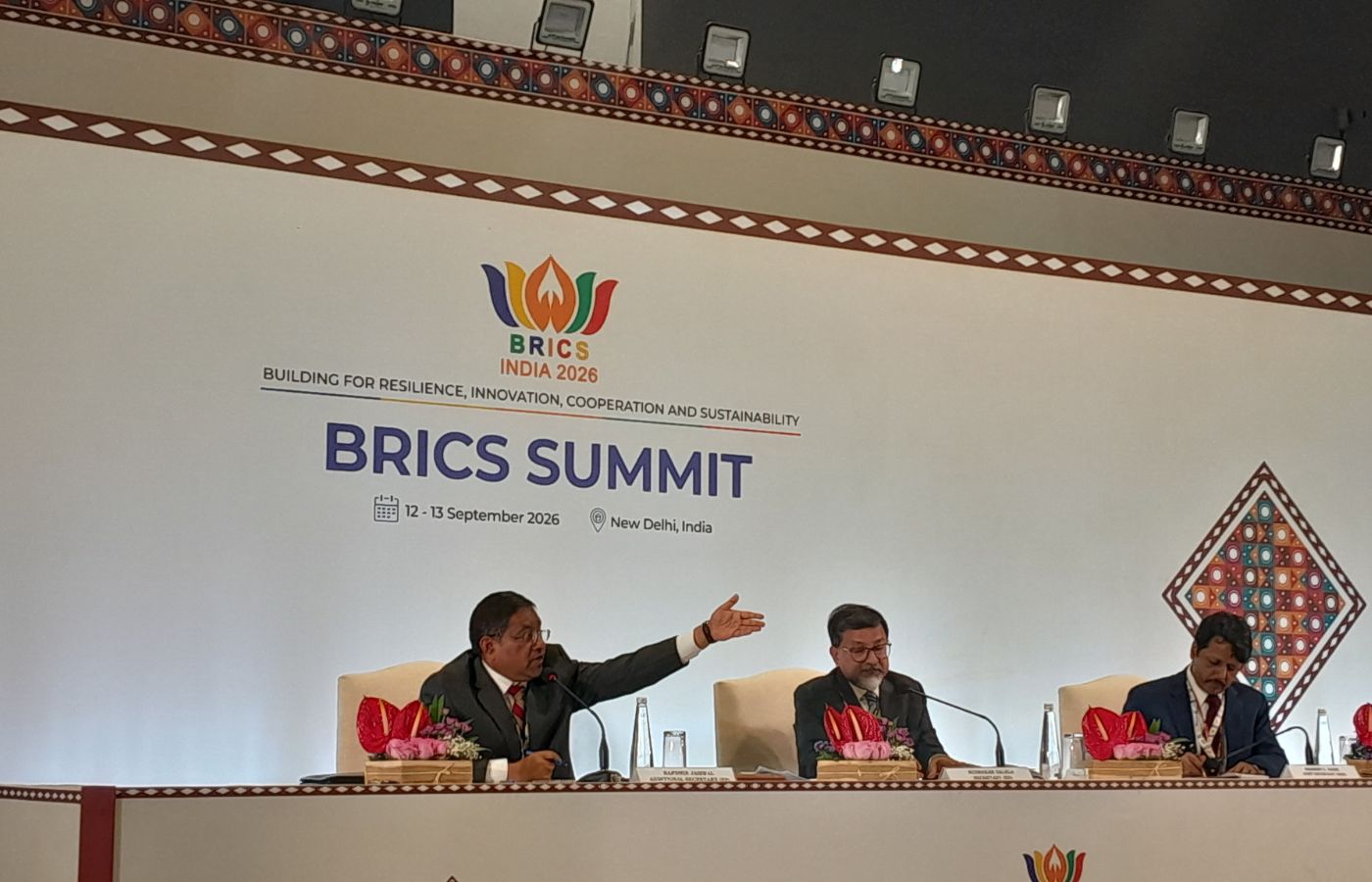
Speaking to Birrmetrics at a press briefing following the 18th BRICS Summit on Saturday, Shri Sudhakar Dalela, Secretary (ER) at India’s Ministry of External Affairs, said the New Delhi Declaration and 50 practical outcomes adopted at the summit were intended to frame cooperation around development priorities shared by countries across Africa, Asia and the wider Global South.
“If you look at the factsheet that we have issued, which lists 50 practical outcomes under Resilience, Innovation, Cooperation, and Sustainability pillar, if you look at the New Delhi Declaration, you will find that the attempt is to really frame collaboration on development agenda,” Dalela said.
“And that agenda also resonates very well with our partners in Africa or Asia, in Global South,” he added.
His comments came in response to a question on how BRICS’ push for greater representation of developing countries in global institutions could support Ethiopia’s efforts to secure reliable access to the sea.
Ethiopia has been seeking reliable and sustainable access to a seaport as part of its wider economic and strategic objectives. The landlocked country depends on neighbouring countries for routes for its external trade and has repeatedly raised the issue of securing dependable maritime access.
The scale of its dependence on external ports is significant. More than 95 percent of the country’s import-export trade by volume moves through the Addis-Djibouti corridor, according to the World Bank, leaving Ethiopia heavily reliant on a single maritime gateway for its international commerce. The concentration has also exposed businesses to congestion, delays and higher logistics costs as trade volumes have grown.
Dalela did not specifically address Ethiopia’s port-access request or indicate that BRICS had adopted a position on the matter. Instead, he pointed to the grouping’s wider role as a platform through which countries in the Global South can share development experience and expertise.
“India has been sharing its development experience and expertise through various initiatives with the Global South countries, and we are also learning from our Global South members in different sectors,” he said.
“That is the spirit of BRICS in which we can learn from each other. We bring different experiences.”
One of the challenges facing Ethiopia’s efforts to secure reliable maritime access is the complex political environment in the Horn of Africa, where disputes over territorial sovereignty and Ethiopia’s proposed arrangements with coastal neighbours have repeatedly generated tensions with countries around the potential access points.
The challenges facing Ethiopia’s maritime ambitions also come as the expanded BRICS grouping seeks to reconcile divergent interests among its members. The bloc brings together countries with competing strategic interests, including India and China, while differences between Iran and the UAE over the Middle East have also complicated consensus-building.
Birrmetrics reported ahead of Saturday’s summit that BRICS leaders were expected to adopt a joint statement, following negotiations among member states over a range of geopolitical and economic issues. That outcome has now taken shape in the New Delhi Declaration, adopted by BRICS leaders at the summit.
The declaration shows both the breadth of issues on which BRICS members are prepared to cooperate and the sensitivities involved in reaching common positions. It addresses conflicts and security concerns in the Middle East, Gaza, Lebanon, Sudan and Syria, as well as nuclear risks, global governance reform and the role of developing countries in international institutions.
Dalela said the diversity of BRICS was a strength rather than a weakness, arguing that members had been able to forge consensus across the grouping’s three main areas of cooperation: political and security, economic and financial, and people-to-people cooperation.
“I think it was discussed in the closed session today that this diversity is also the strength of BRICS. And we celebrate that diversity,” he told Birrmetrics.
For ongoing coverage of Ethiopian macroeconomic updates, global trade diplomacy, and regional infrastructure news, visit BirrMetrics. And Why PM Modi's Ethiopia Outreach Matters At BRICS As Houthis Threaten Bab el-Mandeb | Explainers News - News18




