

The world is entering an awkward phase of infrastructure investment. Governments are spending heavily on roads, power networks, water systems, housing and other assets that are expected to last for decades, even as the climate those assets must withstand is changing faster than the standards used to build them. Infrastructure designed around the weather of 20 or 30 years ago may no longer be adequate for the risks of today.
That is turning disaster risk from an emergency-management problem into an economic one. A bridge that fails in a flood, a power network knocked out by extreme weather or a city paralysed by water does not merely create a humanitarian crisis; it interrupts economic activity and leaves governments with a large reconstruction bill. The question is therefore shifting from how quickly countries can rebuild after a disaster to how much risk they can prevent from becoming a loss in the first place.
Governments are responding by giving disaster-risk reduction a more permanent place in the machinery of the state. The number of countries reporting a national disaster-risk reduction strategy to the UN Office for Disaster Risk Reduction rose from 57 in 2015 to 151 in 2026.
Ethiopia is part of this institutional shift. Its disaster-risk management system is being reshaped at a time when the country is investing in infrastructure while facing growing exposure to climate and other hazards. But creating an institution is easier than giving it influence over how roads are designed, where cities expand and how public money is allocated.
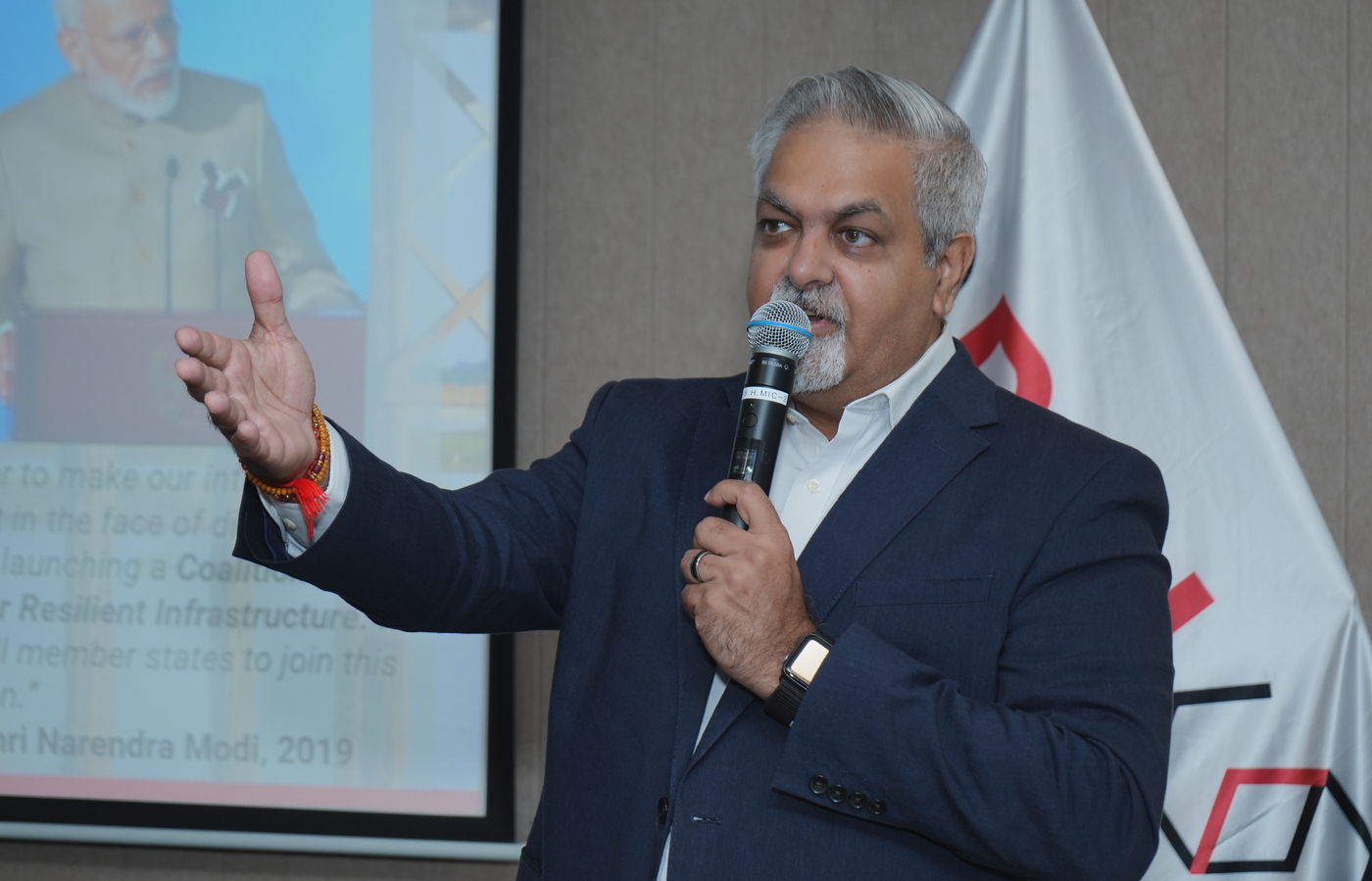
During a visit to the Coalition for Disaster Resilient Infrastructure (CDRI) in New Delhi on the sidelines of the 2026 BRICS Summit, Birrmetrics Editor-in-Chief Mintesinot Nigussie spoke exclusively with Amit Prothi, Director General of CDRI, about the economics of resilient infrastructure, the role of disaster-risk institutions, how governments can finance resilience, the shortage of technical expertise and what Ethiopia could gain from joining the coalition.
Launched in 2019, the New Delhi-based coalition brings governments and other partners together around a relatively simple proposition: infrastructure should be planned, financed and built with disaster and climate risks in mind. CDRI estimates that infrastructure losses from climate change and disasters put 14 percent of global GDP growth at risk each year, with power, transport and telecommunications accounting for about 80 percent of that risk. The coalition now has 71 members across 59 countries, with 183 projects and 21.84 million US dollars in funding disbursed.
Birrmetrics: Ethiopia has only recently established its Disaster Risk Management Commission. At this early stage, what would you recommend the Commission prioritise?
Amit Prothi: It is really important to think about who the actors are that you are trying to influence. When you talk about disasters, you have to think about codes and standards. When you are building roads, bridges or water infrastructure, you need to consider the codes and standards that are set at the national level.
If the institution wants to influence those codes and standards, it has to work with the relevant national agencies. It becomes important to identify which agency offers the best opportunity to influence those decisions. Sometimes, that can be the Ministry of Finance.
When the Ministry of Finance is deciding how to allocate the budget for infrastructure in a given year, can it look at those investments from a resilience point of view? We are doing that in several countries, including India, and we are starting to see it in other countries as well. Can we use the Ministry of Finance to influence those decisions? Can we work with the transport ministry, public works agencies and others?
So, when you think about disaster risk, it becomes important to break it down by identifying which entity has the greatest opportunity to influence outcomes. My advice would be for the institution to identify who it is trying to influence.
The post-disaster side has a humanitarian dimension. In the first two months after a major earthquake or flood, you have to ensure that basic services remain available — water, access to hospitals and education for children. Power should not be disrupted, and essential services need to continue.
That is the humanitarian angle. Again, the institution needs to think about whether it is getting involved in the humanitarian side, where there are already many entities working, or whether it is focusing on how to build back over the longer term.
If housing is damaged, for example, how do you rebuild it, and who pays for that? There is a lot of complexity around this. But I think the key question is: who are you trying to influence?
From your experience, what funding resources should the Commission consider to ensure it has adequate financing for resilient services?
It becomes important for the state to allocate some budget to it. What the institution has to demonstrate to the state is that the interventions it puts in place can save the state money on rebuilding.
If the institution helps reduce flood risk, for example, then the disruptions caused by floods can be reduced, creating savings for the state. Similarly, if it is working with a public utility, such as a power utility, and can help that utility maintain services during a disaster, there is a cost saving to the utility.
Often, that cost saving is much greater than the initial investment. So the argument that needs to be made is: if you give us a certain amount of funding, our work can help you protect three, four or five times that amount. That becomes an important argument for the institution to make to the state.
This also applies to the private sector. If private companies are building housing for middle-income or higher-income groups, or developing industrial areas, and the state is investing in protecting those areas from floods and other hazards, then the question is whether the private sector would also be willing to contribute to those resilience efforts.
During the presentation, you mentioned that CDRI is working with the African Union. Could you tell us more about that work?
With the African Union Commission, we are looking at urban flooding and urban water challenges. We are developing a training module with the Commission, with support from the government of the Netherlands, to bring that expertise to the AU and its member states.
The aim is to look at urban flooding from a best-practice perspective and help countries understand how to address these challenges. The training module is currently being developed.
How is the work progressing?
It should be launched in the next three or four months.
What do you think is preventing African countries from integrating disaster resilience into infrastructure planning?
I think the complexity of resilience sometimes requires a workforce that can bring that thinking into infrastructure decisions.
A lot of countries in Africa, but also India and other parts of the Global South, do not have enough trained professionals who can bring this complexity into the solutions. To me, that is the biggest challenge that all of us are facing.
It is not that we are not investing in building things. We are all investing, although more investment can certainly come in. The question is whether we can shift how we invest towards a more resilient future. Often, the expertise required to do that is not easily available.
Why do you think Ethiopia has not yet joined the Coalition for Disaster Resilient Infrastructure? And what impact could Ethiopia's membership have?
I am not sure why Ethiopia has not joined, so I cannot answer that. But I think Ethiopia would be a fantastic addition. Ethiopia has a very strong voice on the African continent and increasingly on the global stage.
If Ethiopia can bring leadership and say, "This is an important agenda. Resilient infrastructure is important for Ethiopia and for other countries," I think that leadership would be incredibly valuable. I would really welcome Ethiopia joining the Coalition.
Membership also gives countries access to other countries and expertise. To me, access to the experts that we all need becomes available when you are part of this Coalition.
Read about domestic production and foreign exchange savings in Industry Ministry Claims Manufacturing Replaced $5.96 Billion in Imports—Nearly 10 Times Its Export Earnings. Also consult global disaster prevention resources and framework updates on the official United Nations Office for Disaster Risk Reduction (UNDRR) portal.




