

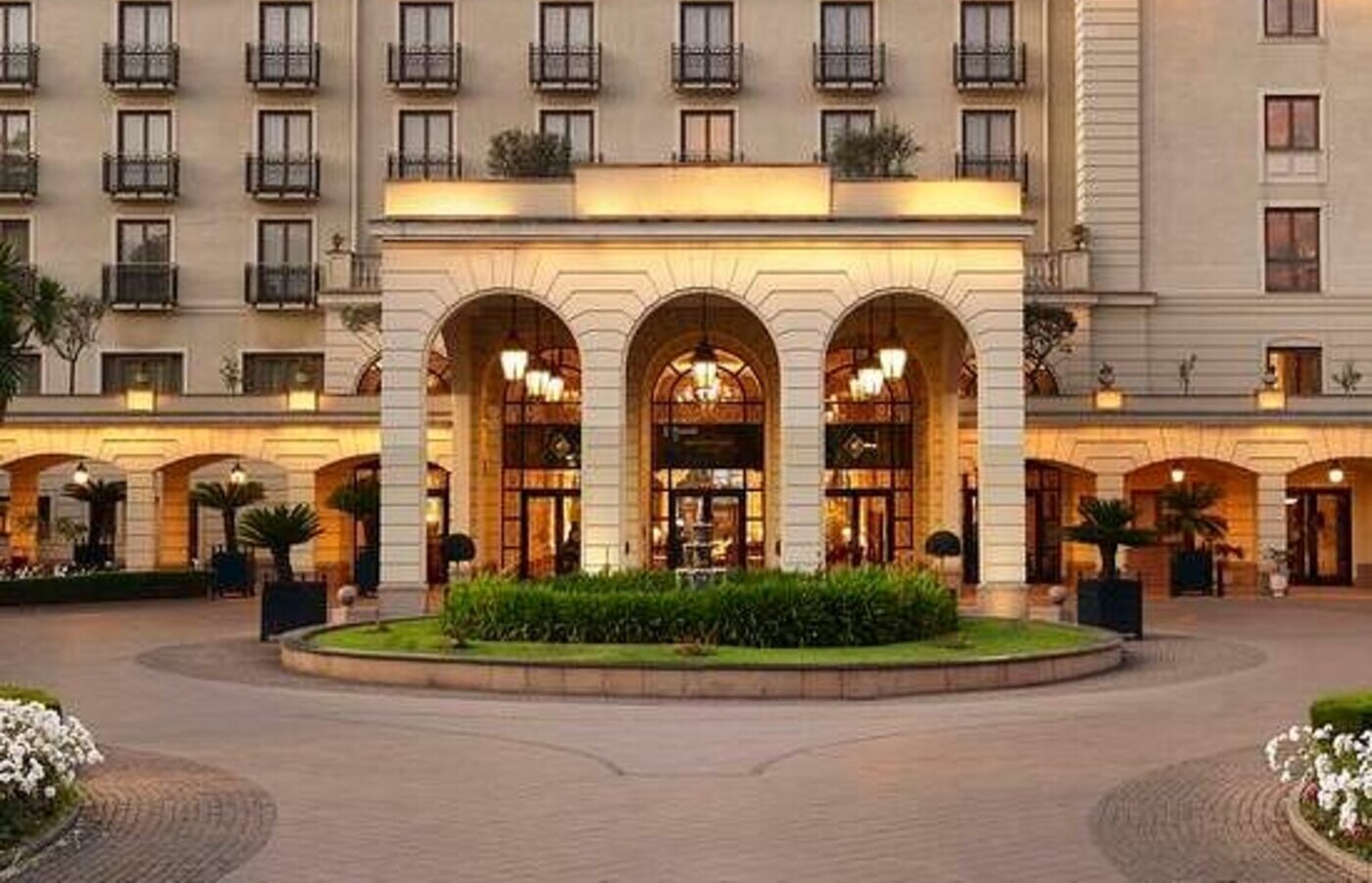
Sheraton Addis Profitability Disclosure: MIDROC Chief Speech
Sheraton Addis, one of Ethiopia’s most prestigious hotels and a landmark of the capital’s diplomatic hospitality industry, failed to generate a profit or build adequate maintenance reserves for 21 years, according to MIDROC Investment Group Chief Executive Officer Jamal Ahmed.
The disclosure presents a striking contrast between the hotel’s international reputation and its financial performance. Since opening in February 1998, Sheraton Addis has hosted heads of state, African Union summits, international conferences and some of the world’s best-known entertainers.
Yet behind the luxury façade, Jamal said, the hotel operated for more than two decades without producing a return for its owner or setting aside sufficient resources for major refurbishment.
“Until I came, Sheraton had never made a profit for 21 years,” the CEO said during an interview discussing MIDROC’s restructuring. “It had not even accumulated money for its own maintenance.”
The claim could not be independently verified because MIDROC Ethiopia Plc, the company that owns the hotel, does not publicly release detailed annual financial statements. It is also unclear whether Jamal was referring to accounting profit, distributable profit or cash remaining after financing, depreciation and management expenses.
Nevertheless, the statement is one of the most significant disclosures made about the financial history of a property long regarded as one of Ethiopia’s most commercially successful hotels.
Jamal said the financial problem extended beyond the hotel’s bottom line to how assets were maintained and used.
Some of Sheraton Addis’s carpets reportedly remained in service for 27 years without replacement. A fully equipped restaurant, complete with furniture, kitchenware, utensils and other facilities, had remained closed for approximately 23 years.
After inspecting the property, Jamal said he ordered the restaurant opened and discovered that it required an operator rather than substantial new investment.
According to the CEO, the unused facility illustrated a wider problem across the MIDROC empire: assets had been acquired or developed at considerable expense but were left idle because managers lacked a sense of ownership and commercial responsibility.
He argued that the hotel’s problems were not primarily caused by a lack of capital. Rather, they reflected weak oversight, poor use of existing assets and the absence of a corporate system linking managers’ decisions to the owner’s returns.
Sheraton Addis continued operating to international standards because of its global management arrangement, he said. But operational quality alone did not ensure that the owning company was profitable or building adequate reserves.
The hotel’s ownership and management are separate. MIDROC Ethiopia Plc owns the physical property, while Sheraton Addis operates within Marriott International’s Luxury Collection. Marriott provides the international brand, reservation network and hotel-management standards but does not own the asset.
Sheraton Addis opened in February 1998 as Ethiopia’s first privately owned international hotel, according to MIDROC. It was also the first African hotel to join The Luxury Collection.
The hotel was built by Ethiopian-born Saudi billionaire Sheikh Mohammed Hussein Ali Al-Amoudi, founder and chairman of MIDROC Investment Group. Marriott describes it as a gift from Sheikh Mohammed to Ethiopia, designed by architect Kosek Ivo as a combination of Ethiopian artistic traditions and neoclassical architecture.
Situated between the National Palace and the Prime Minister’s residence, the hotel’s location helped establish it as a preferred property for visiting political leaders, diplomats, corporate executives and international organisations.
The property currently offers 295 rooms and suites, three-storey villas with private pools and 11 restaurants and lounges. Its facilities include conference spaces, landscaped gardens, swimming pools and the Aqva Club. Marriott International
Its opening came at a time when Addis Ababa’s international hospitality market was dominated by the state-owned Hilton Addis. Sheraton introduced a new standard of privately financed luxury hospitality and became one of Sheikh Mohammed’s most visible investments in Ethiopia.
For years, its reputation also helped shape the public perception of MIDROC as a highly profitable private business empire. Jamal’s disclosure suggests that the hotel’s prestige did not immediately translate into a financial return for its owner.
Sheraton Addis is owned through MIDROC Ethiopia Plc, a hospitality company within MIDROC Investment Group.
International Finance Corporation documents show that Sheikh Mohammed owns 75 percent of MIDROC Ethiopia Plc, while his wife, Sofia Saleh Al-Amoudi, owns the remaining 25 percent.
That ownership structure relates specifically to MIDROC Ethiopia Plc and should not automatically be interpreted as the ownership structure of every company operating under the MIDROC name.
Sheikh Mohammed built his initial fortune in construction and property in Saudi Arabia before expanding into oil refining, mining, agriculture, cement, manufacturing and hospitality. His investments eventually stretched across Ethiopia, Saudi Arabia, Sweden, Morocco and other markets.
In Ethiopia, MIDROC developed interests in gold mining, cement, fuel distribution, construction, agriculture, manufacturing, hotels and real estate. Forbes valued Sheikh Mohammed’s fortune at USD 8.1 billion in 2017, before his detention in Saudi Arabia later that year. Forbes
His detention during Saudi Arabia’s November 2017 anti-corruption crackdown lasted more than 14 months. He was released in January 2019 without a public explanation of the conditions attached to his release. The episode exposed the extent to which some MIDROC companies depended on his personal financing and supervision.
MIDROC Investment Group says it formally assumed the role of the owner’s representative at Sheraton Addis in 2021.
That change placed the hotel under the group-wide restructuring led by Jamal, which introduced stronger oversight, internal controls and annual external audits across the conglomerate.
MIDROC’s official profile says Sheraton’s performance has improved significantly since the group took over the owner-representation role.
Under the new system, the hotel is required to produce audited reports showing its assets, liabilities, operating results and financial obligations. Jamal said the arrangement is intended to ensure that the property can be evaluated as a business rather than simply as a prominent national institution.
More recent group figures suggest a considerable turnaround, although MIDROC has not released Sheraton’s actual revenue or profit.
During the first half of the 2025/26 fiscal year, the group reported that Sheraton Addis achieved 176 percent of its profit target, with profit rising 95 percent from the corresponding period a year earlier. However, the value of the target and the actual profit were not disclosed.
The financial turnaround is now being followed by one of the largest private hospitality investments in Ethiopia.
In May 2026, the IFC approved an USD 80 million long-term loan to MIDROC Ethiopia Plc to finance the refurbishment of Sheraton Addis and the construction of a second Sheraton hotel on the same site.
The total cost of the two-hotel project is estimated at up to USD 116 million, meaning MIDROC is expected to provide or mobilise approximately USD 36 million beyond the IFC financing.
The existing 294-room hotel will undergo extensive refurbishment, while the second property will expand MIDROC’s premium hotel capacity in Addis Ababa. IFC said its financing would provide long-term foreign-currency funding that is generally difficult to obtain from Ethiopia’s domestic banking system.
The project will also introduce international environmental and social standards and green-building certification. IFC classified it as Category B, indicating that its potential environmental and social risks are considered limited, site-specific and manageable.
Marriott’s current hotel information confirms that guest-room renovation is already underway.
The financing represents a sharp reversal in Sheraton’s corporate story. A hotel that, according to its owner’s representative, failed to accumulate money for its own maintenance for more than two decades has now secured one of Ethiopia’s largest international hotel loans.
It also provides an external test of MIDROC’s claim that it has established credible audited accounts. IFC’s approval process requires extensive financial, legal, environmental and operational due diligence, although the financing does not independently prove the historical profitability claims made by the company.
The Sheraton investment is part of a much wider MIDROC hospitality expansion.
Jamal said the group intends to increase its portfolio from one flagship internationally branded hotel to ten properties across Ethiopia.
Projects are planned or underway in Addis Ababa, Bahir Dar, Hawassa, Jimma and Langano. The group recently acquired a property at Langano and says it is developing two hotels in Bahir Dar.
In Addis Ababa, MIDROC is working on a long-delayed hotel near the African Union headquarters. The project was initially designed with approximately 200 rooms but has reportedly been redesigned to accommodate 430 rooms, with finishing work now underway.
MIDROC also plans to develop another hotel within the Sheraton compound and is pursuing hospitality components at its Mohammediya development.
However, the brands, operators, construction costs and completion dates of most of the planned hotels have not been publicly disclosed. Jamal’s suggestion that the group will operate ten internationally branded properties should therefore be treated as an expansion target rather than a completed portfolio.
The new projects are significant for Addis Ababa, where international hotel demand is closely tied to the African Union, the United Nations Economic Commission for Africa, Ethiopian Airlines, diplomatic missions and conference tourism.
Sheraton Addis remains one of Sheikh Mohammed’s most symbolic investments in Ethiopia. It transformed the country’s luxury hospitality market and became a visible expression of private investment at a time when Ethiopia had few internationally branded hotels.
Explore cross-border financial networks in PAPSS China India Expansion 2027: Payment Linkage Beyond Africa, and track updates directly on the Nairobi Securities Exchange (NSE) market portal.




