

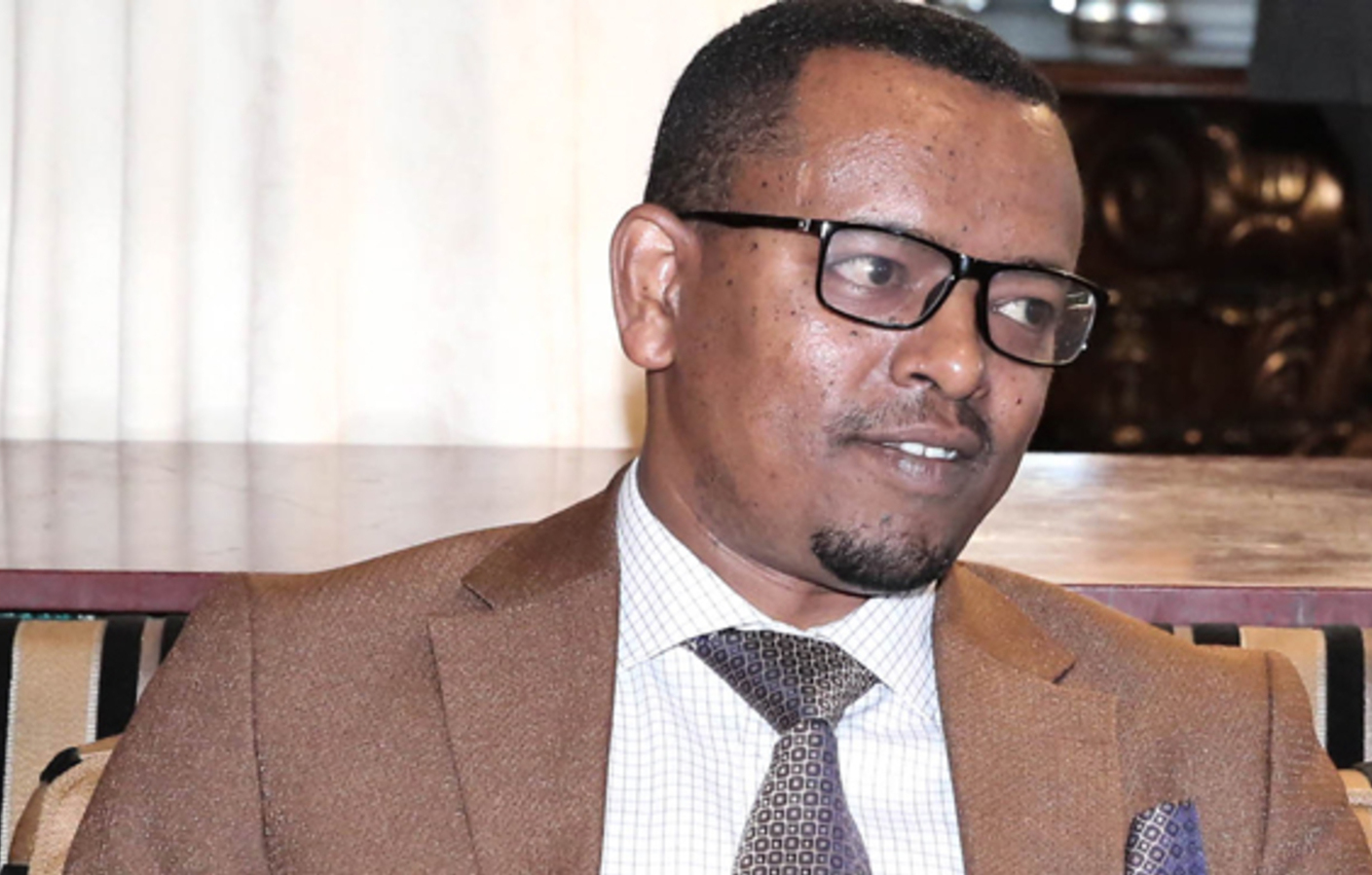
Netsanet Lemessa discusses rising settlement costs, inflation-driven claims and Ethio-Re’s African expansion ambitions.
Ethio-Re is earning more in birr, but meeting its foreign currency obligations has become increasingly difficult, according to Chief Executive Officer Netsanet Lemessa. In this interview with BirrMetrics, he describes how higher settlement costs and unpredictable access to foreign exchange are putting pressure on relations with international reinsurers. He also discusses the company’s response to rising property valuations, opportunities in agricultural and cyber insurance, and plans to expand its African operations.
Netsanet brings more than 23 years of professional experience to the role. Before joining Ethio-Re, he served as chief executive of Ethiopian Insurance Corporation, where he also held positions including deputy chief executive for general insurance operations and branch manager. He holds a BA in Accounting from Addis Ababa University and a diploma in Accounting from Kotebe College of Education. His previous industry roles include vice president of the Association of Ethiopian Insurers and board member of the Development Bank of Ethiopia.
In the discussion below, Netsanet says Ethio-Re already serves 12 African countries and intends to build a wider continental presence, even as it works through immediate pressures at home.
The interview has been edited for clarity and flow.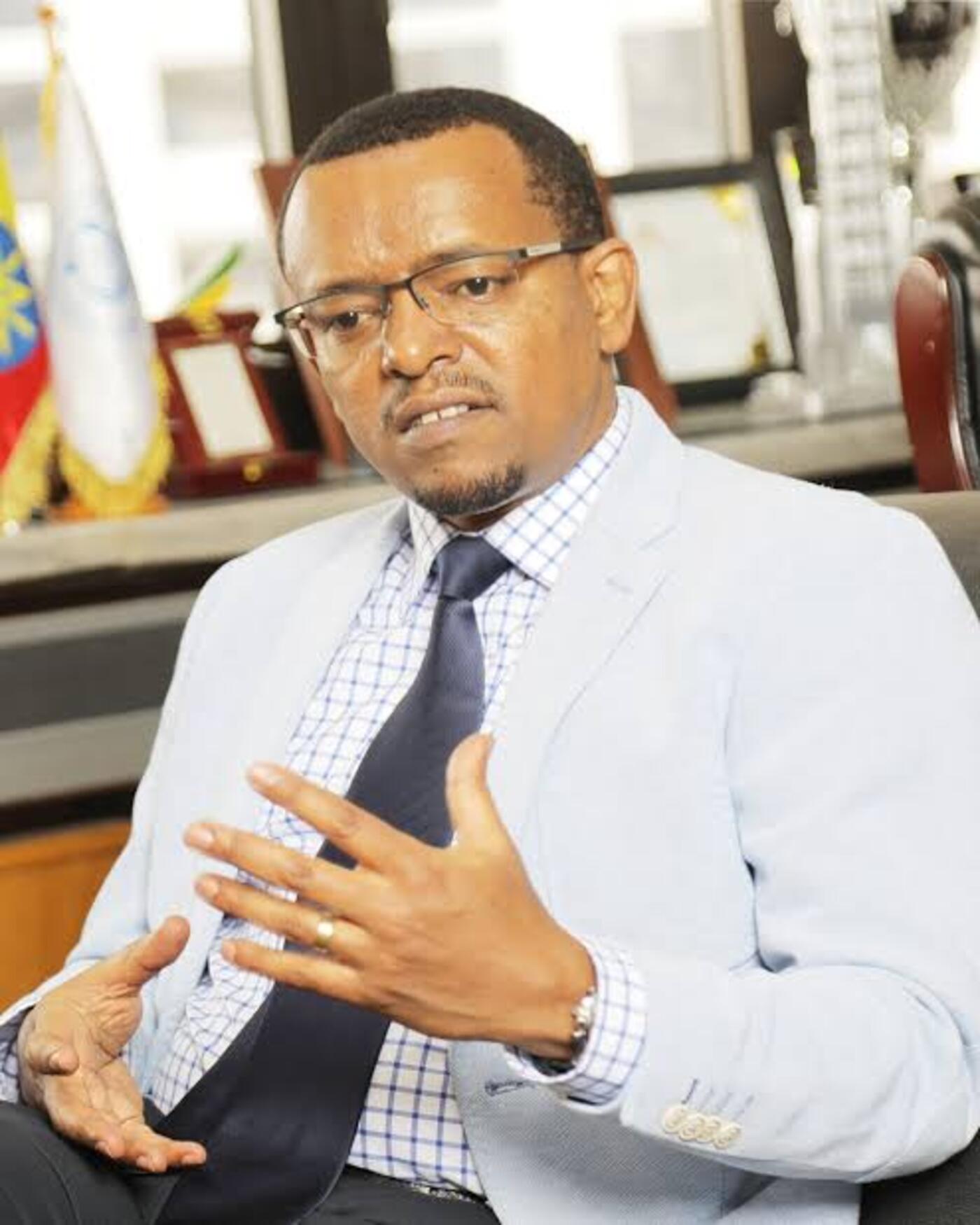
BirrMetrics: How have the macroeconomic reforms and the move to a market-determined exchange rate affected reinsurance claims and settlements with foreign partners?
Netsanet Lemessa: Our profitability in local currency has improved. We are generating more birr than ever. But when it comes to settling claims with foreign reinsurers, we face a severe liquidity bottleneck. Allowing the market to determine the exchange rate was the right policy move for the economy, but hard currency has also become significantly scarcer and more expensive.
Settlement costs have risen sharply. Every dollar we owe a foreign partner now costs substantially more birr than it did a year ago. This eats into our margins on international treaties and forces us to continually reprice our retrocession arrangements, through which we transfer part of our risk to other reinsurers.
Timing has become equally unpredictable. Before the reform, we had a clearer, more centralised foreign exchange allocation process. Now, with market-driven rates and limited dollar supply, we cannot guarantee settlement within the traditional 30-to-90-day windows. This strains our relationships with global reinsurers and puts our credit terms under review.
Some foreign partners now request collateral in hard currency or insist on shorter settlement periods, with penalties for delays. We are also seeing a shift towards multi-currency clauses in new treaties, with obligations explicitly denominated in US dollars or euros to protect foreign partners from birr volatility.
To address these pressures, we have formally petitioned the National Bank of Ethiopia for a special foreign exchange allocation facility for reinsurance settlements, similar to what banks and importers receive. We are also seeking permission to retain a portion of our premiums in foreign currency so that we can build a natural hedge against our liabilities. In addition, we are using the new forward foreign exchange contracts allowed under Directive FXD/04/2026 to lock in future exchange rates and reduce uncertainty.
The system has not yet caught up with reality. For now, we are managing day to day, prioritising critical claims and maintaining transparent communication with our partners. These changes require a fundamental rethink of how we structure, price and settle our international reinsurance programmes.
BirrMetrics: What financial adjustments are you making as inflation pushes up property values and compensation claims?
Netsanet: This is one of our most pressing operational challenges. High inflation does more than erode purchasing power; it changes the mathematics of reinsurance. As property valuations rise, the sums insured increase. When claims arise, we face higher replacement costs rather than the original values.
We are making four key adjustments. First, we now apply quarterly inflation indices to all property portfolios, rather than adjusting them annually. This helps ensure that premium calculations reflect current replacement costs rather than historical values.
Second, we require clients to provide updated valuation certificates at each renewal, with penalties for underinsurance.
Third, for asset classes exposed to high inflation, including real estate, commercial buildings and infrastructure, we are reducing the amount of risk we retain and transferring more to our retrocession partners. This protects our balance sheet from oversized claims while sharing the inflation burden internationally.
Fourth, every treaty we write now includes a contingency loading, typically between 5 percent and 15 percent depending on the sector, to account for unexpected valuation increases. This is a buffer against volatility, rather than a source of profit.
Where possible, we are moving towards cash settlements based on indexed values at the time of loss rather than at the start of the policy. This aligns payouts with the economic cost of replacement, reduces disputes and accelerates recovery.
These adjustments are not a perfect shield. Inflation is running ahead of our actuarial models, and property valuations in urban centres are climbing faster than official indices capture. We are also seeing more fraudulent claims involving inflated valuations. We have therefore invested heavily in independent loss adjusters and digital valuation tools to verify every major claim.
We are adapting, but the environment tests our agility daily. Our shareholders and partners should know that we are pricing risk realistically, reserving conservatively and monitoring this exposure weekly. Inflation is manageable only if we stay ahead of it.
BirrMetrics: Are local insurers’ efforts to retain more risk putting pressure on your market share?
Netsanet: I do not believe their efforts to increase retention are putting negative pressure on our market share. The coverage insurers provide is closely tied to their capital and the premiums they collect. Ethio-Re is not in a position to dictate how they should operate.
Since the macroeconomic reforms and the move to a market-determined exchange rate, we have seen turbulence across the economy. This is a general market phenomenon, rather than something confined to insurance. Because we also balance our portfolio with business outside Ethiopia, shifts in our domestic market share have a limited effect.
We are moving in line with the broader insurance market. Our adjustments to inflation are market-driven, and we remain confident in our position. We continue to focus on delivering value across the region.
BirrMetrics: How are you responding to climate risks, and what are your plans for products such as parametric insurance?
Netsanet: On the domestic front, the Green Legacy initiative is a promising effort to mitigate climate-related risks. Our strategy builds on that work and extends beyond it. Ethiopia’s ratification of the Nairobi Agreement on climate matters gives us a foundation for introducing parametric insurance.
Agriculture is central to any discussion of climate risk. Agricultural insurance in Ethiopia remains largely untapped, with very low penetration, and we want to help change that.
Compared with other countries, we consider Ethiopia relatively less vulnerable to climate change, with topography suited to insurance. This makes it attractive to international insurers, although their stringent requirements have so far held back development.
Industry experts have repeatedly identified areas that need improvement, including professional leadership and stronger self-regulation. There is nevertheless broad agreement that the market has the potential to become significant and highly profitable.
The government’s climate initiatives and the country’s natural conditions contribute to its appeal. We believe Ethio-Re is well positioned to develop this underserved market.
BirrMetrics: What steps are you taking to strengthen your capital and improve your international credit rating?
Netsanet: We currently hold a B rating. The capacity we have demonstrated over the past three years allows us to operate across Africa, and we already provide services in 12 African countries.
Over the next two years, we plan to pursue expansion more aggressively in East Africa and the wider sub-Saharan region. We will assess the results before expanding across the continent over the following five years, including through branches and subsidiaries.
Our current capacity supports pan-African operations, but we prefer to follow our strategic timetable and assess results at each stage.
The second part of our strategy involves international partners, most of whom are based in the West. London remains a major global insurance hub, and these relationships give us access to the wider market.
We share risks with partners rated A or higher, and we also monitor companies with BB+ and A ratings. Close collaboration and alignment with these partners will be important as we work to improve our own rating. Strengthening our capital will also depend heavily on the development of the domestic insurance sector.
BirrMetrics: Are you planning to introduce reinsurance products covering cyber risks?
Netsanet: Cyber risks are a growing global concern. We are assessing how to work with international reinsurers to address them. Sharing risks with highly rated partners helps us balance our exposure, but their requirements can be demanding.
One of the main conditions our partners have raised is the need for an independent cyber risk oversight body. In Ethiopia, cybersecurity is currently overseen by the Information Network Security Administration, INSA, a government institution. Our international partners have argued for an independent body, and we have been working to bridge that gap.
We mainly provide government reports through INSA. Although we submit documents demonstrating the work being done, our partners remain firm on the question of independence.
For example, in the event of a cyberattack on a bank, they want an entity capable of responding immediately. They appreciate the reports we provide, but their position is that international best practice favours a non-governmental regulatory body.
There are encouraging indications that we may reach an agreement. We expect the upcoming insurance regulatory law to bring closer alignment with international standards, and we believe continued dialogue will produce solutions.
Meanwhile, cyber risks are growing rapidly. We will introduce reinsurance solutions and the associated payment arrangements in line with market readiness and prevailing conditions.
BirrMetrics: How does the African Continental Free Trade Area fit into your plans to expand beyond Ethiopia?
Netsanet: The move towards a single continental market supports our ambitions. We are engaging with initiatives such as Afreximbank’s AfrexInsure programme and the Pan-African Payment and Settlement System, PAPSS. Local-currency cross-border payments can remove a major obstacle to continental reinsurance business.
Our goal is to become a reliable continental and global insurer as Africa’s economy develops. We want to build African capacity to retain premiums within the continent and reduce the outflow of hard currency to foreign reinsurers, alongside growing our market share.
Competition is intense, and foreign players have deeper pockets. But we have strong local backing, knowledge of East African markets and a clear expansion plan.
We obtained a rating from GCR, the South African rating agency, and more recently from AM Best, the US-based agency. These ratings were a turning point. Without them, we could not operate credibly across borders. They have helped us export services and enter African markets.
We have already signed strategic partnership agreements with partners in Kenya, Sudan, Uganda and the Middle East.
BirrMetrics: What opportunities for collaboration and competition do you see in opening Ethiopia’s insurance market to foreign investors?
Netsanet: We welcome it wholeheartedly. Foreign capital brings the dollars we urgently need to settle international obligations and strengthen our balance sheet. Foreign expertise can bring innovation, advanced underwriting tools and products such as takaful and parametric insurance that we have previously lacked.
We see opportunities for collaboration, particularly in knowledge transfer and technology adoption. This can strengthen the industry and extend coverage to Ethiopia’s largely uninsured population.
But we are not intimidated by competition. We have been preparing for this for years. We secured international ratings from AM Best and GCR, expanded into 12 African countries, built partnerships in Kenya, Sudan and Uganda, and invested in a fully automated core system through SAP.
These were deliberate steps to ensure that we could compete with global players entering our market.
Some foreign reinsurers are larger and more experienced. We respect that, but we do not fear it. Our understanding of local risks, regulation and client relationships cannot be replicated overnight.
We are ready to compete and to collaborate where it benefits us, and we intend to lead. Ethio-Re is not stepping back; we are stepping up.
BirrMetrics: Where do you see the biggest opportunities in agricultural insurance and digital finance?
Netsanet: We see two clear areas of growth. The first is agriculture. Index-based insurance supported by satellite data is changing how we underwrite risk, reducing fraud and administrative costs while enabling automated, real-time payouts. Programmes such as DRIVE have demonstrated that this model can work even in remote pastoral areas.
The second is digital finance. With mobile money penetration nearing 50 percent and the new regulatory sandbox creating opportunities, we are exploring fintech-enabled products, from blockchain-based claims to microinsurance for people previously excluded from financial services.
For Ethio-Re, the opportunity extends beyond new revenue. We want to build sustainable systems capable of serving millions of Ethiopians. We are piloting innovations, establishing partnerships with technology providers and working with government and donors to support responsible development of the market.
The potential is considerable. We are pursuing it with ambition and discipline while protecting our balance sheet.
For more on regional financial integration, explore cross-border financial networks in PAPSS China India Expansion 2027: Payment Linkage Beyond Africa, and also enjoy tracking market updates directly on the Nairobi Securities Exchange (NSE) portal.




