

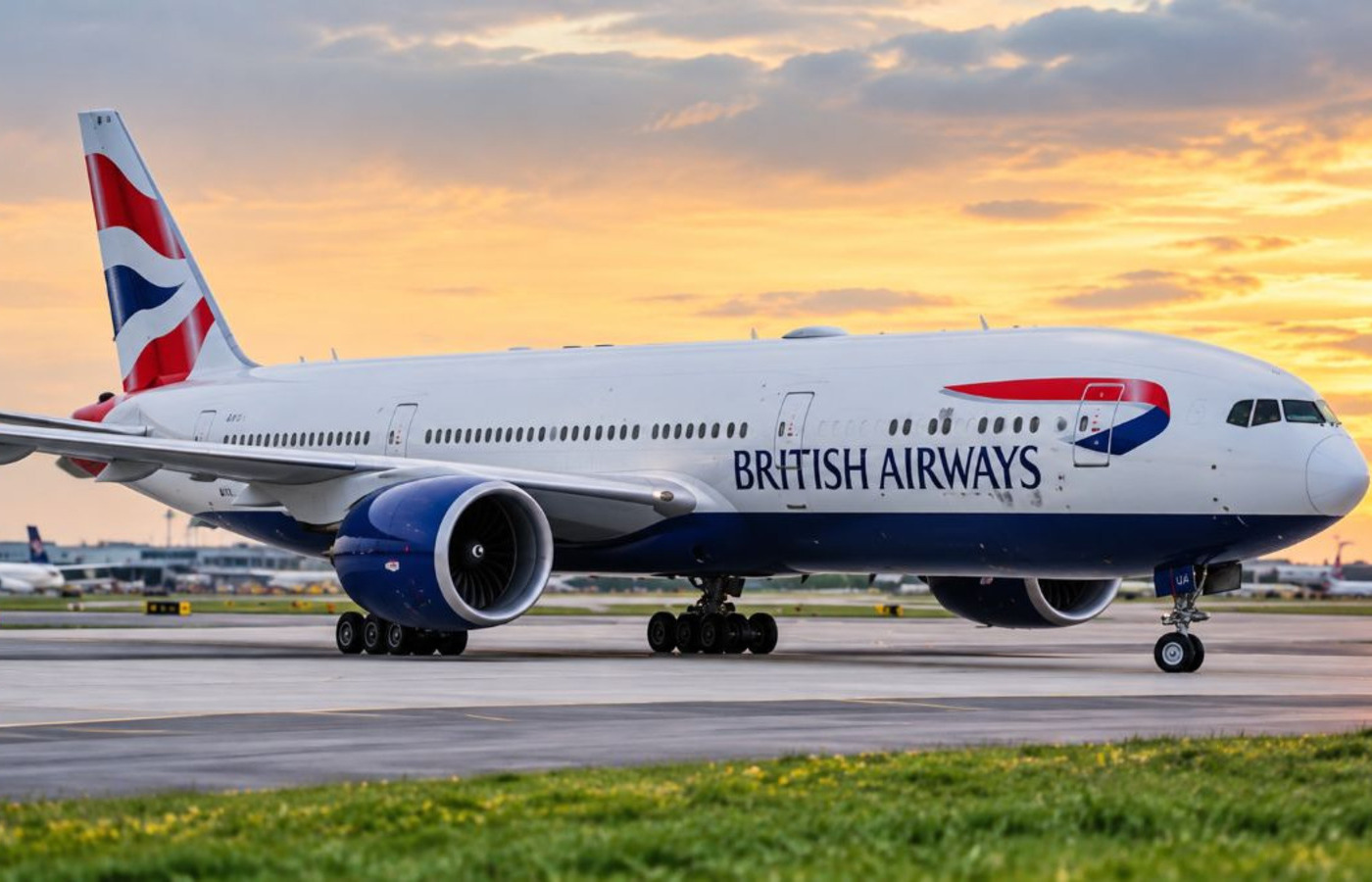
British Airways Tanzania Flight Return Boosts Competition as Tourism Hits $4.4B
British Airways will return to Tanzania in 2027 with three weekly flights linking London Gatwick with Kilimanjaro and Zanzibar, opening a new competitive front for African airlines that have built significant connecting traffic around the East African tourism market.
The seasonal service will begin on May 29, 2027, and operate through October 31, covering Tanzania’s peak safari season as well as the British summer holiday period.
British Airways will operate the route with a Boeing 777, flying from Gatwick to Kilimanjaro International Airport before continuing to Zanzibar and returning to London.
Flights will depart Gatwick on Mondays, Thursdays and Saturdays, with return fares starting at £849, including taxes and fees.
The launch marks British Airways’ return to Tanzania after more than a decade away from the market. Its previous service connected London with Dar es Salaam, but the new operation is structured differently, concentrating almost entirely on Tanzania’s high-value international tourism economy.
Rather than serving the country’s commercial capital, the airline is going directly after two of its most internationally recognised tourism gateways.
Kilimanjaro International Airport provides access to the Northern Safari Circuit, including the Serengeti, Ngorongoro Crater, Tarangire, Lake Manyara and Mount Kilimanjaro. Zanzibar gives the carrier access to one of Africa’s fastest-growing Indian Ocean leisure destinations.
The triangular routing effectively packages two major tourism products — safari and beach — into the same long-haul operation.
British Airways is returning at a time when Tanzania’s tourism economy is considerably larger than when the airline previously withdrew.
Tanzania recorded 2.29 million international tourist arrivals in 2025, up 7.1 percent from 2.14 million a year earlier.
Tourism earnings increased even faster, rising 13 percent to a record 4.41 billion US dollars, from about 3.90 billion US dollars in 2024.
The difference between arrival and revenue growth is significant. Tanzania is not only attracting more tourists; visitors are spending more.
Average expenditure on mainland Tanzania increased about 19 percent to 289 US dollars per visitor per night in 2025, from 243 US dollars a year earlier.
That makes the market increasingly attractive to full-service international airlines capable of capturing premium safari, honeymoon and leisure traffic rather than competing only for passenger volume.
The United Kingdom is already one of Tanzania’s most important tourism markets. British travellers accounted for about 6 percent of visitors to mainland Tanzania in 2025 and approximately 7.7 percent of visitors to Zanzibar.
British Airways is therefore entering a market where underlying UK demand already exists rather than attempting to build an entirely new passenger base.
The implications extend beyond British Airways and Tanzania.
For years, passengers travelling between Britain and Tanzania have relied heavily on connecting services through regional and international hubs.
Among African carriers, Ethiopian Airlines has been able to channel Tanzania-bound passengers through Addis Ababa, connecting its London services with Kilimanjaro, Zanzibar and other East African destinations.
Kenya Airways similarly uses Nairobi as a connecting hub, selling London itineraries onward to both Zanzibar and Kilimanjaro.
British Airways’ new operation removes that connection for a portion of the market.
A British tourist heading for a safari in northern Tanzania will be able to board a British Airways aircraft at Gatwick and arrive directly at Kilimanjaro without changing aircraft in Addis Ababa or Nairobi. Zanzibar-bound passengers can remain on the same operation as the aircraft continues to the island.
That does not eliminate the competitive advantages of Ethiopian Airlines or Kenya Airways. Both carriers operate extensive African networks that allow passengers to combine Tanzania with multiple destinations across the continent, while their hub structures provide frequencies that a three-times-weekly seasonal British Airways operation cannot necessarily match.
But for point-to-point UK leisure travellers — particularly tourists whose entire itinerary is centred on Kilimanjaro, the northern safari circuit and Zanzibar — the value of connecting through another African hub becomes less compelling when a direct alternative exists.
The result could place pressure on connecting fares and premium leisure traffic carried through Addis Ababa and Nairobi, particularly during the June-to-October high season.
The most direct competitive impact, however, could fall on Air Tanzania.
The Tanzanian flag carrier has already announced plans to begin its own services from London Gatwick to Kilimanjaro and Zanzibar from July 2027, with at least three weekly flights planned.
British Airways is now scheduled to enter the same market roughly two months earlier.
That creates the prospect of two airlines competing for virtually the same traffic — from the same London airport, to the same Tanzanian tourism gateways and during the same peak travel season.
For Air Tanzania, the London route had been positioned as an important step in its international expansion and an opportunity to capture more of the tourism revenue associated with bringing visitors into its home market.
British Airways’ entry complicates that calculation.
BA brings a large UK customer base, established relationships with British tour operators, an extensive frequent-flyer ecosystem and substantial long-haul distribution capacity. Air Tanzania, by contrast, has the advantage of being the national carrier, with a domestic network that can distribute passengers beyond the international gateways and potentially integrate London traffic with other Tanzanian destinations.
The contest could therefore become an important test of whether African airlines can retain a larger share of the value generated by the continent’s rapidly expanding tourism industry as major European and Gulf carriers add direct capacity.
The broader development also illustrates how Tanzania’s tourism growth is beginning to reshape airline network decisions.
Greater international air capacity can lower travel friction, expand the pool of potential visitors and increase competition on fares. It can also allow more tourism spending to enter Tanzania directly rather than requiring passengers to connect through another country.
For Tanzania, that means Kilimanjaro and Zanzibar are increasingly functioning not merely as secondary destinations fed through large African or Middle Eastern hubs, but as long-haul destinations capable of supporting direct wide-body services from major European markets.
British Airways is making the bet with a Boeing 777.
Its return also comes as the airline expands other parts of its long-haul network for the 2027 summer season, including additional Cape Town capacity and a broader increase in services to Latin America.
For African airlines, however, Tanzania carries a different significance.
The growth of direct European services into destinations such as Kilimanjaro and Zanzibar gradually reduces the automatic advantage enjoyed by continental hubs in Addis Ababa, Nairobi and Kigali, which have traditionally aggregated passengers travelling to smaller African markets.
Those hubs will remain critical to intra-African and connecting traffic. But as individual African destinations generate enough high-value demand to justify direct long-haul flights, competition is increasingly moving from who controls the connection to who can offer the passenger the most convenient route to the destination itself.
With tourism already generating more than 4.4 billion US dollars a year, Tanzania is becoming one of the East African markets where that competition is likely to intensify.




