

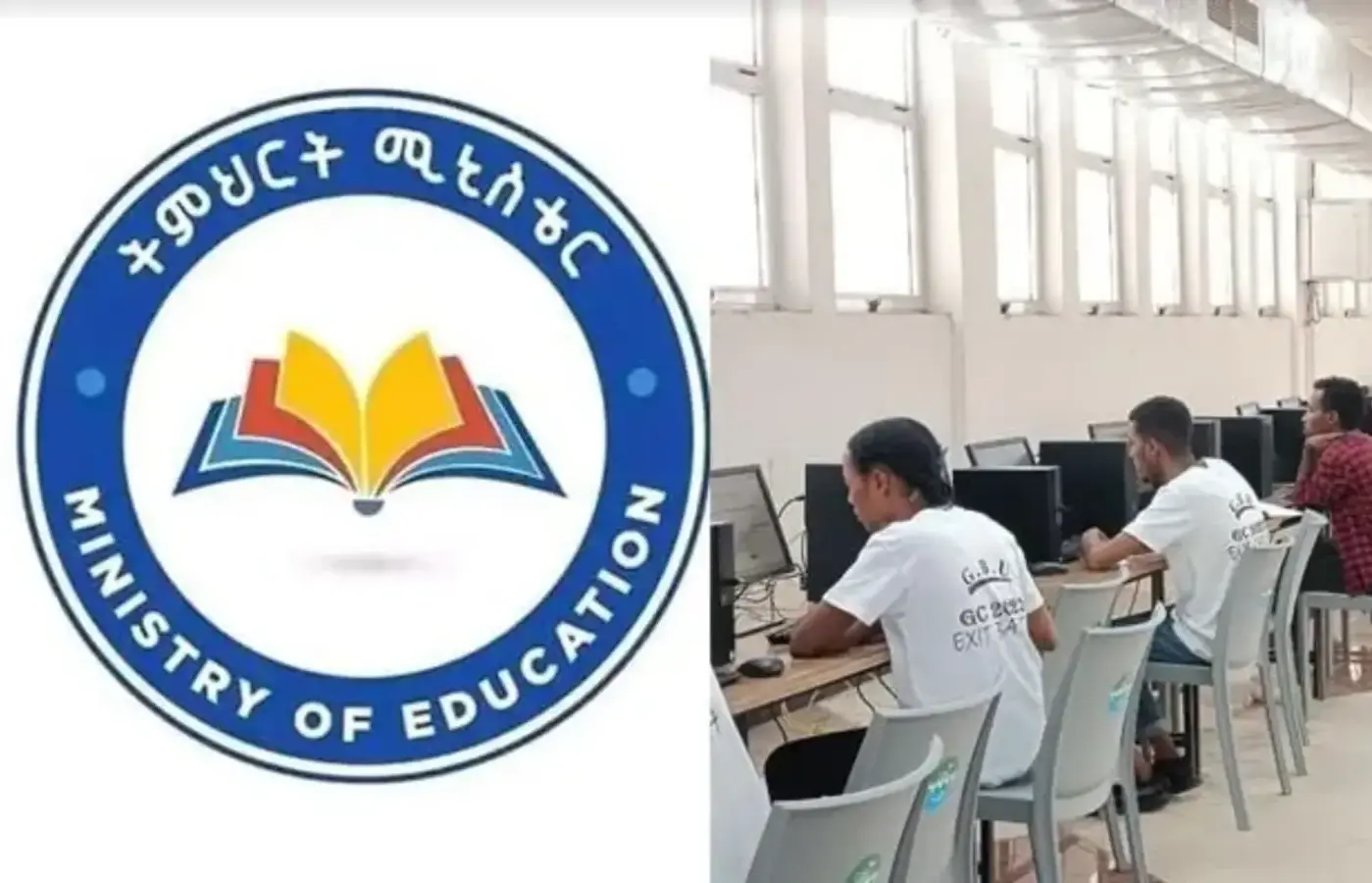
The Ministry of Education has announced it is developing a comprehensive national and institutional policy to regulate the use of Artificial Intelligence (AI) in strengthening online education across Ethiopia's higher education institutions. The initiative cites both the technology's growing role in modern teaching and learning and the risks posed by its unregulated use.
Getahun Mekonnen (PhD), Chief Advisor for Monitoring, Evaluation, and Education under the Ministry's Online Education Strengthening Program, underscored AI's pivotal role in modern teaching and learning. He cautioned, however, that without clear guidelines and robust standards, its application risks creating significant gaps.
Getahun emphasized that rigorous oversight is particularly critical during student assessments. This ensures that submitted work genuinely reflects students' own efforts and safeguards against adverse effects.
Ethiopia's policy landscape for AI and digital education has been steadily taking shape in recent years. In June 2024, the federal government issued the National Artificial Intelligence Policy, establishing a framework for human capacity building, data governance, ethical standards, and international cooperation.
The Digital Ethiopia 2030 strategy further positioned AI as a central pillar of national development. It includes plans for expanded cloud infrastructure and structured data governance.
In higher education specifically, the Ministry's e-SHE program has already connected over 250,000 learners across 50 universities. It has also trained 35,000 educators in digital pedagogy and established regional multimedia hubs for content production.
The Ministry approved the National e-Learning Policy and issued the Higher Education Institutions Electronic Learning Implementation Directive. These created governance structures for online learning at the institutional level. The current AI policy initiative builds on this foundation.
Officials said the system must be implemented in accordance with ethical standards at every level, from institutions to individuals. They stressed that neither outright avoidance of the technology nor its unregulated use is acceptable.
According to the advisor, AI has the capacity to provide students with learning approaches tailored to their individual interests and knowledge levels. He explained that the technology can enhance online education by identifying subject areas in which students are struggling. It can also recommend supplementary learning materials and resources.
Officials noted that failing to harness the technological advancements achieved worldwide would undermine national efforts. It would hinder the cultivation of a workforce capable of competing on the international stage.




