

An EU-backed fellowship will support 20 Ethiopian media institutions with training, mentorship and consultancy aimed at strengthening their business resilience, digital capabilities and editorial capacity through 2028.
The AMIRP Forward Media Fellowship is being implemented in Ethiopia by OMNI Ethiopia in collaboration with International Media Support (IMS), DW Akademie and other programme partners.
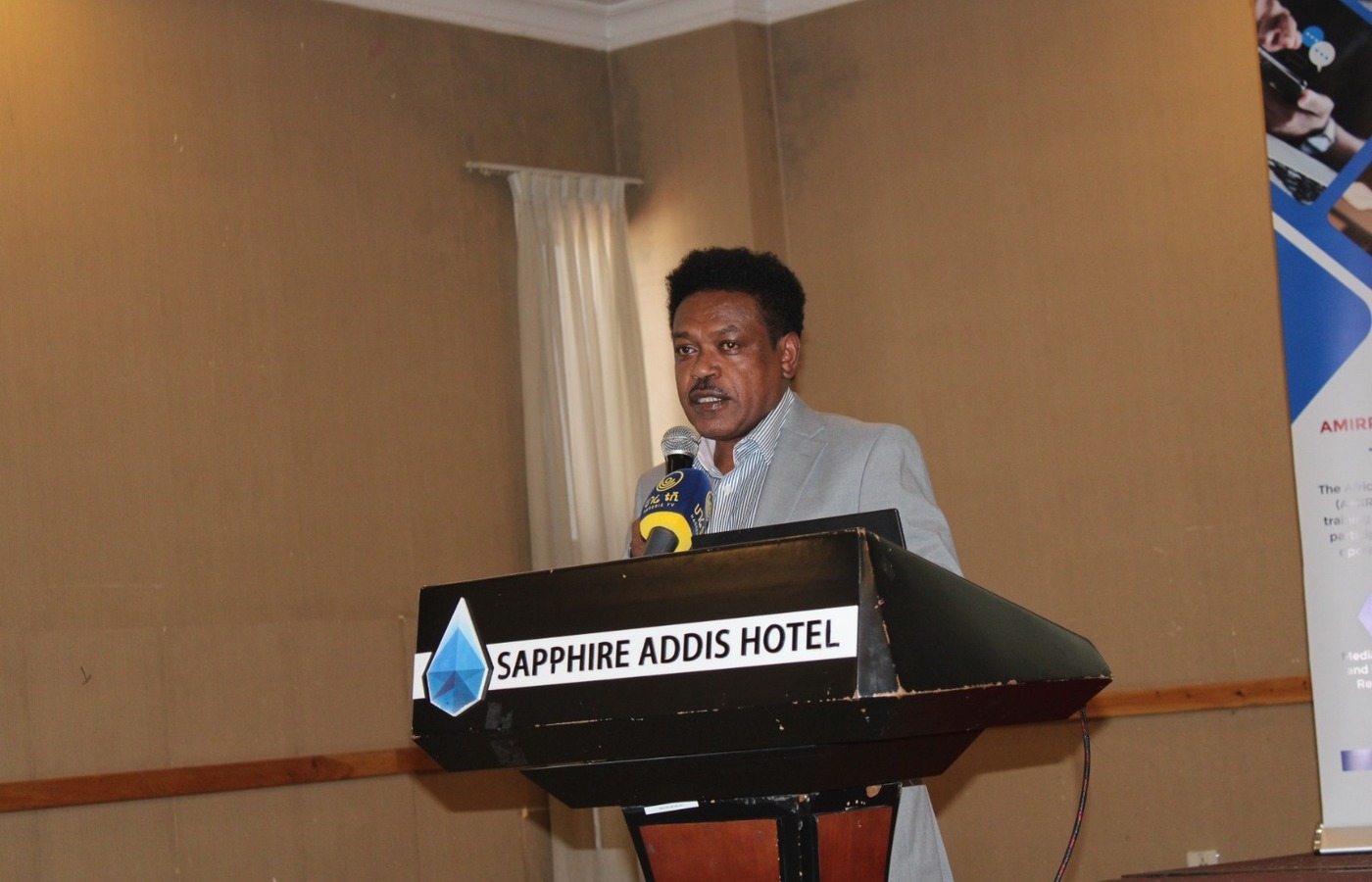
Begna Simesso, Managing Director of OMNI Ethiopia, said the programme comes as Ethiopian media organisations increasingly depend on digital platforms for audience reach while continuing to rely heavily on advertising and sponsorship for revenue.
“Fifty-two respondent media said they get more than 50 percent of their audience from digital,” Begna said.
The shift in audience behaviour has increased the importance of digital distribution for news organisations, but has not necessarily translated into stronger or more diversified revenue streams.
He said many newsrooms have introduced formal business plans, but those plans have not guaranteed higher revenues.
“Newsrooms are more dependent on ads and sponsorship. They have adopted business plans, but business plans aren't a guarantor for strong revenue,” he said.
The revenue model is one of the issues addressed by the fellowship, which includes Media Viability and Business Resilience among its core areas of support.
The programme will also cover digital transformation and responsible artificial intelligence, as well as the use of open-source intelligence for investigation and verification.
The fellowship is part of the African Media Integrity and Resilience Program (AMIRP), a 2026-2028 initiative funded by the European Union and coordinated by IMS. AMIRP is being implemented in Ghana, the Central African Republic and Ethiopia.
The 20 Ethiopian media institutions were selected through a competitive process and will participate across two cohorts. Each organisation is expected to apply the training through institutional plans, practical assignments and measurable newsroom or operational improvements.
Under the memorandum of understanding governing participation, media houses can nominate up to six staff members covering editorial and public-interest journalism, digital technology and AI, business and operations, and senior management.
The programme may also provide conditional opportunities such as study or exchange visits, internships, awards, equipment and financial support to third parties. These opportunities are subject to available resources, eligibility requirements, selection procedures and separate written agreements.
The agreement also establishes a separation between programme support and editorial decision-making. OMNI Ethiopia is required to respect participating media houses' editorial independence, while each media organisation remains responsible for its editorial decisions, legal compliance and professional standards.
“The Media House remains responsible for its editorial decisions, legal compliance and professional standards,” the MoU states.
The fellowship is scheduled to begin with an official launch bringing together participating media organisations, programme partners, trainers and media-sector stakeholders.
For Ethiopian newsrooms, the programme comes as audience behaviour continues to shift toward digital platforms while advertising and sponsorship remain important sources of income. The findings cited by Begna Simesso highlight the gap between digital audience reach and the ability of media organisations to turn that reach into sustainable revenue.
The fellowship's emphasis on media viability therefore places business planning alongside digital transformation and editorial capacity, with participating organisations expected to translate the training into practical institutional changes.
To explore further reporting on media technology, digital economy trends, and communications infrastructure in East Africa, review coverage on BirrMetrics Media & Telecoms, or access official international partnership guidelines via International Media Support (IMS).




