

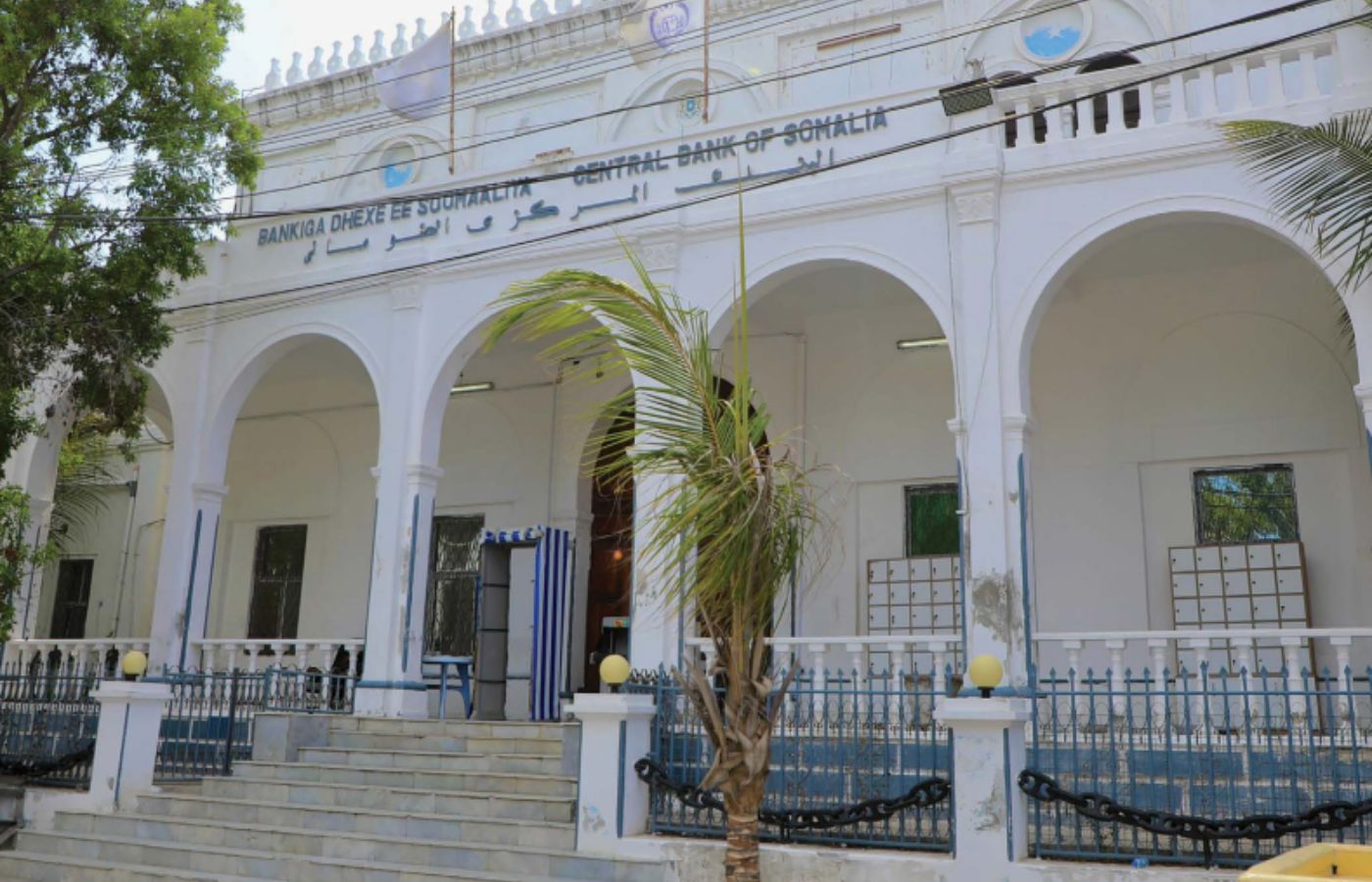
Somalia's exclusion from the global correspondent banking system is costing the country an estimated 210 million US dollars annually, forcing every international transaction through costly intermediary channels and draining resources from one of the world's most fragile economies.
The exclusion means no Somali bank can send or receive US dollars directly. Every transaction is routed through correspondent institutions in Nairobi, Djibouti, and Istanbul, a chain of intermediaries that adds layers of cost, delay, and opacity to trade, aid, and remittances alike.
"No Somali bank today can send or receive US dollars directly," Central Bank Governor Abdirahman M. Abdullahi said. "What finally arrives is diminished not by crime or corruption, but by the machinery of financial intermediation."
The governor said the arrangement falls hardest on trade finance, humanitarian aid, and remittances, the three lifelines of Somalia's economy.
Somalia receives approximately 4.2 billion US dollars in annual inflows, roughly 1 billion US dollars in aid and 3.2 billion US dollars in remittances. Even at a conservative 5 percent average transfer cost, 210 million US dollars disappears into intermediary fees each year.
The governor argues the exclusion is no longer justified by Somalia's regulatory environment. Over the past decade, the Central Bank has licensed and now supervises 13 domestic commercial banks, one foreign bank, six mobile money providers, and 15 money transfer businesses. A modern legal framework covers anti-money laundering and counter-terrorist financing, targeted financial sanctions, insurance, and regulated financial institutions.
The payments infrastructure has been rebuilt around international standards. Somalia launched the Somalia Instant Payment System (SIPS) in March 2025, a real-time, 24/7 clearing and settlement system based on QR-code standards that connects bank accounts, mobile wallets, and merchant terminals. The system operates on ISO 20022 standards with IBANs, sanctions screening, and a national QR code.
"Exactly the kind of documentation international banks need for streamlined due diligence," Abdullahi said.
By early 2025, an estimated 73 percent of Somali adults actively used mobile money services, among the highest rates in sub-Saharan Africa. SIPS has begun integrating these mobile wallets with the formal banking system, with seven banks connected at launch and six more, plus major mobile money operators, expected to join.
The consequences extend beyond aid and remittances. Somalia imported roughly 9.2 billion US dollars worth of goods in 2024, but less than one-third was financed through the formal banking system. The remainder moved through money transfer operators or informal networks, channels that are more expensive and far less transparent.
The distortion is most acute in trade finance, where Somali businesses lack access to letters of credit and other instruments that would allow them to compete with regional exporters. With direct settlement channels, a larger share of trade could be routed through regulated banks where compliance teams can monitor transactions, the Central Bank argues.
International financial institutions have acknowledged the problem. At the 2026 IMF-World Bank Spring Meetings, Central Bank officials co-chaired a Financial Sector Initiative session with the World Bank focused on restoring correspondent banking relationships for Somali banks. The African Development Bank is supporting a Financial Sector Development Project aimed at strengthening AML/CFT compliance to meet international standards.
However, hesitation among global banks is not merely technical. Somalia remains a high-risk environment, with ongoing conflict, political instability, and the presence of Al-Shabaab, which is subject to UN sanctions. Somali officials point out that no international sanctions apply to the government or private sector, only targeted measures on the militant group, but concerns about governance and aid diversion persist.
A recent UN report documented widespread diversion of humanitarian assistance, and international donors have been shaken by repeated allegations of corruption. For Somalia to achieve the direct correspondent relationships it seeks, the federal government must demonstrate not only regulatory compliance but concrete progress in ensuring that funds entering the country are used transparently.
"The burden of proof remains on Somali institutions," FTL Somalia noted in its assessment of the correspondent banking campaign.
Somali officials frame the exclusion as a "de-risking" problem that pushes legitimate money flows into harder-to-track channels, ultimately weakening global transparency. They point to recent milestones, including HIPC debt relief in 2023, joining the East African Community, election to the UN Security Council in 2025, and advanced negotiations to join the WTO, as evidence that reforms are real and recognized.
The Central Bank has also moved to formalize previously unregulated segments of the financial sector. In November 2025, it granted the first licenses to seven non-deposit-taking microfinance institutions, creating a regulatory framework for institutions that serve households, microenterprises, and women-owned businesses outside the formal banking system.
"Microfinance is not just about credit," Abdullahi said at the licensing announcement. "It is about giving low-income and vulnerable groups a formal, safe and affordable entry point into the financial system."
But until correspondent banking relationships are restored, the Central Bank argues, even the most compliant Somali bank remains dependent on intermediaries, and the country continues to pay the price.
For further legal and economic analysis on Horn of Africa financial policy, read our coverage on Somalia Correspondent Banking Trade Costs, and track institutional updates directly via the Central Bank of Somalia Official Portal.




