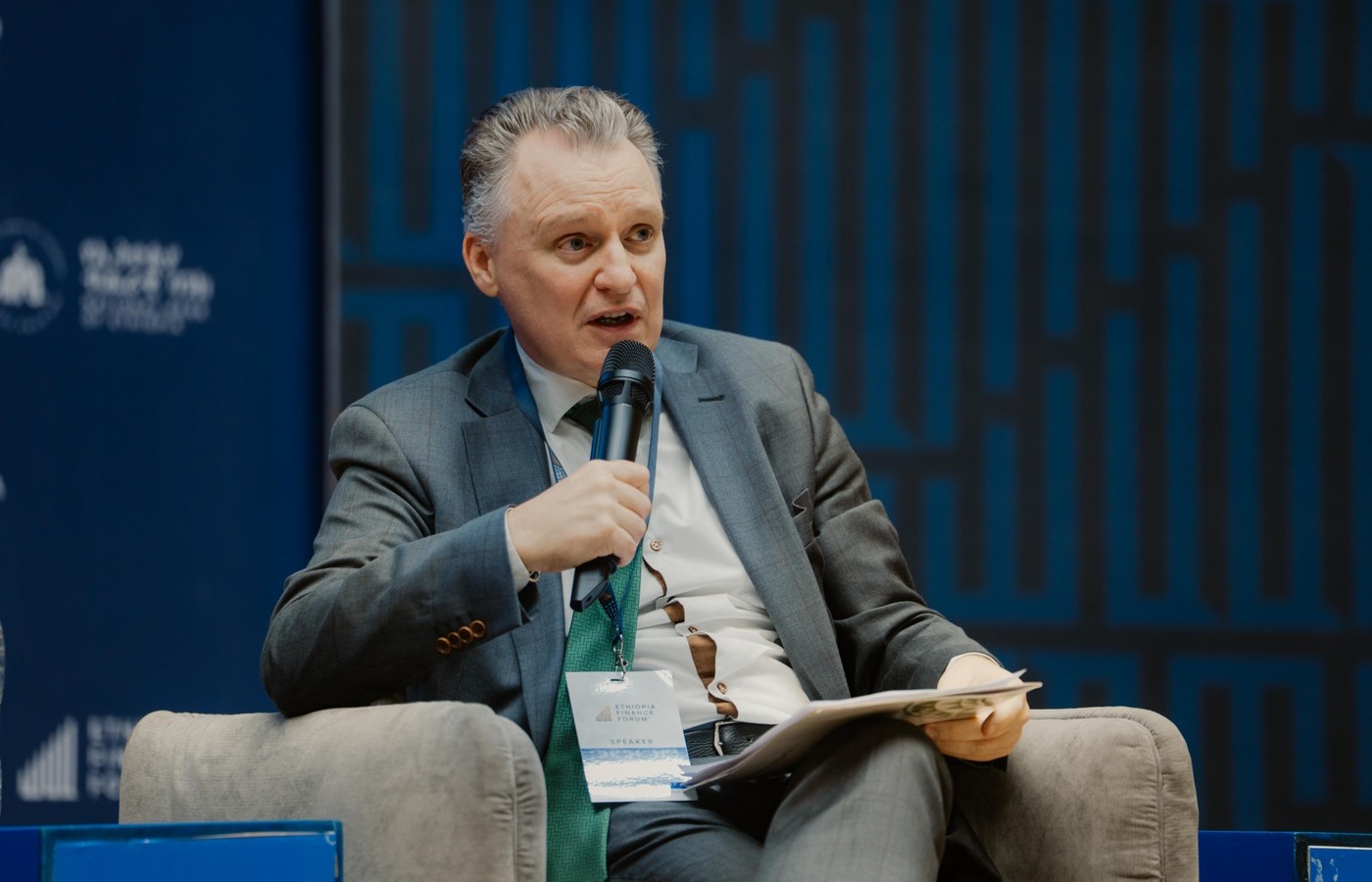
Vanhelleputte tells Ethiopia Finance Forum 2026 that better access to foreign exchange is opening the door for domestic production, jobs and value addition.
Ethiopia's foreign exchange reform could spark a boom in local manufacturing, creating jobs and keeping more value inside the country, according to Wim Vanhelleputte, Safaricom Ethiopia CEO, who also oversees M-PESA.
The reform, he argues, is giving Ethiopian businesses something they have long lacked: reliable access to foreign currency.
Ethiopia launched sweeping economic reforms in July 2024, shifting to a market-based exchange rate and scrapping mandatory foreign exchange surrender requirements for exporters.
The country had long struggled with acute FX shortages. At times, the parallel market premium exceeded 100 percent, while foreign reserves covered barely two weeks of imports.
The reform program is backed by a four-year International Monetary Fund Extended Credit Facility and World Bank development policy financing, alongside debt restructuring under the G-20 Common Framework.
Since the reform, reserve coverage has risen to more than two months of imports, and the parallel market premium has narrowed sharply.
Speaking at a panel on FX market reform, capital-market development and global market integration during the Ethiopia Finance Forum 2026, Vanhelleputte described the transition as short-term pain and long-term gain.
He noted that the reform has forced companies that operated under the previous FX regime to reassess their accounts and cost structures in line with market realities.
Improved access to foreign exchange, however, could enable local firms to import raw materials, manufacture goods domestically and offer products and services in local currency, he said.
Beyond manufacturing, Vanhelleputte pointed to opportunities for greater local participation in infrastructure, goods and services, and talent development.
These areas, he said, could drive job creation and value addition within the Ethiopian economy.
He also stressed the need to align revenues and pricing with investment costs, adding that visible dividend payments and improved FX availability have strengthened investor confidence.
Data suggests the reform is already yielding results.
In the 2024/25 fiscal year, Ethiopia's merchandise export earnings climbed to about 8.3 billion US dollars from roughly 3.8 billion US dollars the previous year, a 119 percent increase.
Gold exports surged even more sharply, rising from 409 million US dollars to 3.46 billion US dollars, a 747 percent jump, largely driven by higher export volumes as trade shifted from informal to official channels.
Coffee exports also rose 86 percent to 2.67 billion US dollars, supported by higher international prices and the exchange rate reform.
Inflation, meanwhile, declined from an average of 27 percent in the 2023/24 fiscal year to 16 percent in 2024/25, aided by tight monetary and fiscal policy.
Real GDP growth rebounded to 9.2 percent in the 2025 fiscal year, driven by a strong industrial recovery, with the World Bank projecting 7.2 percent growth for 2025/26.
Vanhelleputte took over as CEO of Safaricom Ethiopia in September 2023, bringing more than 25 years of African telecommunications management experience, including senior roles at MTN Group.
He previously served as CEO of MTN Uganda and MTN Côte d'Ivoire, where he led the launch of mobile money and mobile data services.
Under his leadership, Safaricom Ethiopia's network now covers 59.2 percent of the population, with 13.6 million active subscribers over a 90-day period.
The company's mobile money platform, M-PESA, reached 5.2 million active subscribers in fiscal year 2026, a 120 percent increase, processing 442.2 million transactions during the year.
For additional economic analysis, market insights, and financial updates, read our report on Development Bank of Ethiopia Expands Financing for Off-Grid Solar Businesses, or explore our coverage on Africa Moves to Establish Continental EV Observatory Under AU E-Mobility Framework.