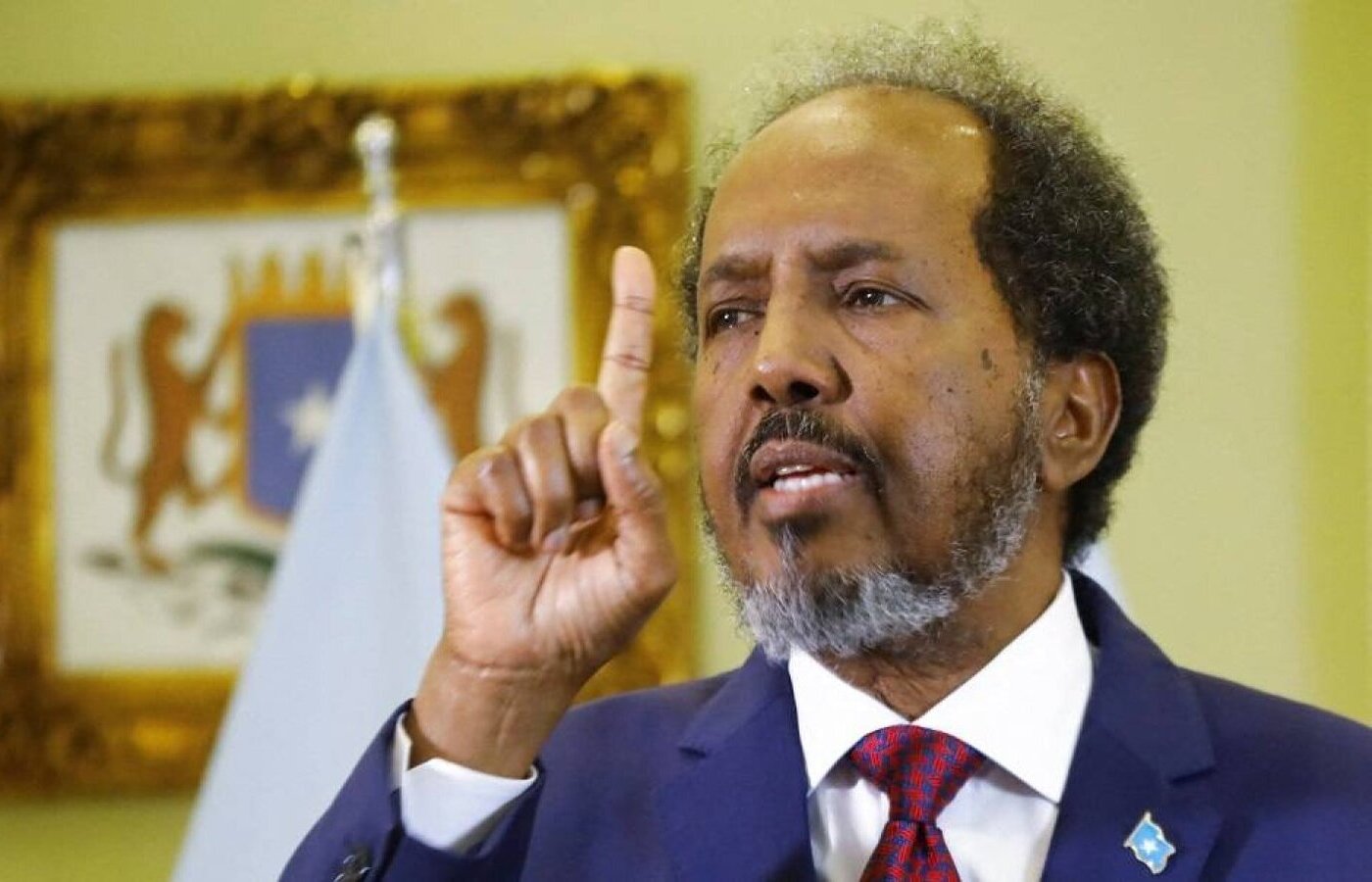
Somali President Hassan Sheikh Mohamud said his government is prepared to allow Ethiopia to reach the sea through Somali territory, including the use of Somali ports for imports and exports.
Mohamud made the remarks in an interview with Al Jazeera on Saturday, October 3, during a visit to Egypt for high-level regional meetings.
He said relations between Somalia and Ethiopia are strong and stressed that his country does not object to its landlocked neighbor gaining maritime access. The Somali president noted that other landlocked African nations already reach the sea through neighboring countries, and argued that Ethiopia's access should be governed by established standards and internationally accepted arrangements.
His comments rank among the clearest public statements on Ethiopia's maritime ambitions since a diplomatic dispute strained relations between the two countries.
The rift began in January 2024, when Ethiopia signed a memorandum of understanding with Somaliland that envisaged Ethiopian access to the Gulf of Aden.
Somalia rejected the deal, arguing that arrangements involving territory it considers part of Somalia cannot proceed without the approval of the federal government in Mogadishu.
Relations later improved through Turkish-mediated negotiations. Under the December 2024 Ankara Declaration, Ethiopia and Somalia reaffirmed respect for each other's sovereignty, unity, independence and territorial integrity, and acknowledged the potential benefits of assured Ethiopian sea access.
The two countries also agreed to pursue mutually beneficial commercial arrangements, including contracts, leases or similar mechanisms. Such arrangements would provide Ethiopia with reliable, secure and sustainable maritime access while remaining under Somalia's sovereign authority.
Mohamud's latest remarks broadly reflect that framework.
He further described the Red Sea as strategically important to Somalia's economy and security, saying countries bordering the maritime corridor, along with those with security interests there, need to understand one another.
Mohamud stressed that Somalia would not support violence or violations of another country's sovereignty to resolve regional disputes. He said governments should instead pursue dialogue and agreements, adding that he does not expect a regional war.
The remarks come at a particularly sensitive moment for the Horn of Africa. Mohamud is in Egypt, where he met Egyptian President Abdel Fattah el-Sisi ahead of a four-way summit bringing together Egypt, Eritrea, Sudan and Somalia in New Alamein.
Mohamud's comments do not mean Ethiopia would receive sovereign territory or ownership of any part of Somalia's coastline.
Any eventual agreement would require further negotiations between the two governments over the ports Ethiopia could use, the commercial terms governing access and the legal framework under which it would operate.
For broader geopolitical and macroeconomic updates, read our coverage on Safaricom Ethiopia CEO Speaks on FX Reforms Boosting Local Manufacturing, or explore our report on Development Bank of Ethiopia Expands Financing for Off-Grid Solar Businesses.