The African Export-Import Bank's balance sheet has expanded sixfold over the past decade, President George Elombi said, disclosing that shareholders' funds now stand at approximately 9 billion US dollars, up from 8.4 billion US dollars at the end of 2025.
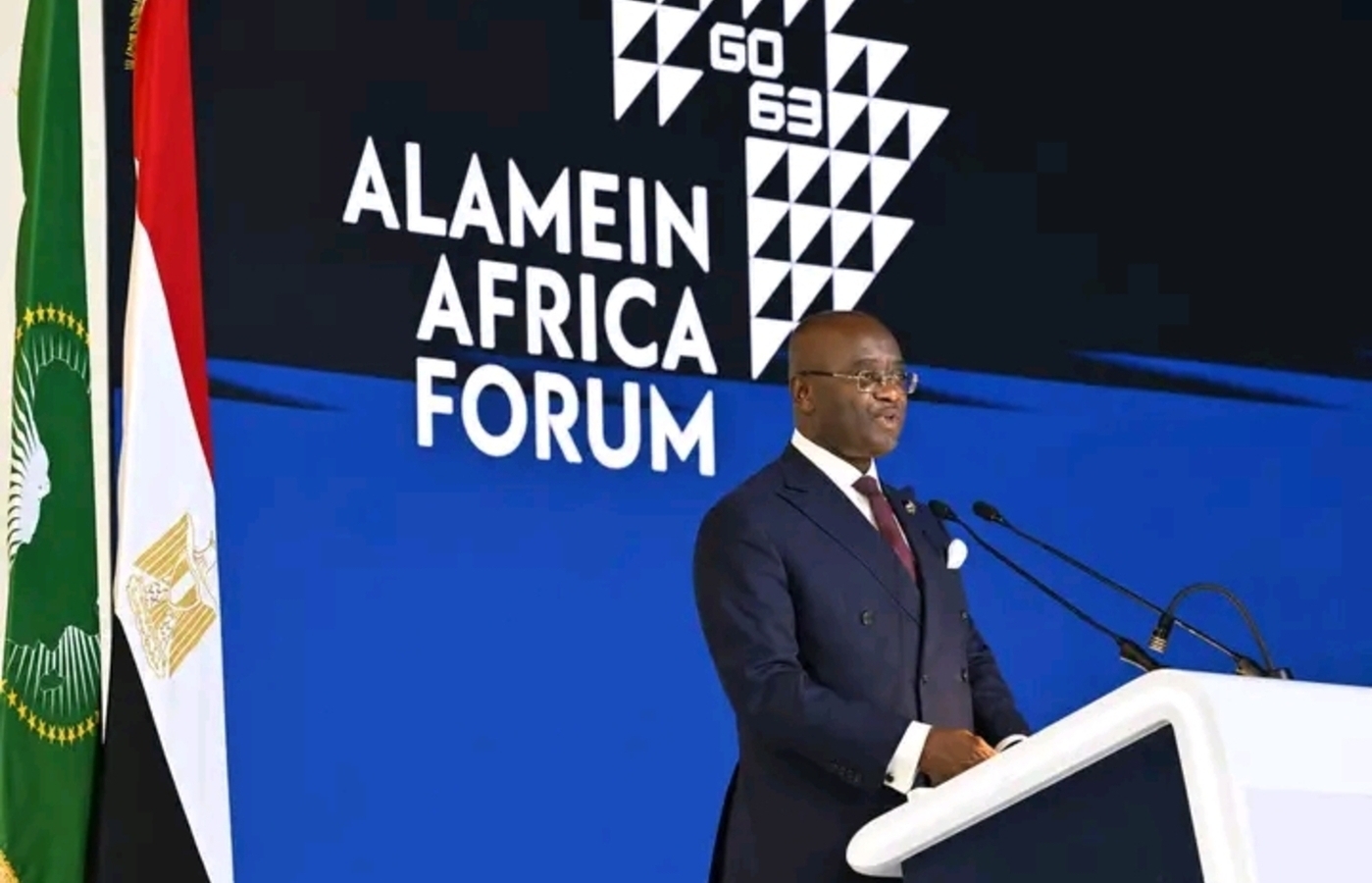
Elombi, speaking at the Alamein Africa Forum 2026 in New Alamein, Egypt, said net income rose 30 percent in the first half of 2026.
African shareholders injected nearly 300 million US dollars in fresh equity during 2025, he said. A further 226 million US dollars has been received in 2026 to date, with an additional 300 million US dollars expected.
"This growth reflects sustained capital injections by African shareholders," Elombi said, describing the contributions as "ownership made tangible."
Elombi also urged African heads of state to defend the continent's multilateral financial institutions. He said global rating agencies penalize African ownership and argued that credit ratings have been used as a political weapon.
For the year ended December 2025, total assets and contingencies rose 21 percent to 48.5 billion US dollars, up from 40.1 billion US dollars a year earlier.
Net income advanced 19 percent to 1.2 billion US dollars, surpassing 1 billion US dollars for the first time in the institution's history.
Liquid assets accounted for 14 percent of total assets, above the bank's 10 percent strategic minimum.
Afreximbank has expanded financing for trade, industrialization, and regional integration across Africa and the Caribbean.
Its initiatives include a 10-billion-US-dollar Gulf Crisis Response Programme and the Pan-African Payment and Settlement System (PAPSS), both intended to deepen intra-African trade.
In June 2026, S&P Global Ratings affirmed the bank at BBB+ with a stable outlook, citing its strategic role and shareholder support.
Afreximbank is owned by four categories of shareholders. Class A comprises African governments, African central banks, and regional institutions, which together hold more than 50 percent of shares across 53 member states.
Class B consists of African private investors and financial institutions, holding roughly a quarter of total shares.
The remaining classes cover non-African and general investors. Class C is reserved for non-African investors, while Class D, created in 2012, is open to general investors and listed on the Mauritius Stock Exchange. As of December 2025, the bank had 169 shareholders.
The bank operates under successive five-year strategic plans. Its current framework, IMPACT 2026 – Extending the Frontiers, focuses on intra-African trade, industrialization and export development, trade finance leadership, and financial sustainability.
Afreximbank has positioned itself as a countercyclical lender and a supporter of the African Continental Free Trade Agreement (AfCFTA).
For more insights on regional financial and trade developments, explore our analysis on Development Bank of Ethiopia Expands Financing for Off-Grid Solar Businesses, or read our update on Ethiopian Capital Market Authority Grants New Investment Banking Licenses.
For broader macroeconomic and regional development insights, read our coverage on Somalia Ready to Grant Ethiopia Sea Access, Says President Hassan Sheikh, or explore our report on Development Bank of Ethiopia Expands Financing for Off-Grid Solar Businesses.