Prime Minister vows to pursue peaceful Red Sea access, complete macroeconomic reforms and build stronger defence capabilities after Parliament returns him to office
Prime Minister Abiy Ahmed (PhD) pledged constitutional reform, a renewed push for access to the sea, tougher action against corruption and the completion of Ethiopia’s macroeconomic overhaul after Parliament elected him to lead the federal government for another term on Monday.
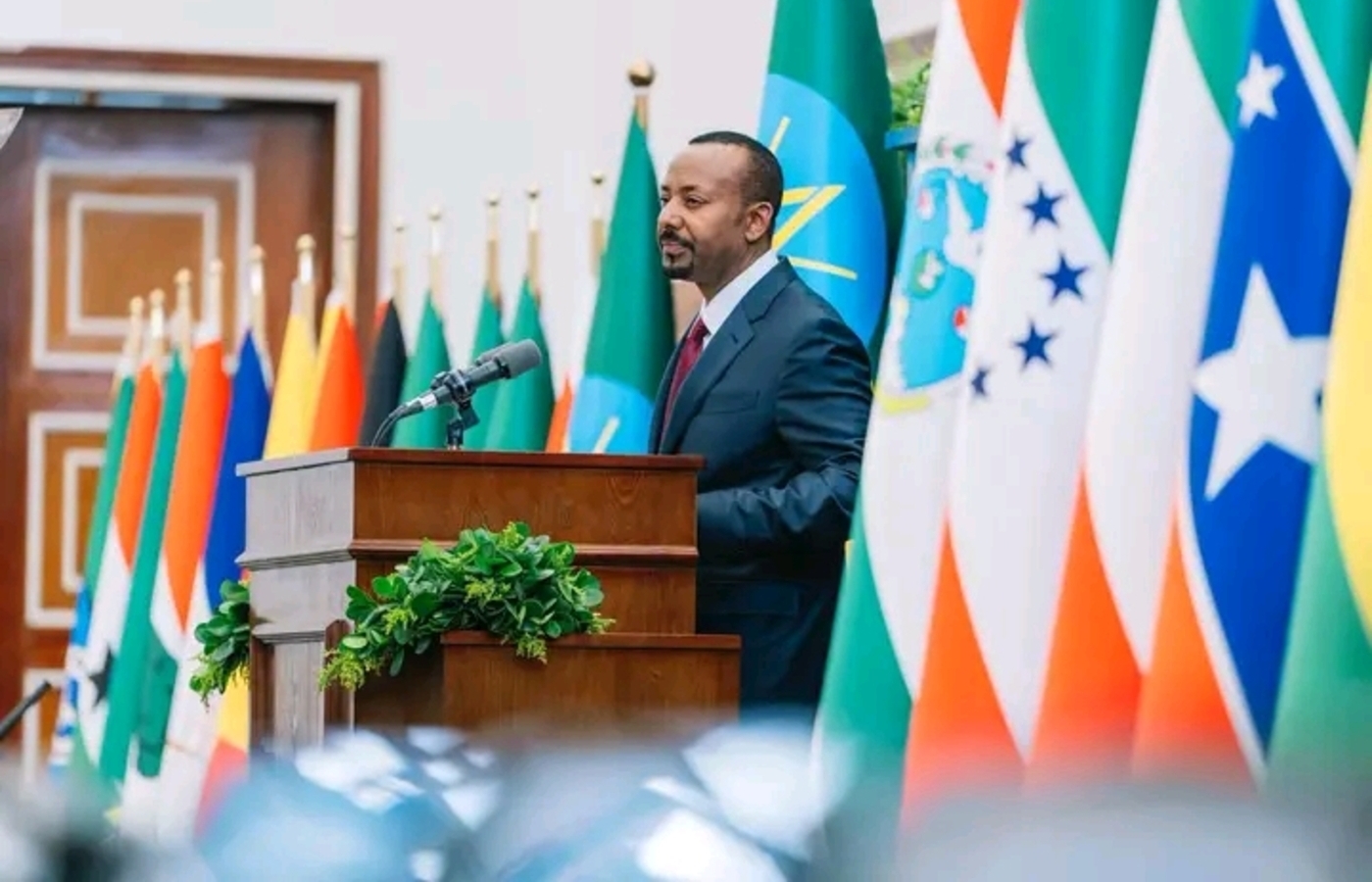
The House of Peoples’ Representatives appointed Abiy during the first regular session of its seventh parliamentary term on October 5, 2026. He subsequently took the oath of office, formally beginning the new administration.
In a wide-ranging address following his election, Abiy presented the next five years as a period in which Ethiopia must consolidate domestic reforms while preparing for an increasingly volatile geopolitical environment.
Among his most significant political pledges was a commitment to pursue constitutional amendments based on the outcomes of the Ethiopian National Dialogue process.
He said the government would also seek greater cooperation with opposition political parties and called on armed groups operating in the country to abandon violence and return to peaceful political engagement.
Abiy also placed Ethiopia’s long-running pursuit of maritime access near the centre of his foreign-policy agenda.
He said Ethiopia would seek to realise its interest in securing access to the sea through peaceful engagement with neighbouring countries and on the basis of what he described as a principle of “give and take” and mutual benefit.
The Prime Minister linked the issue to the rapidly changing strategic environment surrounding the Horn of Africa, the Red Sea, the Gulf and the Indian Ocean.
Ethiopia, he argued, sits in a region where geography provides both opportunity and vulnerability, and must build sufficient economic, political and military capacity to determine its own future rather than have decisions imposed on it by stronger actors.
He accused Ethiopia’s adversaries of shifting their attention towards preventing the country from advancing its interests around the Red Sea after, in his assessment, previous attempts to weaken or dismantle the country had failed.
But the Prime Minister framed the government’s stated pursuit of maritime access as one to be achieved through negotiation and reciprocal benefit rather than confrontation.
*Stronger Defence and Security Capabilities*
Abiy also pledged to develop what he described as a modern, innovative and highly prepared defence and security establishment capable of deterring attacks before they occur and prevailing if the country is confronted.
He specifically referred to strengthening Ethiopia’s air superiority in the region as part of the effort to improve its defensive capabilities.
The remarks formed part of a broader warning that Ethiopia must prepare for a geopolitical environment that is becoming increasingly unpredictable.
“The times have changed,” Abiy said in his address, describing the international political and economic landscape as one in which fixed alliances are becoming less certain and countries increasingly have to prepare for abrupt shifts in power and interests.
He drew parallels with Ethiopia’s history, arguing that the country had previously paid heavily for failing to prepare for major technological, geopolitical and military changes.
Referring to Italy’s second invasion of Ethiopia four decades after its defeat at Adwa, Abiy argued that victory can itself become dangerous when it produces complacency.
His message to the incoming administration was that Ethiopia could not afford to be caught unprepared again.
*Constitutional Reform and Political Opening*
Domestically, one of the most consequential commitments in the speech was Abiy’s declaration that constitutional reform would follow the findings of the National Dialogue process.
He did not spell out which provisions of the Constitution could be amended or provide a timetable for the process.
Any attempt to revise Ethiopia’s Constitution would nevertheless represent one of the most politically sensitive undertakings of his new term, given longstanding disputes surrounding federalism, identity, territorial administration and the distribution of political power.
Abiy also promised greater cooperation with opposition parties and urged armed movements to pursue their objectives peacefully.
He called on the new Parliament to closely scrutinise and guide the work of the executive during the coming term.
*Economic Reform to Continue*
On the economy, Abiy said his government would push the macroeconomic reform programme it has already begun “to its goal”, signalling continuity rather than a reversal of the economic policy direction pursued during the previous administration.
He listed macroeconomic reform, digitalisation, agriculture, corridor development, tourism, the Green Legacy programme and efforts to restructure state-owned enterprises among areas where the government believes progress has been achieved.
The government would also seek to modernise the civil service and improve the quality of education, he said.
Abiy promised stronger measures against corruption, theft and discriminatory administrative practices, presenting civil-service reform as one of the pillars of the new government.
*A Government Facing a Different Ethiopia*
Abiy’s return to office gives his administration another five-year mandate, but the priorities outlined in Monday’s speech suggest a government confronting challenges markedly different from those it faced at the beginning of the previous term.
The agenda combines some of Ethiopia’s most difficult unresolved domestic questions — constitutional reform, armed conflict, corruption and economic restructuring — with increasingly ambitious regional objectives, particularly the pursuit of reliable maritime access.
Abiy portrayed those challenges as part of a wider struggle over Ethiopia’s ability to determine its own future.
Countries that anticipate global changes and prepare for them will benefit, he told lawmakers, while those that remain weak and unprepared will bear the cost.
For related coverage on the new government cycle, read our report on Abiy Ahmed Re-elected Prime Minister of Ethiopia for New Five-Year Term or explore our story on Ahmed Shide Elected Speaker of Ethiopia's House of Peoples' Representatives.