

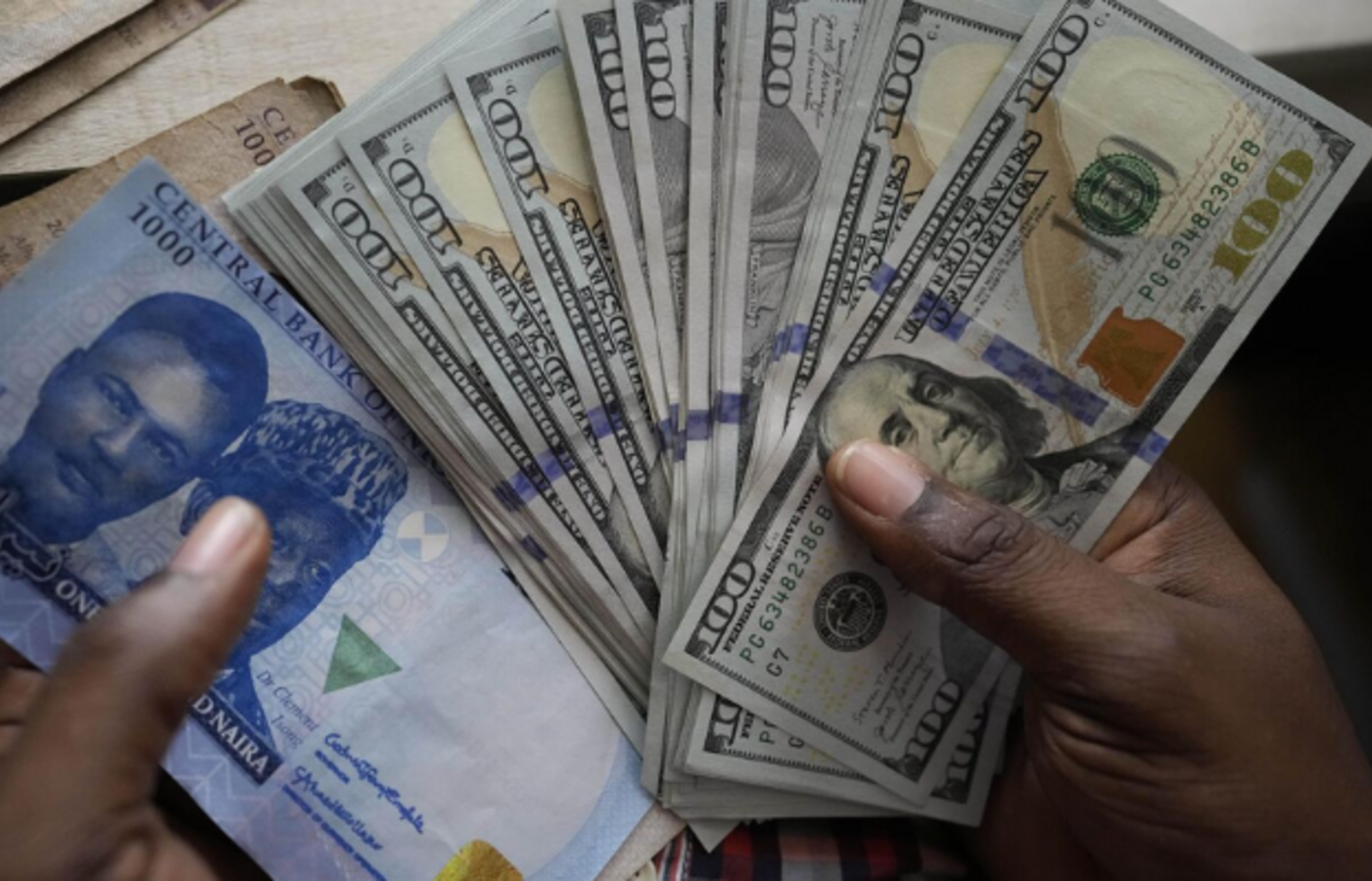
Nigeria’s gross foreign exchange reserves have surged to an all-time high of $55 bln, while net foreign reserves reached $46 bln, driven by sustained monetary discipline, structural foreign exchange reforms, and growing international investor confidence. Central Bank of Nigeria (CBN) Governor Olayemi Cardoso announced the financial milestones during the Nigeria-Asia Connectivity Dialogue.
The sharp recovery in external liquidity represents a turnaround for Africa's largest economy. Net foreign reserves—calculated by deducting short-term liabilities, foreign exchange swaps, and forward contracts from gross holdings—had plummeted below $1 bln during the height of Nigeria’s foreign exchange crisis. Over the past nine months, net liquid buffers expanded by $11.2 bln from the $34.8 bln recorded at the close of 2025.
Cardoso attributed the reserve accumulation to strict policy adherence, improved FX liquidity management, and robust diaspora remittance flows. The current reserve level comfortably exceeds the central bank's original end-of-year target of $51.04 bln. The strengthened buffer expands the country's capacity to service external debt, finance critical imports, and absorb external financial shocks.
The accumulation of reserves has coincided with exchange rate stabilization. The Nigerian naira has stabilized around the 1,330 naira per US dollar threshold in official trading channels, operating within a narrow range between 1,330.50 and 1,332.99 per dollar. The elimination of multiple exchange rate windows and the narrowing gap between official and parallel market rates have improved capital mobility, enabling international investors to repatriate capital with minimal friction.
Complementing the reserve expansion, the Central Bank of Nigeria implemented an operational adjustment by cutting the benchmark Monetary Policy Rate (MPR) by 350 basis points from 26.5 percent to 23 percent to improve monetary policy transmission as inflation pressures moderate.
The macroeconomic stabilization has prompted positive evaluations from international financial institutions. Credit rating agency Fitch revised Nigeria’s sovereign credit outlook to Positive while affirming its 'B' rating, citing fiscal reforms and expanding external buffers. Concurrently, the World Bank upgraded Nigeria’s 2026 real GDP growth forecast to 4.3 percent, up from 4.0 percent in 2025, projecting growth to settle at 4.4 percent across 2027 and 2028.
For related coverage on regional macroeconomic policy and energy developments, read our report on Nigeria Unveils 30-Day Petrol Discount, Rules Out Full Subsidy Restoration or explore our update on Sub-Saharan Africa Growth Forecast Raised to 4.3 % for 2026, World Bank Says.




