


Green aviation fuel accounts for less than one percent of global consumption as governments push for investment, harmonised regulations and expanded production capacity.
Global aviation must increase sustainable aviation fuel production more than 200-fold over the next 24 years to meet its 2050 net-zero emissions target, exposing a substantial gap between the industry’s climate commitments and the volume of cleaner fuel currently available.
Global production of sustainable aviation fuel (SAF) is projected to reach just 2.4 million tonnes in 2026, accounting for 0.8 percent of total jet fuel consumption. By 2050, annual production would need to reach approximately 500 million tonnes under the International Air Transport Association’s (IATA) net-zero pathway.
The difference represents a roughly 208-fold increase from projected 2026 production levels, equivalent to sustaining approximately 25 percent annual compound growth over the next 24 years.
The scale of the challenge has emerged as governments and industry representatives convene at the International Civil Aviation Organization’s (ICAO) Seventh Worldwide Air Transport Conference in Montréal, Canada, from November 16 to 20, 2026, to negotiate reforms covering aviation investment, economic regulation and access to cleaner energy.
During discussions on November 19, delegates reached broad agreement on the need to expand sustainable aviation fuel production through international investment, stronger supply chains and harmonised sustainability certification systems.
The negotiations come as SAF production continues to grow but at a slower pace than in previous years.
According to IATA, global production increased from approximately one million tonnes in 2024 to 1.9 million tonnes in 2025, nearly doubling within a year. Production is forecast to rise to 2.4 million tonnes in 2026, an increase of about 26 percent.
Despite the expansion, the fuel’s share of total aviation consumption is expected to increase only from 0.6 percent in 2025 to 0.8 percent in 2026.
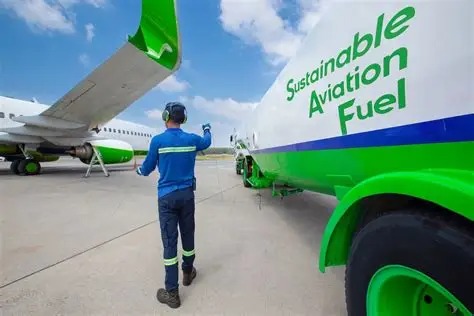
The industry association estimates that sustainable aviation fuel will need to deliver approximately 65 percent of the emissions reductions required for international air transport to reach its net-zero target by the middle of the century.
The remaining reductions are expected to come from improvements in aircraft technology, operational efficiency and other measures, including carbon removal and offsetting.
Unlike conventional jet fuel, which is derived from fossil crude oil, SAF can be manufactured using renewable and waste-based materials, including used cooking oil, agricultural residues and municipal waste. Synthetic alternatives can also be produced using renewable electricity, hydrogen and captured carbon dioxide.
Depending on the production process and feedstock, these fuels can significantly reduce greenhouse gas emissions over their lifecycle compared with conventional jet fuel. They do not, however, eliminate carbon dioxide emissions when burned in aircraft engines.
Beyond production volumes, the financial burden of transitioning to cleaner aviation fuel remains substantial.
IATA estimates that the additional cost associated with purchasing sustainable aviation fuel could reach 4.3 billion US dollars in 2026, despite the fuel accounting for less than one percent of total consumption.
An industry study released in October 2026 found that SAF remains approximately two to three times more expensive than conventional jet fuel.
The cost difference has emerged as a central issue in negotiations over how governments should accelerate production without placing additional financial pressure on airlines or creating uneven competitive conditions.
IATA has called for government policies that first encourage investment in production facilities, renewable energy infrastructure and fuel distribution networks before imposing wider consumption mandates.
The association has also sought internationally harmonised standards and mechanisms allowing airlines to finance sustainable fuel production even when the fuel is not physically available at their operating airports.
The European Union has already introduced mandatory SAF blending requirements under its ReFuelEU Aviation regulation.
The framework required sustainable fuel to account for at least two percent of aviation fuel supplied at covered European Union airports beginning in 2025. The requirement increases to six percent in 2030 and 70 percent by 2050.
A European Commission report published in September 2026 indicated that SAF supply in the European Union had exceeded the initial two-percent requirement, while production capacity was projected to remain sufficient to meet the 2030 blending target.
The regulatory approach in Europe contrasts with the absence of equivalent mandatory blending requirements across many other aviation markets.
At the global level, ICAO member states adopted a framework in November 2023 establishing an aspirational target to reduce international aviation carbon dioxide emissions by five percent by 2030 through sustainable aviation fuels, lower-carbon aviation fuels and other cleaner energy sources, compared with a scenario without their use.
The framework covers four principal areas: policy and planning, regulatory arrangements, implementation support and financing.
The latest discussions in Montréal are intended to strengthen these arrangements by establishing clearer investment conditions, expanding production opportunities and facilitating access to cleaner aviation energy, particularly in developing economies.
Delegates have supported international assistance to strengthen certification systems, build supply chains and mobilise financing for emerging producers.
The emphasis on developing markets is particularly relevant to African countries seeking to establish domestic sustainable aviation fuel industries.
Ethiopia is among the countries that have begun exploring opportunities to manufacture SAF locally.
In August 2024, Ethiopian Airlines signed a memorandum of understanding with Satarem America Inc. covering the proposed production and use of sustainable aviation fuel in Ethiopia.
Under the agreement, Satarem was expected to produce the fuel domestically, while Ethiopian Airlines would purchase it for use in its operations. The agreement did not establish that commercial production had commenced.
The initiative was followed by an ICAO-supported feasibility study completed in 2025, examining Ethiopia’s potential to develop domestic SAF production and the investment, infrastructure and technical conditions required.
The study formed part of ICAO’s Assistance, Capacity-building and Training for Sustainable Aviation Fuels programme, which supports countries seeking to develop cleaner aviation energy industries.
For Ethiopian Airlines, one of Africa’s largest carriers, access to sustainable aviation fuel is also linked to regulatory developments in international destinations.
European blending requirements affect aviation fuel supplied at covered airports, including fuel purchased by international carriers operating flights from those airports.
The global shift towards cleaner fuel therefore has implications for airlines operating international networks, alongside potential investment opportunities for countries capable of supplying qualified production inputs or manufacturing the fuel.
At the ICAO conference, delegates have also backed proposals for blended financing, public-private partnerships and technical assistance to help developing countries prepare commercially viable aviation infrastructure projects.
The conference, attended by representatives of 115 member states, is scheduled to conclude on November 20 with a ministerial declaration setting out a common policy direction for the international aviation sector.
The negotiations take place against the industry’s longer-term emissions commitments and the continuing dependence of commercial aviation on conventional petroleum-based jet fuel.
Although sustainable aviation fuel production has increased since 2024, the projected 2.4 million tonnes available in 2026 represents less than half of one percent of the estimated annual volume required in 2050.
The difference between existing production and future demand leaves the industry facing the task of expanding fuel manufacturing, securing investment, developing supply chains and reducing production costs over the next two decades.



