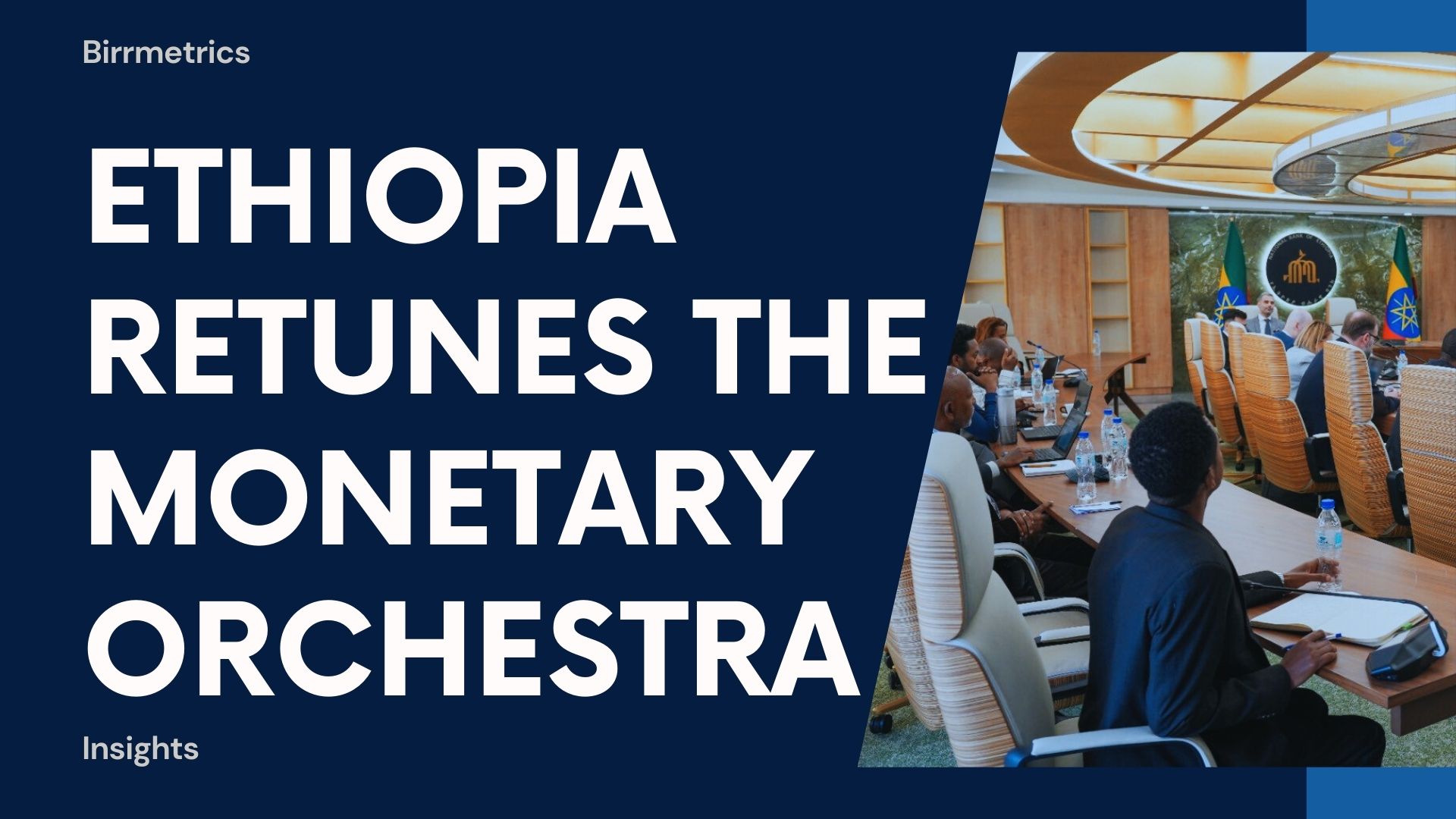
Last week saw heated debate among financial experts, financial industry players and other stakeholders as the National Bank of Ethiopia (NBE) unveiled its new three-year Strategic Plan covering the period between 2023-2026. The Plan outlines an ambitious reform agenda aimed at overhauling Ethiopia's monetary and financial systems through several wide-ranging initiatives.
After two years of domestic and external shocks exacerbating macroeconomic challenges, the timing of this Strategy Plan is crucial to help restore stability and set the economy back on a sustainable growth path. It comes as the government implements its Homegrown Economic Reform Plan 2.0 to revive structural reforms across sectors. The primary near-term focus must be restoring fiscal and monetary stability after years of imbalances.
So what exactly does the NBE plan to do over the next three years, and what are the key debates around its new strategy? Let's take a deeper look.
Transitioning to a Modern Monetary Policy Regime
Perhaps the most significant change envisioned in the Plan is transitioning Ethiopia's monetary policy regime away from targeting monetary aggregates to a more market-determined, price-based system using interest rates and open market operations. This would bring Ethiopia more in line with global best practices.
To enact this transition, the NBE plans to establish a Monetary Policy Committee to set interest rates by mid-2024. It will also put in place the necessary technical conditions like conducting open market operations between the central bank and commercial banks, and ensuring a functioning secondary market for government securities trading. Critics argue this overhaul requires substantial preparatory work and poses transition risks if not carefully managed.
Supporters counter that a market-based regime will give the NBE a more effective tool for influencing inflation and maintaining price stability over the long run. If introduced gradually and supported by developing interbank money and FX markets, they believe it can stabilize prices while promoting financial deepening. Overall most experts agree this is a necessary, if ambitious, reform direction.
Ensuring Financial Stability
Another core objective is ensuring Ethiopia's financial system remains stable and sound. The NBE plans to revamp its regulatory frameworks in line with global principles like Basel III, enhance supervision using more risk-based approaches, and modernize currency management systems. It also aims to introduce macroprudential oversight functions like financial stability reporting.
While welcomed by stakeholders, questions have been raised about the NBE's current capacity and whether global standards can be fully adopted in the short term. Critics argue priorities should involve strengthening existing on-site supervision first. Supporters counter that many regulations are already outdated and alignment is critical for the sector's long-term stability and attracting foreign investment mandated under reforms. Overall most agree this shows positive reform momentum if properly sequenced and resourced.
Promoting Inclusion, Deepening and Digitization
A third major objective involves promoting broader financial inclusion, deepening of services beyond payments like savings and credit, and accelerating digitization across the sector — seen as mutually reinforcing goals.
The NBE plans to implement the national financial inclusion strategy and establish an independent insurance regulator. It wants to ensure widespread digital financial service adoption and improve credit bureaus. Stakeholders generally approve of these aims but note inclusion must go beyond geography to also consider gender, sectors and product usage if impact is to be significant and sustainable.
Questions have also been raised about requirements like expanding access points without first strengthening existing ones or growing clients' financial capabilities. Critics argue digitization risks excluding some groups and needs balanced safeguards. Supporters counter technology can accelerate inclusion if barriers are reduced and capabilities enhanced in parallel.
Operational Excellence and Strong Governance
To underpin delivery of its strategic objectives, the NBE targets transforming talent management, streamlining processes, boosting research and upgrading technology systems. It plans to re-establish the Ethiopian International Banking and Finance Institute as a center of excellence too.
Stakeholders view these internal strengthening aims positively. However, some argue true excellence also requires establishing strong accountability and transparency systems currently lacking at the NBE. For example, its financial statements have never been audited externally.
Critics say this hampers credibility and oversight. Supporters counter governance reforms take time and the Plan demonstrates commitment to progress. Most experts stress transparency and accountability must feature more prominently to ensure strategy success and build needed public trust over the long run.
Ambitious but Necessary Targets
In quantifying its vision over the next three years, the NBE has set notably ambitious inflation reduction and foreign reserve accumulation targets that experts say will require deft macroeconomic management.
Bringing inflation down from nearly 30 percent today to under 10 percent by 2025 and eight percent by 2026 will be an arduous task, given lingering impact of supply shocks and potential volatility from transitioning monetary frameworks. Lowering inflation at this pace demands unprecedented coordination between fiscal and monetary levers, according to economists.
Similarly, growing foreign exchange reserves from less than one month of imports currently to over two months by 2026 presents a major challenge. Ramping up reserves this quickly while maintaining a flexible market-determined exchange rate won't be easy and depends on export competitiveness and inflows improving substantially.
Targeting a reduction in monetary base growth is also no small feat. Cutting the target nearly in half from 32 percentto 14 percent in just two years amounts to a substantial policy tightening that risks curbing credit availability if not smoothly implemented.
However, experts also stress that ambitious goals can foster greater accountability. Quantitative targets are important for ensuring continued momentum on difficult reforms. Calibrated flexibility should be built in to accommodate inevitable uncertainties, but the overarching direction is necessary.