

As African nations work to turn the promise of open borders into shared prosperity, a key bank's analysis delivers both promise and warnings.
The African Export-Import Bank’s (Afreximbank) fresh reports reviewed here uncover the staying power of regional commerce under the young African Continental Free Trade Area in a stormy 2023. But the studies also lay bare looming risks that could derail advances if left unchecked.
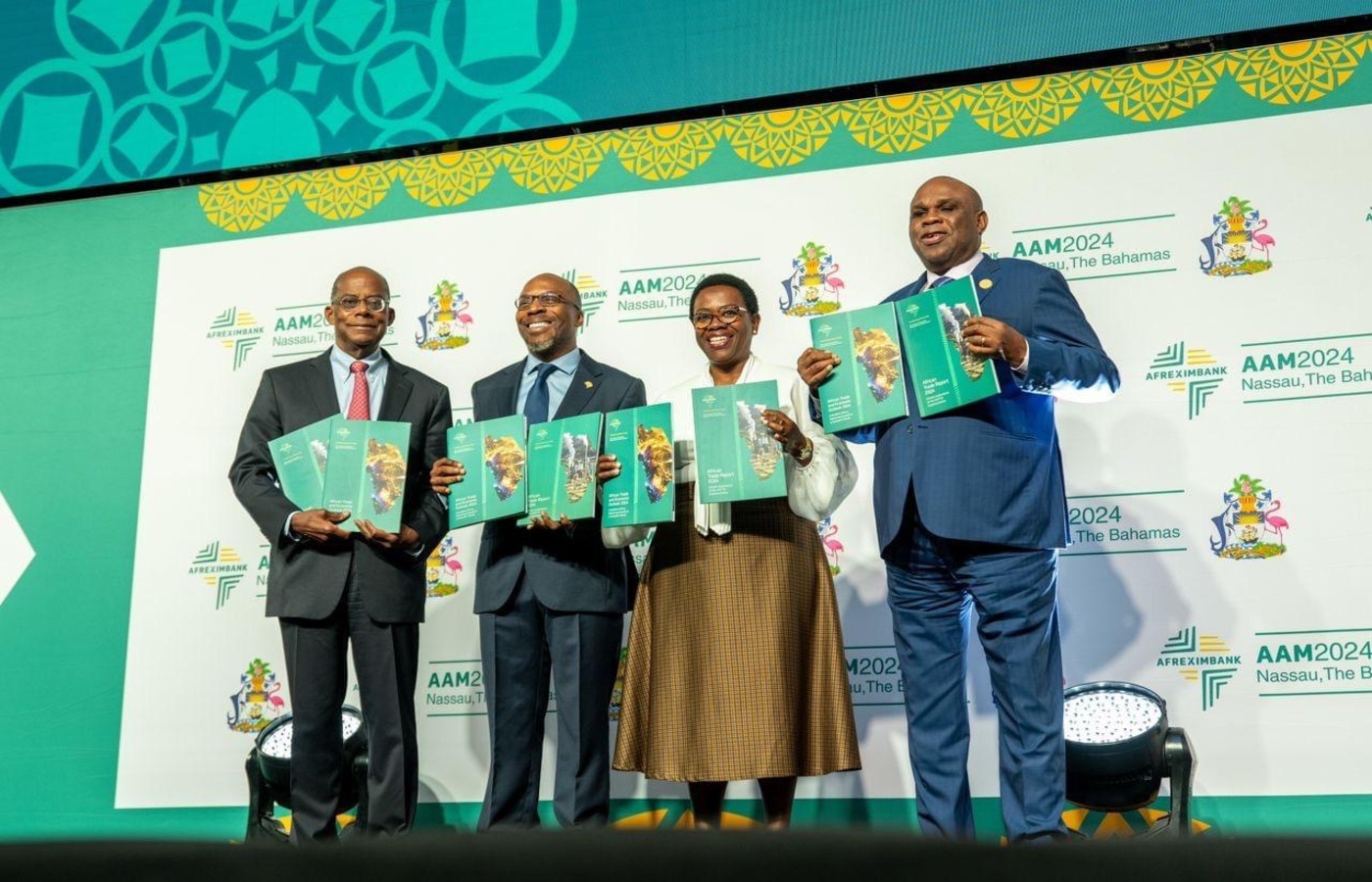
Afreximbank released two key reports analyzing trends in African trade and the implications of the African Continental Free Trade Area (AfCFTA). The reports were launched at Afreximbank's annual meetings in Nassau, providing insights into both the economic opportunities and environmental effects of the landmark trade deal.
Economic Outlook Remains Positive
According to the African Trade and Economic Outlook Report 2024, African economies are forecast to grow at an average of 3.8 percent in 2024 - slightly outpacing projected global growth of 3.2 percent. Growth is expected to accelerate further to around four percent in 2025.
Titled "A Resilient Africa: Delivering Growth in a Turbulent World", the outlook report examines macroeconomic indicators, trade patterns, debt scenarios and future projections across the continent. Afreximbank's Group Chief Economist, Yemi Kale (PhD), noted Africa demonstrated resilience in weathering global headwinds in 2023.
While merchandise trade contracted 6.3 percent last year after a strong 15.9 percent expansion in 2022, intra-African commerce still managed to increase 3.2 percent over the same period. According to Kale, this performance reflects African economies' ability to withstand external shocks, as well as the stabilizing potential of the AfCFTA single market.
Untapped Potential Within Africa
The outlook report identified considerable untapped opportunities for boosting intra-African trade. There are large gains to be made especially in exchanging machinery, electricity, motor vehicles and agricultural products between African nations.
Harnessing this domestic demand through continental economic integration could help shelter Africa from the volatility plaguing global markets. As the world's largest free trade area linking 1.3 billion consumers across 55 countries worth a combined three trillion dollars GDP, the AfCFTA offers an unparalleled platform.
Addressing Risks to Growth
However, Afreximbank's analysis also flagged several risks that could hamper Africa's economic progress. Rising sovereign debt levels pose sustainability concerns if not managed prudently. Additional threats include excessive commodity price exposure, geopolitical tensions in some regions, volatile domestic politics, high inflation and potential food insecurity issues.
Coordinated policy responses will be needed by African governments and their partners to strengthen resilience against these downside risks and maximize the rewards of cooperating under the AfCFTA framework. Concerted efforts are justified given projections that growth on the continent in 2024-25 will surpass international averages.
Climate Impact Assessment
In its flagship African Trade Report 2024, Afreximbank delved into the crucial issue of how the AfCFTA's implementation may influence carbon emissions across Africa. Titled "Climate Implications of the AfCFTA", this analysis is significant given ongoing debates around the agreement's environmental effects.
As Kale explained, some believe increased industrialization resulting from the AfCFTA will worsen emissions, while others argue prioritizing intra-African commerce over external trade through shorter shipping distances could reduce emissions. To evaluate these perspectives, the report modeled two scenarios.
Scenario One simulated a 97 percent tariff cut on goods and lowered barriers to services exchange. It projected this would boost intra-African trade volumes while marginally diminishing extra-continental exchanges.
Results showed African GDP rising 0.91 percent, intra-regional commerce up 33.04 percent and overall output increasing 1.19 percent. Importantly, total emissions were estimated to grow a modest 0.08 percent - driven mainly by higher imported production inputs.
Scenario Two held extra-African trade at pre-AfCFTA levels. This led to larger 1.78 percent GDP and 24.06 percent intra-African trade increases. However, emissions were forecast to surge substantially more at 0.76 percent.
Revealing environmental gains from optimizing intra-African exchange networks, the model strengthened arguments that the AfCFTA possesses the tools to deliver growth while also addressing climate change concerns.




