

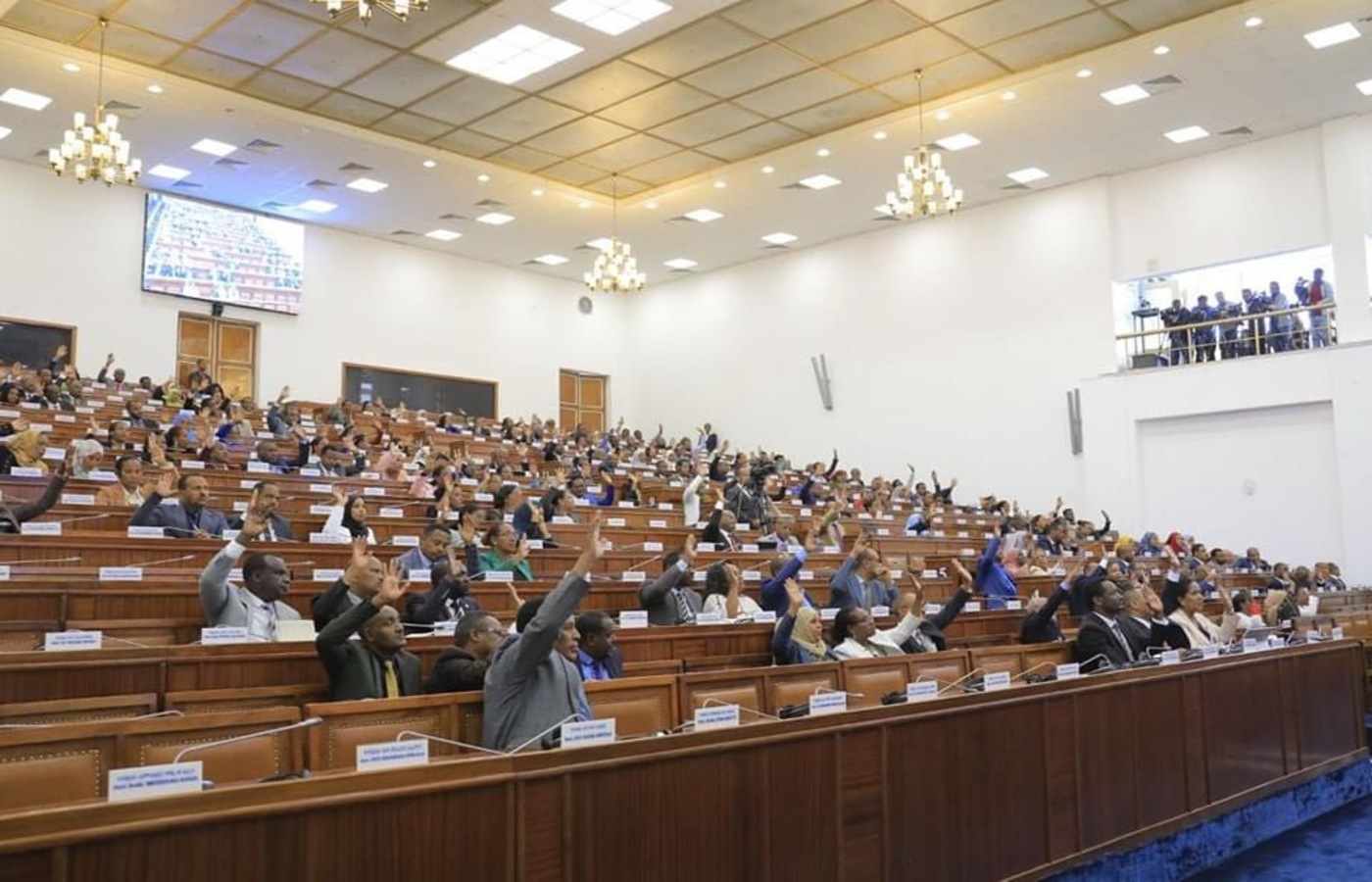
Ethiopia's parliament has approved a 582 billion birr (4.8 billion US dollars) supplementary budget for the 2024/25 fiscal year, with plans to raise 282 billion birr (2.3 billion US dollars) in additional tax revenue to help finance the measures. Finance Minister Ahmed Shide has pledged that the tax hike will not contribute significantly to inflationary pressures.
The tax hike comes at a time when businesses and consumers are already grappling with elevated costs and inflationary pressures. Recent tax increases see an expansion of the VAT base to cover more sectors, such as finance, as well as higher tax rates for some businesses.
The supplementary budgetary allocation is earmarked for a range of priorities, including debt repayment, subsidies for essential goods, capital project expansion, and enhancements to social safety net programs as well as adjustments of government employee salaries.
However, the planned tax hike has raised discussions among lawmakers about the potential burden on taxpayers and the risk of fueling inflationary pressures.
"Supplementary budgets come to the table when there is a potential for new revenue, not out of nowhere," Ahmed told parliament, defending the bill. He added that the government has also secured an equivalent of 300.5 billion birr in direct budgetary support from the IMF and World Bank.
Nonetheless, some members of parliament expressed skepticism about the scale of the additional budget, questioning whether it might be excessive and potentially exacerbate economic challenges.
Ahmed said increasing the tax-to-GDP ratio is a core part of the administration's Homegrown Economic Reform Agenda, with a target of at least a four percentage point increase from the current sub-10 percent level.
The minister said the government may take on “overdraft facilities” this fiscal year to finance the deficit, but that this will be paid off later when the tax revenue is collected, in order to “avoid injecting more money into the economy and further fueling inflation.”
"We were fully financed our deficit with grants and concessional loans from development partners and domestic revenues," Ahmed added.
The parliament approved the budget, with three votes against and five abstentions.




