

By Rozina Molla
In Addis Ababa’s Kotebe 02 neighborhood, the air crackles with energy as the city’s residents prepare for Ethiopia’s Genna, or Christmas, celebrated on January 7. The streets are a mosaic of vibrant colors, with stalls spilling over with fresh produce, spices, and holiday essentials. Shoppers, their faces marked by a mix of excitement and urgency, haggle with vendors under the warm Ethiopian sun.
Yet, as the festivities draw closer, the cost of holiday preparation has become a point of discussion for many. Shoppers navigate the delicate balance between celebration and affordability.
Prices this year are, by most accounts, steady but not without variation. A survey by Birmetrics indicates that while food costs have increased slightly compared to last year, they remain lower than in previous years. A kilo of onions sells for 75-85 birr, butter for 700-800 birr, and chicken for 800-1,400 birr. Lamb, an essential part of the Ethiopian holiday feast, commands between 8,000 and 25,000 birr, depending on size.
Yordanos Assefa, a mother of three, is among the shoppers filling her basket at Kotebe 02. She sighs as she glances at her list. “Prices are slightly higher than I expected,” she says, adjusting her scarf. “There’s plenty of supply, but some traders are using the holiday rush to push up prices. It’s frustrating, but what can we do? This is a time to celebrate, and we can’t cut corners on that.”
For others, like Munaye Gizaw, who supports a family of 12, Kotebe 02 remains a preferred choice. “I’ve visited a few markets, and this one is better for someone like me who buys in bulk. The discounts make it manageable,” she explains, her plastic bag piled high with onions, tomatoes, and berbere, made from chilli.
On the other side of the stalls, traders like Sentayehu Belay Amna are working to meet demand. “This year is better than last,” she says, arranging heaps of red onions. “The shortages we faced in previous years are no longer a problem. We’re getting supplies at fair prices and selling them at rates the community can afford.”
Still, the pressures of the season are palpable. “It’s not just the shoppers who feel the pinch,” Sentayehu adds. “We’re all trying to make the most of the season while staying fair.”
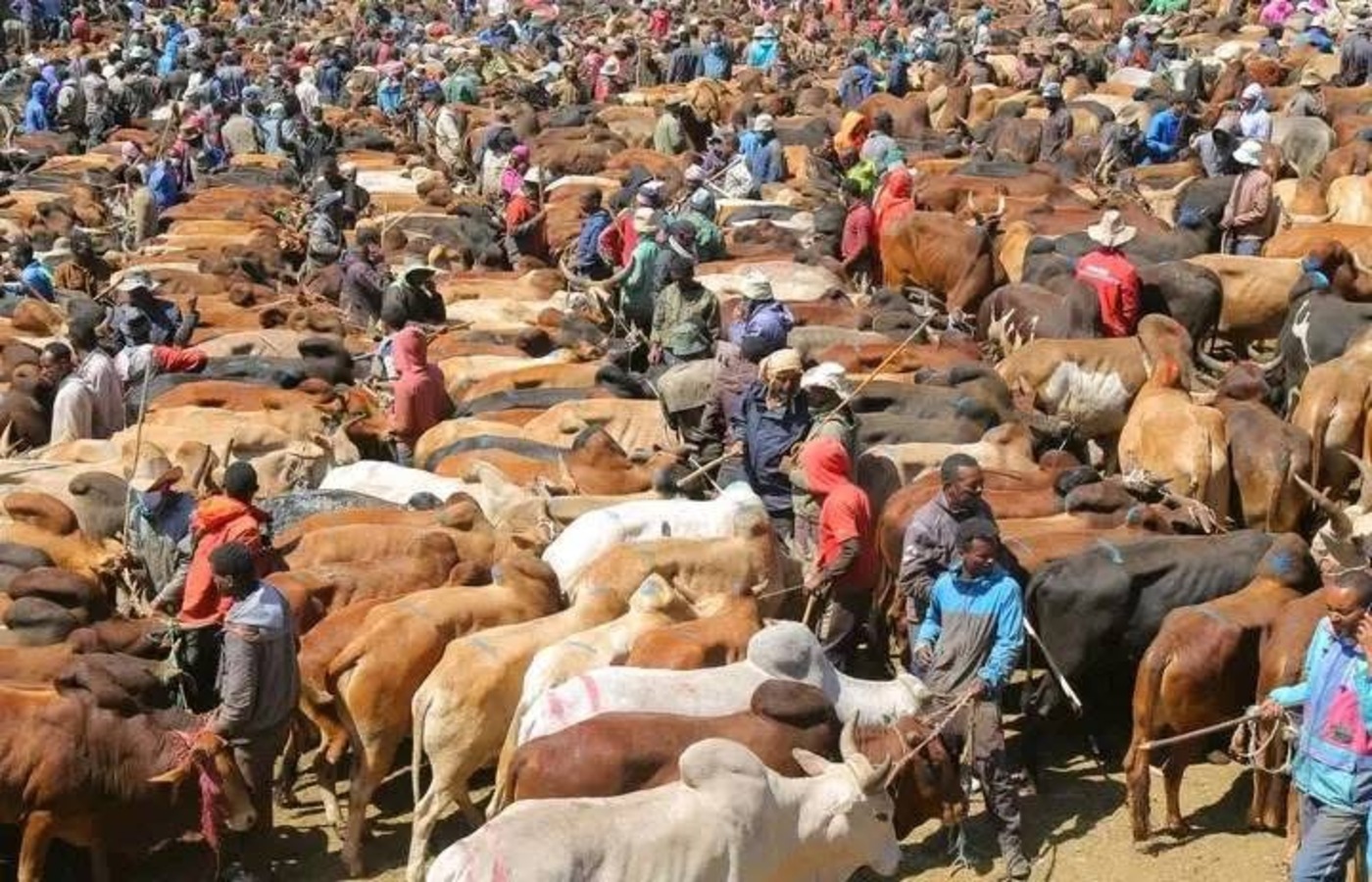
Beyond Kotebe 02, the Shegole oxen market in Addis Ababa’s northern outskirts is a world of its own. Here, the stakes are higher—both in terms of price and significance. Oxen, a centerpiece of the Ethiopian Genna feast, symbolize wealth, generosity, and tradition.
The market is a cacophony of sound, with buyers and sellers locked in animated negotiations. The animals, adorned with colorful ropes, stand patiently, their presence lending an almost ceremonial air to the proceedings.
“Price is stable this year,” says a seasoned buyer who has just purchased a robust ox for 125,000 birr. “Last year, prices were unpredictable, but this year, there’s more consistency.”
For many, purchasing an ox is a once-a-year event that show the importance of family and tradition. “It’s not just about the meal,” explains Getachew. “It’s about bringing people together, honoring our culture, and giving thanks.
As Addis Ababa’s markets hum with activity in preparation for Genna, a time-honored tradition is also quietly making a resurgence: kircha. Once a fading practice, this communal purchasing of an ox or bull has found new relevance in an era of economic strain. For many, kircha offers a practical and cost-effective way to celebrate Ethiopia’s most cherished holiday without breaking the bank.
At the heart of kircha lies a simple but powerful concept—shared responsibility. Groups of neighbors, friends, or family pool their resources to buy an ox or bull, dividing the meat equally. Now there are businesses that facilitate the Kircha through social media. With prices for whole animals ranging from 80,000 to 125,000 birr at markets like Shegole, kircha provides an affordable alternative. The cost of meat through kircha is less than 600 birr per kilogram, with participants required to purchase a minimum of six kilograms.
“It’s the most economical option given the cost of living,” says Geremew Yilma, a father of four from the Lideta area. “For someone like me, with a big family, buying meat individually is just not feasible. But with kircha, we can all contribute and still enjoy the holiday feast.”
Kircha was once a cornerstone of Ethiopian holiday preparations, especially in rural areas where communal living was more prevalent. Over time, however, urbanization and changing lifestyles led to its decline. But with inflation and rising food prices placing strain on household budgets, many urban residents are rediscovering its value.
“It’s not just about saving money,” says Geremew, who l participated in kircha for the first time in years. “It’s about community. When you buy an ox together, you’re not just sharing meat—you’re sharing the experience, the tradition, and the joy of preparing for the holiday as a group.”
The practice begins with forming a group, usually consisting of six to ten households. The group pools their funds to purchase an ox, often from markets like Shegole or Kara, where the selection is vast, and the prices are negotiable. After the purchase, the animal is slaughtered and butchered, with the meat meticulously divided to ensure fairness.
Every piece has its purpose. From the tender cuts for tibs to the fattier portions for kitfo, nothing goes to waste. It’s a system that has worked for generations.




