

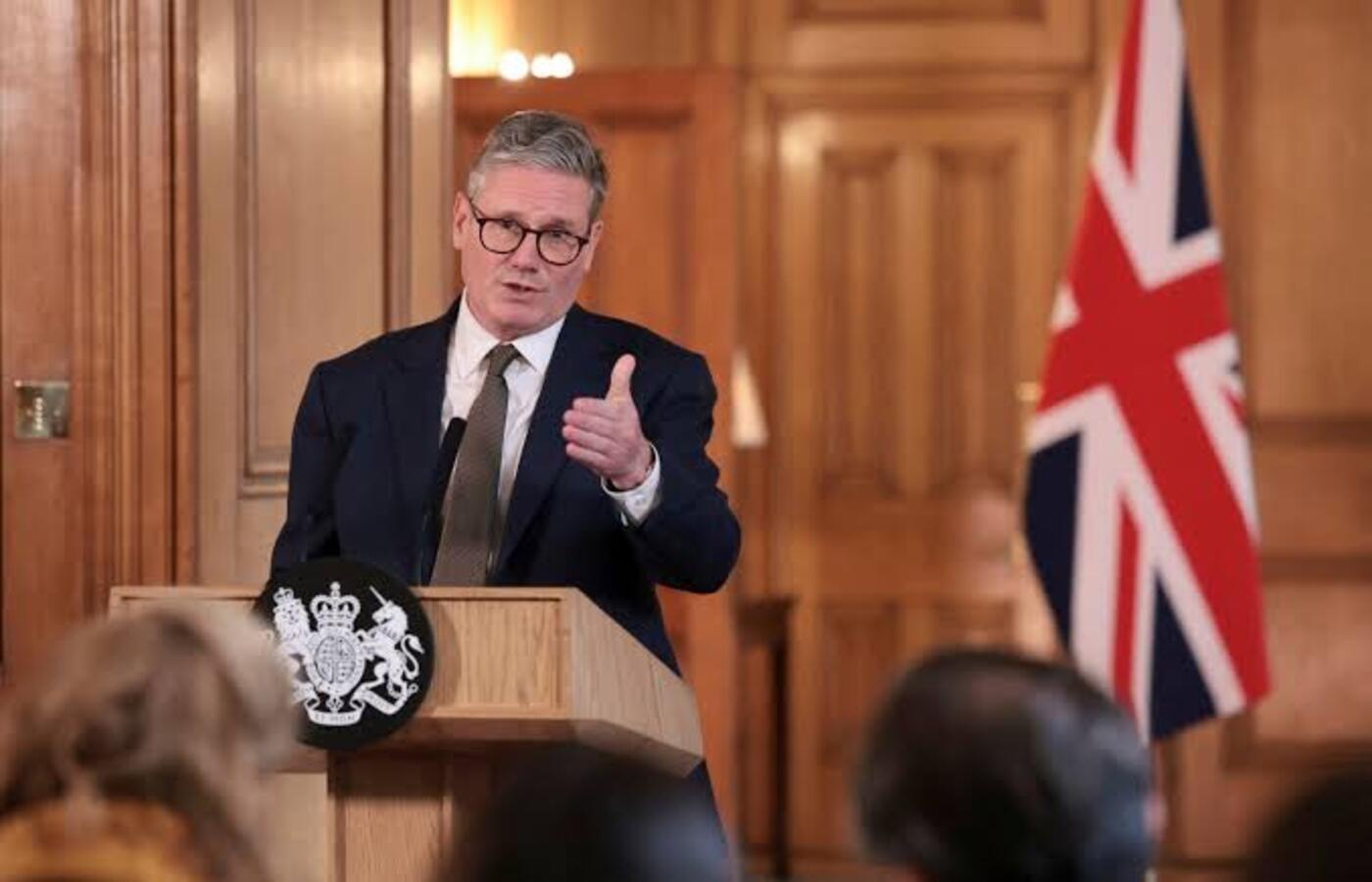
Facing pressure from President Donald J. Trump, British Prime Minister Keir Starmer announced Tuesday that the United Kingdom would slash its foreign aid budget to fund a significant increase in defense spending, raising it to 2.5 percent of gross domestic product by 2027.
The decision, unveiled just before Starmer’s first meeting with Trump since the U.S. inauguration, has drawn fierce criticism from aid groups and Labour Party stalwarts, while threatening dire consequences for developing nations like Ethiopia, a key recipient of British assistance.
Starmer framed the move as a necessary response to a world imperiled by "tyrants" like Russia’s Vladimir V. Putin, promising an extra 13.4 billion pounds (17 billion US dollars) annually for defense starting in 2027.
The move, which slashes overseas aid from 0.5 percent to 0.3 percent of national income, follows a wave of global aid reductions—including a dramatic USAID clampdown in the U.S. and a 30 percent cut by the Netherlands—leaving nations like Ethiopia, a major recipient of Western support, grappling with an uncertain future.
For Ethiopia, one of the U.K.’s top aid beneficiaries, the cuts could not come at a worse time. In 2023-24, the East African nation received 216.9 million UK pounds in British aid, funding programs to combat hunger, improve maternal health, and adapt to worsening droughts.
Now, with Britain scaling back, Ethiopia—a country of 120 million still in the midst of internal conflicts—faces a potential funding gap that could deepen its humanitarian woes.
“This is a lifeline being severed,” said aid worker in Addis Ababa. “Millions depend on food aid, and without it, we’re looking at more displacement, more suffering.” Ethiopia’s economy, though one of Africa’s most dynamic, remains fragile, with nearly a quarter of its population requiring assistance last year due to drought and unrest.
Analysts estimate the U.K. cuts could strip away tens of millions of pounds annually by 2027, forcing Ethiopia to lean harder on overstretched international donors or turn to powers like China, which has already financed major infrastructure projects there.
Starmer’s decision reflects a broader Western shift toward militarization, spurred by Trump’s demands that NATO allies shoulder more defense costs as he signals a retreat from commitments like Ukraine.
The U.K.’s pivot—bolstered by plans to hit 3 percent of GDP on defense by 2034—has won praise from Trump’s defense secretary, Pete Hegseth, but it’s a bitter pill for nations reliant on British largesse.
“Developing countries are collateral damage in this geopolitical chess game,” said Hannah Bond, co-CEO of ActionAid U.K., calling the cuts “profoundly shocking.”
At home, the announcement has split opinion. David Miliband, a former Labour foreign secretary now leading the International Rescue Committee, decried it as a betrayal of Britain’s humanitarian legacy.
Charities like Oxfam and Unicef warned of a “cruel betrayal” of the world’s poorest, while Labour MP Sarah Champion argued that aid and defense are intertwined, not interchangeable. “A less stable world hurts us all,” she said.
Britain’s aid to Ethiopia stretches back to the 1980s, when famine spurred global outcry and cemented a partnership that has since tackled poverty, education, and health.
Even after Conservative-led cuts dropped aid from the U.N.-endorsed 0.7 percent of GDP to 0.5 percent in 2021, Ethiopia remained a priority. Starmer’s Labour Party had pledged to restore higher levels, making Tuesday’s reversal a stark departure from campaign promises.
Starmer, visibly uneasy, told Parliament he was “not happy” with the cuts but insisted they were inevitable after Russia’s 2022 invasion of Ukraine sharpened focus on European security.
He heads to Washington on Thursday, hoping to placate Trump, then hosts European leaders in London this weekend to chart a post-Brexit defense strategy—a “new alliance” he says will deepen U.K. ties across the continent.
The fallout extends beyond Ethiopia. Developing nations, already battered by shrinking aid budgets from the U.S. and others, now face a leaner future as Western priorities shift.
Critics fear this could cede soft-power influence to rivals like China and Russia, while fostering instability that defense spending aims to deter. “You can’t fight poverty with tanks,” said Caroline Lucas, a former Green Party MP, calling the move “utterly shameful.”




