

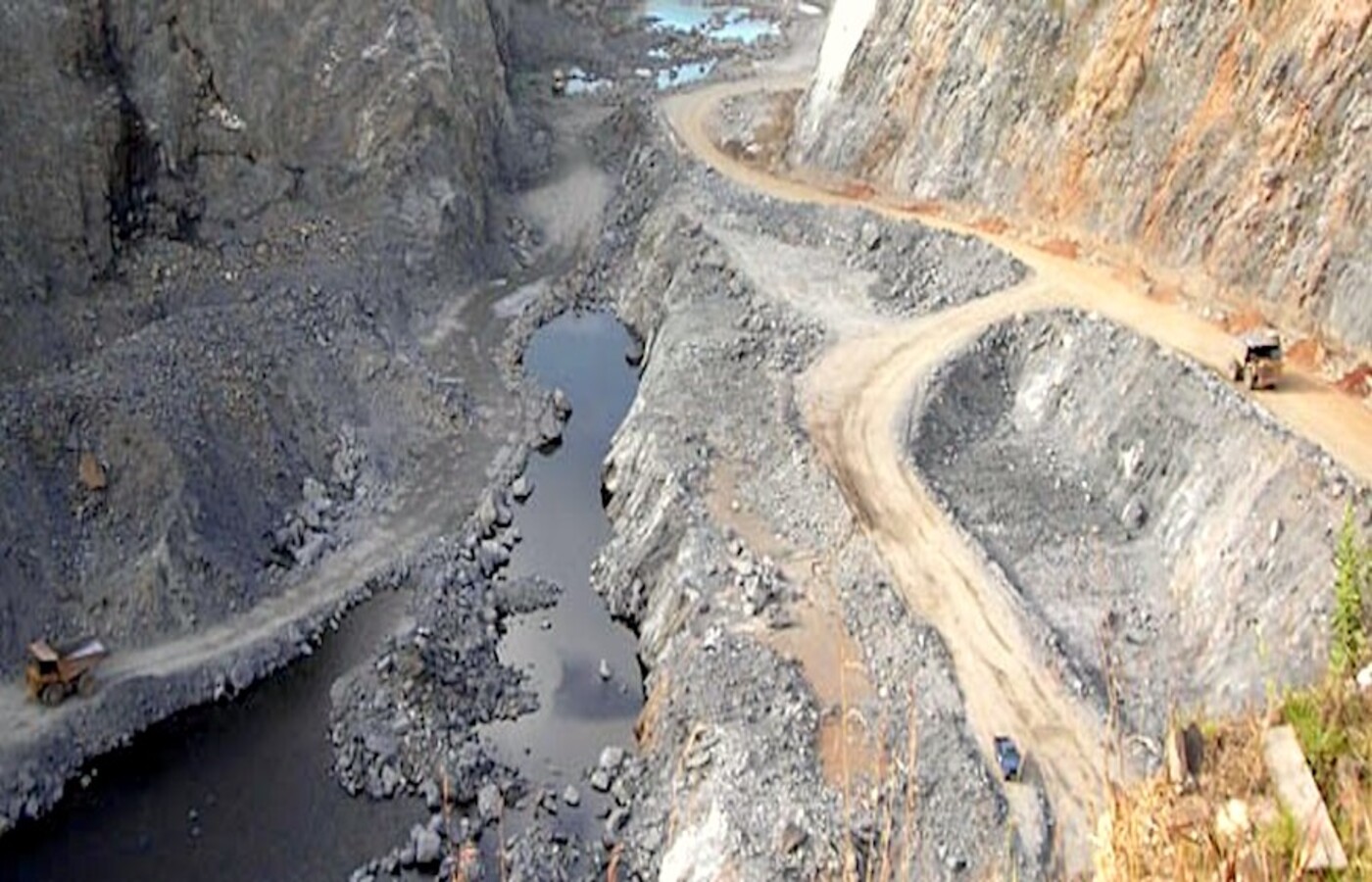
Gold has long been a crucial export earner for Ethiopia, making up over two-thirds of mining revenues. But much of the gold leaves the country illicitly, bypassing official channels. This shadow trade is depriving the state of foreign exchange while undermining security.
By law, all gold must be sold to the National Bank of Ethiopia (NBE), which exports bars through official channels, mostly to Switzerland where refining takes place. However, Ethiopia is designated a "conflict mineral" due to ongoing violence in parts of the country, denting the official exports.
In recent years, informal flows have swelled while official exports have fluctuated wildly despite high global prices. Domestic gold supply has increasingly been siphoned off by black-market traders. They are adept at moving the commodity to Gulf hubs like Dubai, where it enters global markets as "scrap metal".
This illicit gold rush has enabled armed groups and criminal networks to access an easy source of funds. Northern regions bordering Eritrea and South Sudan, where security forces struggle to assert control, have seen a boom in extralegal mining operations exploited by militias and cartels.
Ethiopia sits on sizable gold reserves but much of the precious metal never makes it to official ledgers, as illegal mining and smuggling flourish in a regulatory void. This shadow industry is depriving the state of both wealth and stability while empowering armed groups across restive borderlands.
A thriving informal market has long dominated supply chains, siphoning vast quantities of gold away from the National Bank of Ethiopia's purchase books. Violence and weak governance in regions like Benishangul-Gumuz, Tigray and parts of Oromia have enabled illegal mining to surge in recent years.
While artisanal miners produce much of the bonanza, licensed commercial ventures also stand accused of turning a blind eye to undocumented extraction. Several mines have dragged on interminably in "exploration" despite holding licenses for over a decade. Are they unable to get up and running - or unwilling to shut down money-spinning side operations?
Rather than declare export earnings, most gold heads to Dubai's free zones disguised as scrap before entering the global trade. This provides easy funds not just to militias but also corrupt politicians and officials meant to enforce regulations. Mineral tracking is almost impossible given the lack of a domestic refining industry.
With production potential from planned projects theoretically totalling over 1,000 tons, closing illegal loops represents a huge untapped revenue stream. But stabilising volatile borderlands through security reforms and formalising artisanal supply chains will be an immense challenge for authorities in Addis Ababa.o buy gold from artisanal and supply it to the NBE on behalf of them.
Ethiopia’s Export Earnings from Gold
| Fiscal Year | Revenue (in Million dollars) |
| 2009/10 | 281 |
| 2010/11 | 462 |
| 2011/12 | 602 |
| 2012/3 | 584 |
| 2013/14 | 456.2 |
| 2014/5 | 318.7 |
| 2015/6 | 290.7 |
| 2016/7 | 208.8 |
| 2017/8 | 100.2 |
| 2018/9 | 27.9) |
| 2019/20 | 196.5 |
| 2020/21 | 672.0 |
| 2021/22 | 546.4 |
| 2022/23 | 198 |
| 2023/24 | 274 |
The National Bank of Ethiopia (NBE) has two main channels for obtaining the gold that underpins its foreign reserves. The first comes from commercial mining firms, which extract gold on an industrial scale from deposits across the country. However, artisanal miners - those working on small, informal operations - account for a significant proportion of output.
Many artisanal miners operate independently in remote areas. But the regional governments have sought to bring some order to this informal sector. They license aggregators - businesses that consolidate small volumes of gold from artisanal miners and deliver it to the central bank. This allows the NBE to tap into gold from artisanal sources without having to deal directly with thousands of small-scale prospectors.
Regional Artisanal Gold Supply to the Central Bank in 2023/24
| Oromia | Benishangul | Gambela | South western Ethiopia | Sidama | Afar | Amhara | Tigray | Southern Ethiopia | Somali | |
| Plan (KG) | 942 | 950 | 500 | 250 | 20 | 20 | 10 | 300 | 3 | 5 |
| Performance (KG) | 114.793 | 253.922 | 285.208 | 91.562 | 8.1387 | 0 | 0 | 250.72 | 0 | 0 |
The Ministry of Mines (MoM) aims to coordinate gold supply from Ethiopia's commercial miners to the National Bank of Ethiopia (NBE). However, numerous companies that have received exploration and production licenses remain stuck in the development pipeline due to obstacles like security issues, financing constraints, and inadequate infrastructure.
Sources indicate many licensed producers are indeed extracting gold but diverting supplies to underground markets instead of selling officially to the NBE. Planned production from commercial miners was 5 tons for the 2023/24 fiscal year, but only 3.1 tons ultimately made it to the central bank according to official data. Table: companies
Ethiopia's Gold Supply Plans vs Actuals for 2023/24
| Company | Plan | Performance | Rate (%) |
| Midroc | 3,521.25 | 3,142.7 | 89.2 |
| Oromia mining SC | 63.64 | 0.893 | 1.4 |
| Mekuria Basaye | 91 | - | - |
| YMG | 100 | - | - |
| Elnet | 70 | 0.245 | 0.4 |
| Zumbara | 91.5 | 25.51 | 27.9 |
| Estela | 47.18 | 22.21 | 47.1 |
| Ezana | 500 | - | - |
| Etno Mining | 503.43 | - | - |
| Sidama Small Scale SC | 12 | 2.172 | 18.1 |
| Total | 5,000 | 3,193.73 | 63.9 |
Ethiopia has seen bursts of success extracting value from its gold reserves, though maintaining momentum has proved elusive. Export revenues from the precious metal hit a record 600m dollars in both 2011/12 and 2020/21, when shipments exceeded 12,000kg annually. Commercial miner Midroc Legedembi accounted for around 3,000kg on its own in these boom years.
However, attracting supply from small-scale artisanal miners, who provide the majority of output, has grown more difficult of late. In an effort to lure this informal sector, the central bank raised what it pays above global market prices from just five percent under the previous regime to 35 percent in 2020/21. This initial stimulus worked, but proved short-lived.
As black-market prices fluctuated upwards, the bank upped its premium further to 65 percent last year. Yet this failed to sustain artisanal interest when 100% margins beckon unofficially. While the losses accrue in birr terms for now, the National Bank of Ethiopia's dollar-buying mission means it is thought to have forgone some 10 billion birr to date.
Maintaining competitiveness against an opaque parallel economy will test policymakers. Output cycling and an unreliable supply chain inhibit deeper development of the mining industry. If Ethiopia is to establish gold as a sustained source of export earnings and foreign reserves, more innovative solutions will be needed to bring artisanal miners into the formal sector for the long term.




