

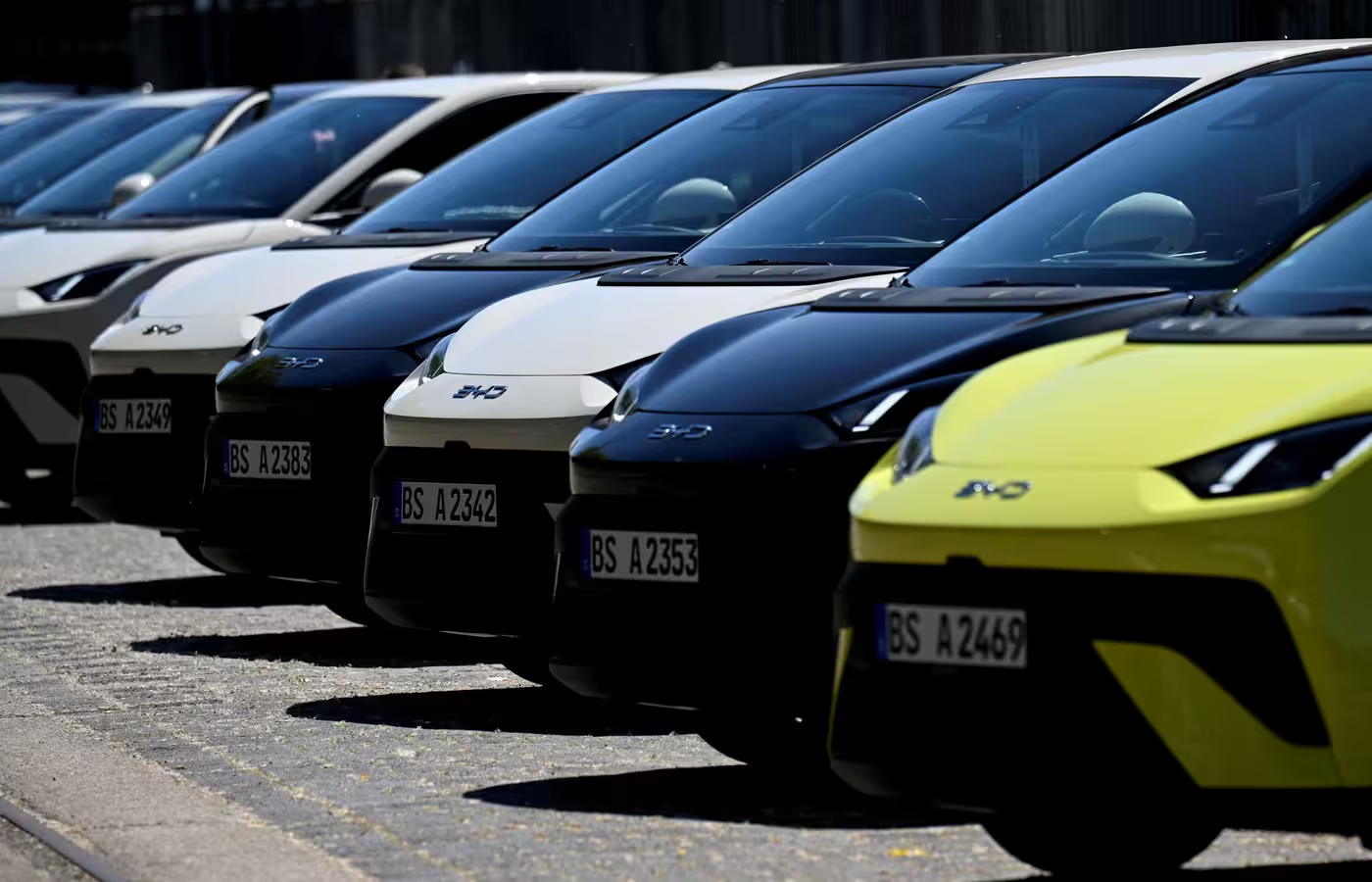
BYD has scaled back production and postponed expansion plans at several of its Chinese manufacturing sites, in a sign that China’s leading electric vehicle maker is beginning to feel the strain of intensifying competition and softening demand in the world’s largest auto market.
The Shenzhen-based group, which overtook Tesla last year as the world’s top seller of battery-powered vehicles, has cancelled night shifts and reduced output by at least a third at multiple facilities, reports show. The company has also suspended plans to install new production lines at some sites.
The moves reflect a shift in tone for BYD, which had been expanding aggressively after selling 4.27 million vehicles in 2024—most of them in China. The company had set an ambitious target of 5.5 million units for 2025, implying a 29 percent rise in sales. That target now appears increasingly at risk.
Shares in BYD, which are listed in Hong Kong, reversed earlier gains of as much as 2.6 percent to trade nearly one percent lower by late Wednesday afternoon following a Reuters report detailing the production cuts. BYD did not respond to a request for comment.
The production slowdown reflect the pressures facing China’s electric vehicle sector, which has been gripped by a bruising price war sparked by a glut of inventory and increasingly cautious consumers. Despite offering steep discounts, several automakers have reported weaker-than-expected sales, raising questions over the sustainability of the sector’s rapid expansion.
Production at BYD facilities has decelerated sharply. According to the China Association of Automobile Manufacturers, the company’s output growth slowed to 13 percent year on year in April and just 0.2 percent in May—the weakest monthly performance since February 2024, when operations were disrupted by the Lunar New Year.
Average monthly output in April and May was 29 percent lower than in the final quarter of 2024, CAAM data showed.
The exact scope and duration of BYD’s production and expansion pullback remain unclear. One person with knowledge of the changes said they were aimed at cost containment, while another attributed them to missed sales targets.
The developments come at a delicate moment for China’s EV sector. While BYD has diversified its customer base with growing exports and new markets in Europe, Southeast Asia and Latin America, its domestic business remains the bedrock of its sales.
BYD operates at least seven vehicle production sites across China, including major hubs in Shenzhen, Xi’an, and Changsha. The affected facilities include at least four of these plants, according to people briefed on the matter.
Though the group has continued to announce new overseas initiatives—including plans for a manufacturing site in Hungary and discussions for a facility in Brazil—the scale-back at home may prompt a more cautious approach abroad.
BYD’s retrenchment follows similar measures by rival automakers, including Tesla, which earlier this year temporarily halted production at its Shanghai Gigafactory to manage inventory.
While BYD’s dominance in the Chinese EV space remains formidable, its recent slowdown suggests that even the strongest players are not immune to the mounting pressures in a market defined by excess capacity, eroding margins, and increasingly wary consumers.




