

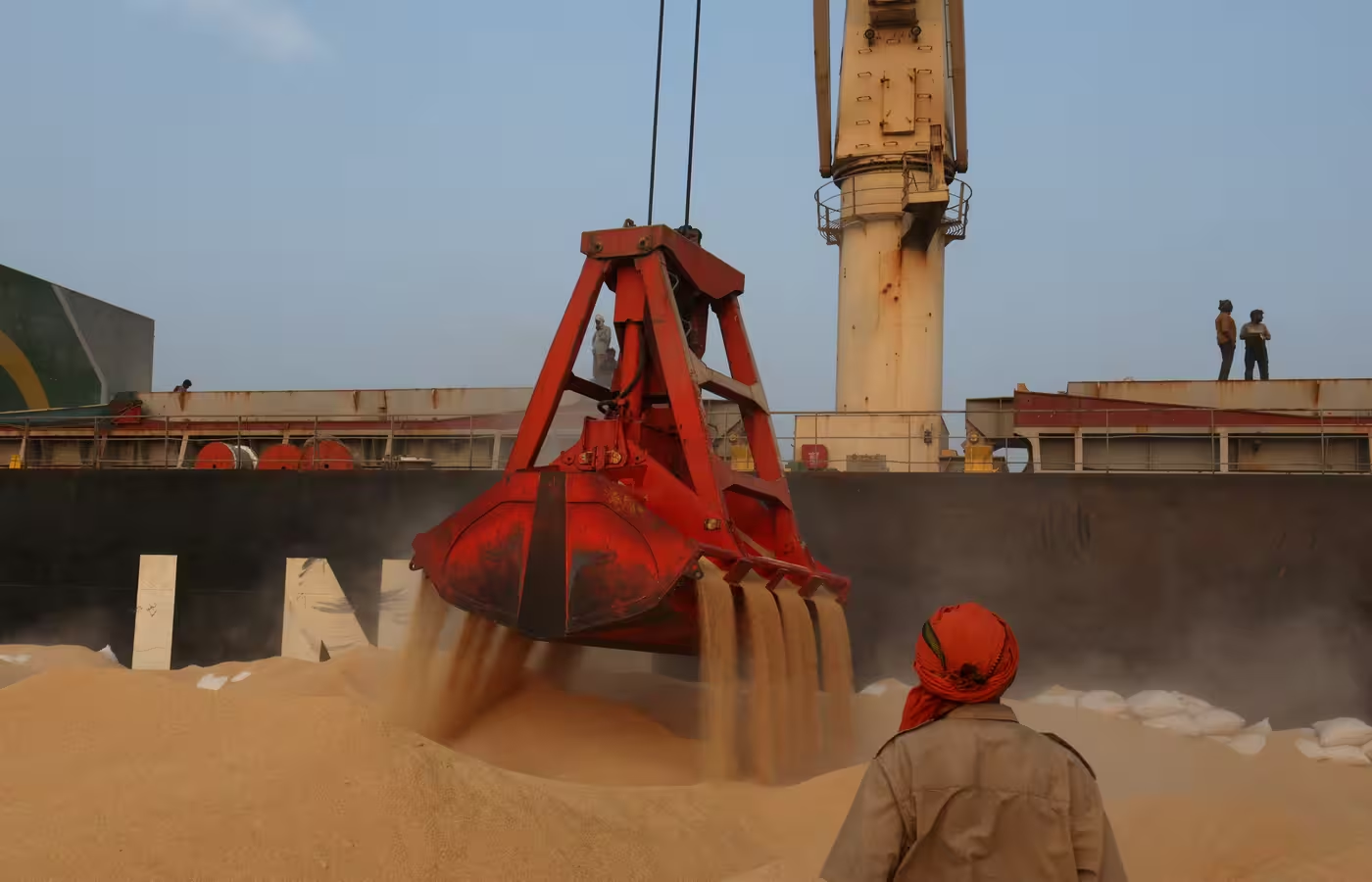
China has formally authorised the import of soybean meal from Ethiopia, marking a notable deepening of trade ties between the two countries and signalling a strategic shift in Beijing’s approach to agricultural sourcing.
The move, announced by the General Administration of Customs of China, comes after the ratification of a bilateral protocol with Ethiopia’s Ministry of Agriculture on sanitary and phytosanitary standards. It permits Ethiopian soybean meal to enter the Chinese market, provided it complies with rigorous pre-export and entry inspection requirements.
The approval enables Ethiopia, a landlocked country in the Horn of Africa, to access the world’s largest consumer of oilseed derivatives at a time when it is under growing pressure to diversify its export portfolio and reduce dependence on traditional commodities such as coffee, gold and cut flowers. For China, the agreement represents another step in efforts to mitigate risk across its agricultural supply chains and reduce exposure to geopolitical and climate-related disruptions affecting key suppliers in South America and North America.
Under the agreement, Ethiopian soybean meal — a high-protein byproduct of oil extraction used widely in animal feed — must originate from production and storage facilities approved and registered by the Ethiopian government. These facilities are required to operate under internationally recognised food safety management systems, including hazard analysis and critical control points (HACCP), and to implement traceability protocols across their supply chains.
The exported commodity must be free from a specific list of pests designated by Chinese authorities and uncontaminated by soil, animal residues, unapproved genetically modified organisms or other prohibited materials. Packaging must carry labels in both Chinese and English, including the names and registration numbers of production facilities, and all consignments must be accompanied by a phytosanitary certificate issued by Ethiopian regulators in line with international standards.
Shipments will undergo further inspection upon arrival in China, where customs authorities will verify documentation and perform pest and residue checks. Non-compliant cargo is subject to rejection, destruction or re-export, while repeat violations may result in suspension of export rights for offending enterprises.
China is the world’s dominant importer of soybean products, having purchased over 100 million tonnes in 2024 alone. Its feed industry underpins a vast and increasingly industrialised livestock sector. While Ethiopia’s contribution to this market will be small in absolute terms, the approval adds to Beijing’s growing list of African sourcing partners under the Belt and Road Initiative and signals an intention to diversify away from over-reliance on established exporters such as Brazil, Argentina and the US.
For Ethiopia, the agreement reflects a broader strategy to reposition itself in global agricultural trade through higher-value exports. While soybeans are not yet a major cash crop in the country, recent years have seen increased policy attention on oilseeds, supported by donor-financed agribusiness programmes, domestic value-addition incentives and efforts to improve sanitary compliance systems.
Nonetheless, structural constraints remain. Poor logistics infrastructure, inadequate cold-chain capacity, high transport costs and gaps in quality certification continue to undermine Ethiopia’s competitiveness in global commodity markets.




