

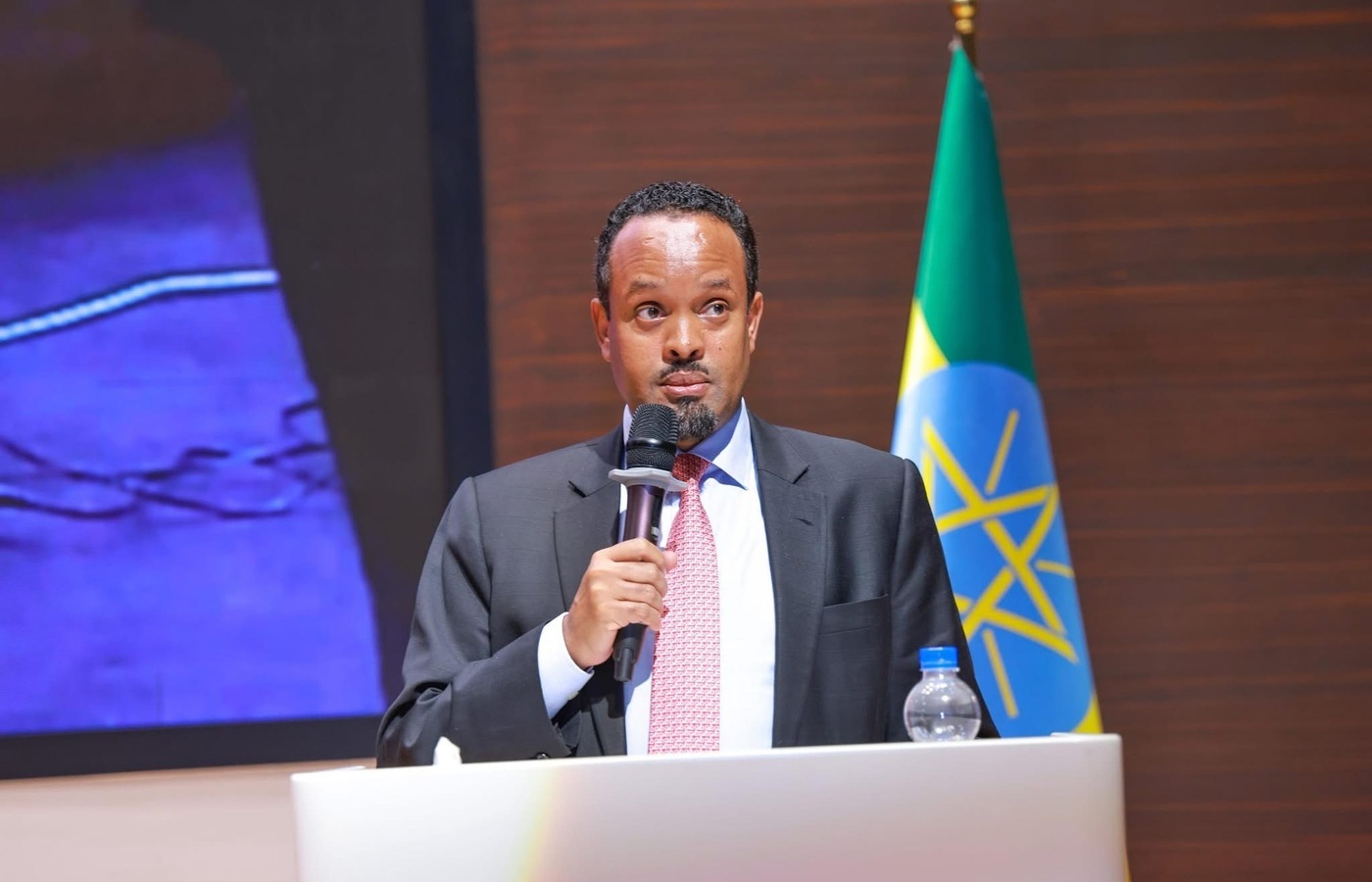
Ethiopia’s Finance Minister, Ahmed Shide, in his role as board chair of the Commercial Bank of Ethiopia, has issued a sweeping directive to the state lender: scale up private sector credit, expand digital lending, and deliver more foreign exchange — or risk falling short of national priorities.
At the bank’s annual general meeting last week, Ahmed set a hardline tone, telling executives that the next five years will demand “greater effort than ever” to modernise operations, protect financial inclusion, and reinforce the lender’s role as the backbone of Ethiopia’s economy.
With loan disbursements topping 458.5 billion birr in the 2024/25 fiscal year — more than 88.2 percent of which went to the private sector — CBE has already cemented its status as the country’s financial workhorse. But Ahmed made clear that performance must move beyond volume.
He encouraged the bank to “grow its market share further” and to match last year’s “historic success” in deposit mobilisation with a repeat performance in the current budget year.
“CBE must transform,” he said, calling for tighter risk controls, stronger staff capacity, and a bigger footprint in underserved regions.
The bank is under increasing pressure to deliver loans through digital platforms. Last year, CBE disbursed over 9.1 billion birr digitally, including 5.8 billion via Telebirr and 3.3 billion via CBE Birr. Digital loan users now number more than 429,000, but Ahmed signalled this is still “early innings” in a much larger inclusion strategy.
CBE’s interest-free window, CBE Nur, also continues to gain traction, accounting for nearly 81 billion birr in disbursements last year. Total outstanding loans now stand at 1.5 trillion birr, including over 79.2 billion under the Islamic banking platform.
But the most pointed remarks focused on foreign exchange. With Ethiopia’s reserves under strain and the birr under pressure, Ahmed tasked CBE with boosting hard currency inflows through trade finance, remittances, and strategic lending.
While reiterating government support for the bank, Ahmed urged it to uphold commercial principles when backing state-led development efforts — a subtle but significant shift in tone, suggesting limits to politically motivated lending.
As the financial sector opened up just last month, and with foreign banks waiting in the wings, Ahmed’s message was as much a warning as a vision: CBE must evolve from a legacy institution into a high-performing, technology-driven bank that can compete and deliver — fast.
The five-year direction set by Ahmed comes as the World Bank throws its weight behind Ethiopia’s financial sector overhaul. A 700 million US dollar loan, approved under a sector reform programme, is earmarked to restructure the Commercial Bank of Ethiopia, as well as support institutional overhauls at the National Bank of Ethiopia and the Development Bank of Ethiopia.




