

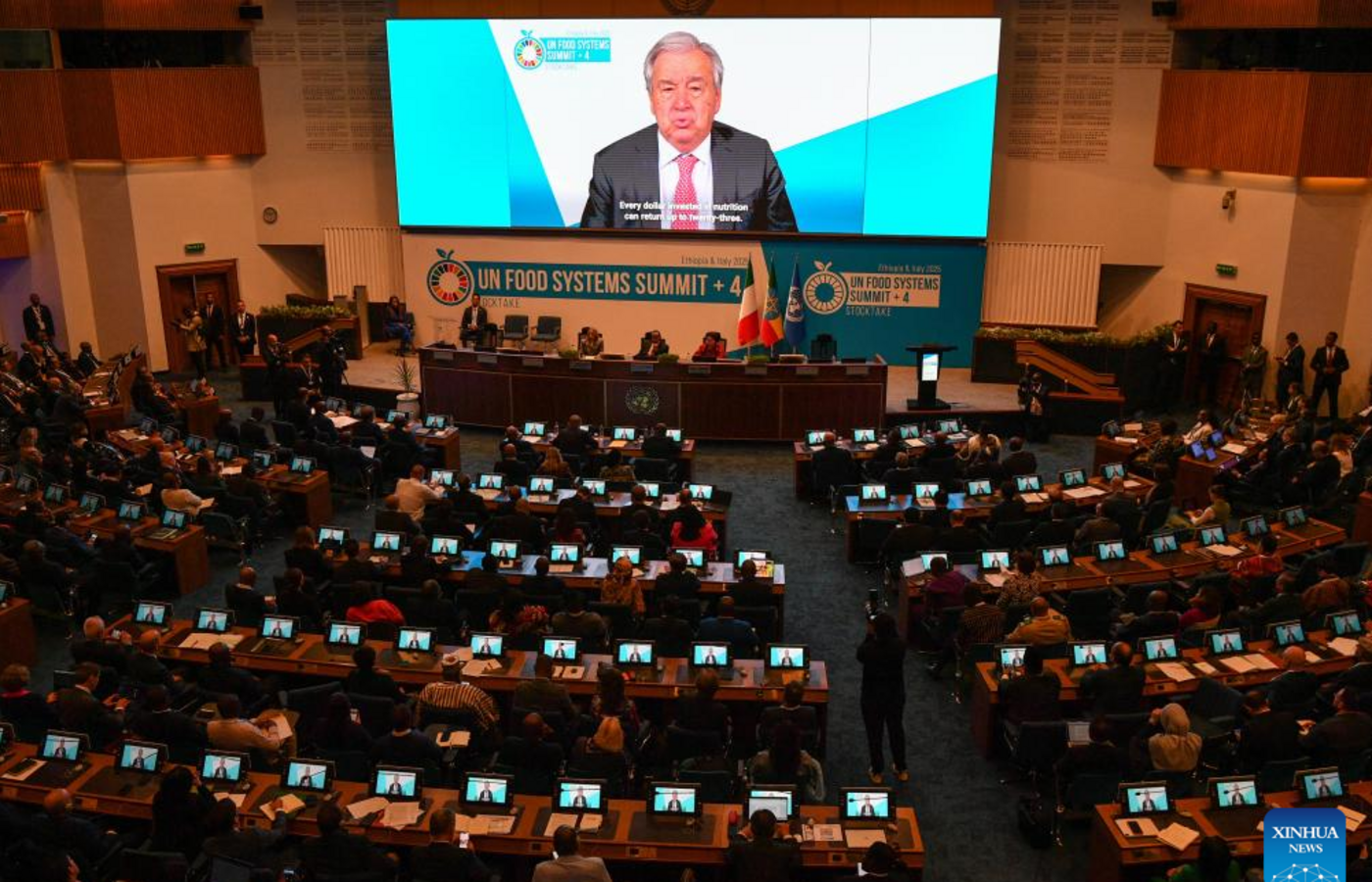
UN Secretary-General António Guterres delivered a sobering message to world leaders gathered in Addis Ababa for the second UN Food Systems Summit Stocktaking Moment, warning that global food systems are failing billions and that the pace of reform remains dangerously insufficient.
In a video address to the high-level gathering co-hosted by Ethiopia and Italy, Guterres acknowledged advances since the 2021 summit, but said those gains are not reaching the people who need them most. “Progress is not fast or fair enough,” he said. “One third of the world’s people cannot afford a healthy diet, while one third of the world’s food is lost or wasted.”
He pointed to a worsening global hunger crisis exacerbated by conflict, trade disruptions, and climate breakdown. The result, he said, is a food system that feeds inequality more than people. “The hidden costs of our food systems — on health, nature and human suffering — exceed 10 tln US dollars a year. That’s more than three times the GDP of the African continent.”
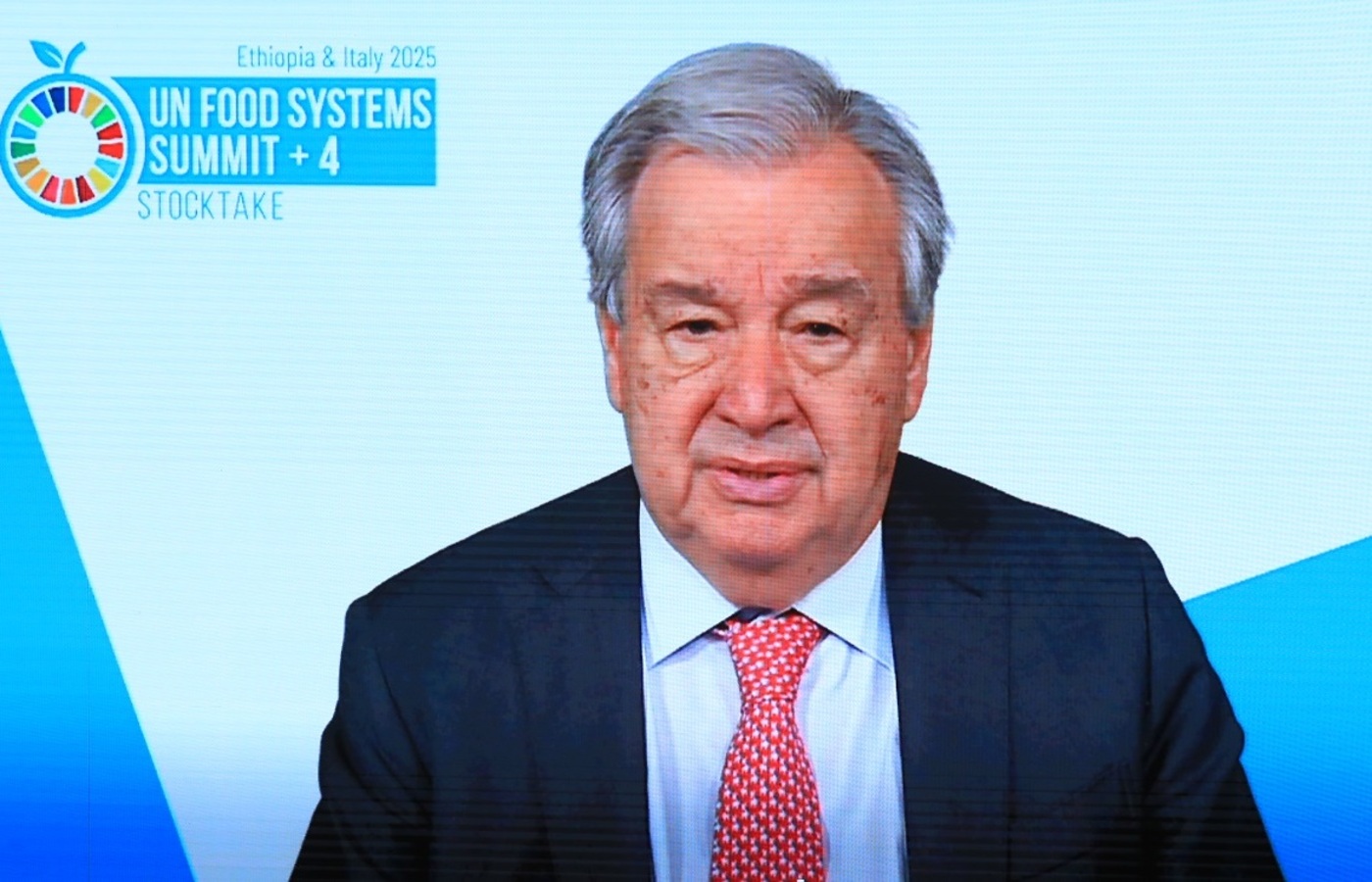
Guterres described the current food crisis not as a failure of production, but of justice. “This is not just a crisis of scarcity. It is a crisis of justice, equity and climate,” he said, warning that nearly 40 percent of the global workforce is tied to food systems, yet millions remain trapped in poverty. He called out the use of hunger as a weapon of war, saying, “We must never accept hunger as a weapon.”
While spotlighting the structural failures of the global food economy, Guterres also pointed to countries taking decisive action. He praised Ethiopia’s efforts to reduce its dependency on imports through local wheat production and food policies aligned with climate objectives. He highlighted the country’s “Yelemat Tirufat” initiative, a multi-year push to boost dairy, poultry, and honey production that has led to the insemination of over two million cows and distribution of 80 million improved chick breeds.
Still, he stressed that national efforts are not enough without global structural change. Guterres called for integrated food policies that break down silos, elevate marginalized voices, and unlock financing at scale. He pressed for debt relief and reform of the global financial system to allow developing countries a fair seat at the table. He also demanded more from the private sector, warning that “bold leadership and enforceable corporate accountability” are essential if food systems are to be rebalanced in favor of public good over private gain.
He concluded with a stark message: food must no longer be treated as a source of profit at the expense of human life and planetary health. “The future of food is the future of humanity,” he said. “Let us work together to build food systems that nourish every person, restore our planet, and grow prosperity from the ground up.”




